US, Russia Commit to New START Nuclear Limits, Agree to Restore Military Talks
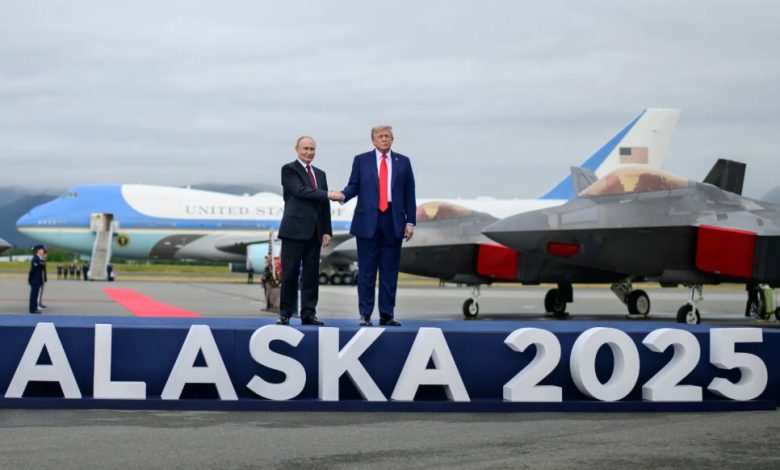
The US and Russia are negotiating a deal to maintain the terms of the New START arms control treaty that officially expires on Thursday, Axios reported.
In another diplomatic breakthrough, Washington and Moscow agreed to re-establish high-level military-to-military dialogue for the first time since 2021.
Observing Nuclear Caps
On the sidelines of Ukraine peace talks in Abu Dhabi, US envoys Steve Witkoff and Jared Kushner had been negotiating with Russian officials on a deal to continue observing the New START treaty beyond its expiration, three sources told Axios.
However, the draft plan still needs approval from the presidents of both countries, two sources noted. An additional source confirmed that the two sides had not reached an agreement.
“We agreed with Russia to operate in good faith and to start a discussion about ways it could be updated,” a US official said. Meanwhile, another source said that the practical implementation would involve a mutual commitment to respect the treaty’s central limits for at least six months while the two sides negotiate on a new nuclear treaty.
New START Treaty
Taking effect in February 2011, the New START Treaty established strict caps on the world’s two largest nuclear arsenals. It limited each side to 1,550 deployed warheads and 700 deployed delivery systems – including ICBMs, submarine-launched missiles, and heavy bombers – while limiting total launchers to 800. The treaty also provided a vital check on Russia’s intercontinental capabilities capable of reaching the US mainland.
The New START Treaty provided for a single five-year extension, which Presidents Joe Biden and Vladimir Putin activated in 2021. With its expiration on February 5, 2026, any continued observance of its nuclear limits now requires an executive decision by leaders of both countries to uphold the restrictions on a voluntary basis.
Russia’s Positions
On Thursday, the Kremlin spokesperson, Dmitry Peskov, signaled Moscow’s readiness for dialogue if Washington responded “constructively” to Russia‘s proposal.
“(Russia is) ready for dialogue with the United States on limiting strategic offensive arms if Washington responds constructively,” Peskov said.
Criticizing Washington’s silence, the Russian Foreign Ministry stated on Wednesday that Moscow’s nuclear initiatives had been “deliberately left unanswered,” effectively ending the era of mutual treaty obligations.
A New Paradigm
In September 2025, Putin proposed continuing to adhere to the caps outlined in the treaty for another year. While President Donald Trump initially called the proposal “a good idea,” he later signaled a willingness to let the formal treaty lapse in pursuit of a more comprehensive deal.
“If it expires, it expires. We’ll do a better agreement,” he recently told the New York Times.
The US suggested it wanted a trilateral agreement that involves China, which has a much smaller but rapidly advancing nuclear arsenal.
“The president has been clear in the past that in order to have true arms control in the 21st century, it’s impossible to do something that doesn’t include China because of their vast and rapidly growing stockpile,” US State Secretary Marco Rubio said on Wednesday.
Restoring Military Talks
In another development, the US and Russia agreed to reestablish high-level military dialogue for the first time in over four years.
In a statement on Thursday, the US European Command announced restoring military-to-military talks, following meetings between Gen. Alexus G. Grynkewich, Commander of US European Command, and senior Russian and Ukrainian military officials in Abu Dhabi.
“Maintaining dialogue between militaries is an important factor in global stability and peace, which can only be achieved through strength, and provides a means for increased transparency and de-escalation. This channel will provide a consistent military-to-military contact as the parties continue to work towards a lasting peace,” the statement said.