UK Convenes 40-Nation Summit to Reopen Hormuz, Blasts Iranian ‘Recklessness’
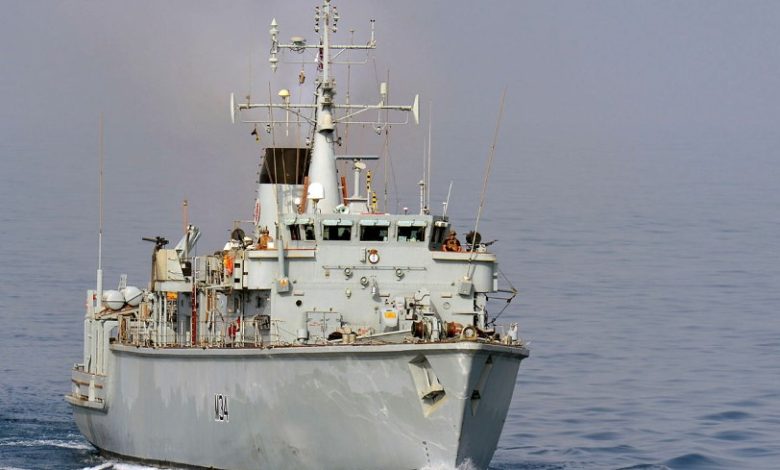
More than 40 countries joined a UK-led virtual meeting on Thursday to discuss ways to reopen the Strait of Hormuz, a vital shipping route impacted by the US-Israeli war with Iran.
The meeting took place amid heightened tensions, after US President Donald Trump said countries that rely on the critical waterway should ensure it was open, suggesting it is not America’s responsibility.
UK-led Efforts to Reopen Hormuz
On Thursday, Foreign Ministers and representatives from over 40 countries joined a video call chaired by British Foreign Secretary Yvette Cooper to discuss “diplomatic and international planning measures” to ensure the safe reopening of the Strait of Hormuz.
These measures include “collective mobilization of our full range of diplomatic and economic tools and pressures, and reassurance work with industry, insurers and energy markets,” Cooper said.
She added that these measures also include “action to guarantee the safety” of 20,000 trapped seafarers on some 2,000 trapped ships, as well as “effective coordination” across the world to enable a safe and sustained opening of the strait.
Cooper said that the meeting aimed to discuss “the urgent need to restore freedom of navigation for international shipping, and the strength of our international determination to see the Strait reopen once more.”
Slamming Iranian Recklessness
Cooper strongly criticized Iran‘s behavior in the Strait of Hormuz and its implications on the global economy. “We have seen Iran hijack an international shipping route to hold the global economy hostage,” she said in her opening remarks.
“Iranian recklessness towards countries who were never involved in this conflict… is not just hitting mortgage rates and petrol prices and the cost of living here in the UK and in many different countries across the world, it is hitting our global economic security,” she noted.
The British Minister pointed to the World Bank’s predictions that Hormuz closure could drive 9 million people around the world into food insecurity. This will add to “the unsustainable increases that we have seen in oil prices and food prices hitting households and businesses in every corner of the world,” Cooper said.
Joint Effort
On March 19, a total of 37 countries, including the UK, France, Germany, Canada, Australia, Italy, Japan, the Netherlands and the UAE signed a joint statement, calling on Iran to stop its attempts to block the Strait of Hormuz and expressing “readiness to contribute to appropriate efforts to ensure safe passage” through the strategic waterway.
However, the US – which did not take part in the meeting – alongside China and most Middle Eastern countries, did not sign the statement.
The Strait of Hormuz is a crucial waterway linking the Arabian Gulf with the Gulf of Oman and the Arabian Sea, serving as the main shipping route for crude oil from the Gulf region to the rest of the world.
Around a fifth of daily global oil supplies (about 20 million barrels per day), as well as a fifth of global liquefied natural gas (LNG) supplies, pass through the Strait of Hormuz, according to the US Energy Information Administration (EIA).
The US-Israeli war with Iran has caused traffic disruption in the strategic waterway, as Iran warned it would not allow “enemy ships” to cross the Strait. It also threatened to deploy naval mines across the Arabian Gulf to cut routes in case the US invaded its southern coast and islands.
Military Capabilities
Cooper noted that another meeting will take place next week among military planners to discuss issues such as clearing mines and securing passage through the strait once the conflict ends.
“We are also convening military planners to look at how we marshal our collective defensive military capabilities, including looking at issues such as de-mining or reassurance once the conflict eases,” she said.
The UK is planning to retrofit the RFA Lyme Bay Auxiliary Bay-class amphibious support vessel with autonomous underwater drones which can detect and neutralize mines for possible deployment in the Strait of Hormuz.
This new equipment will be capable of detecting, identifying and neutralizing threats, enabling Lyme Bay to “store, prepare, deploy and recover a variety of autonomous and crewless technology, from underwater drones to mine-hunting boats – acting as a crewed ‘mothership’ for drone tech,” according to the Royal Navy.
Trump Threats
The meeting took place hours after a prime-time address by Trump to the American people, during which he called on other oil-importing nations to “build up some delayed courage” and seize the critical waterway.
“The countries of the world that do receive oil through the Hormuz strait must take care of that passage. They must grab it and cherish it. They can do it easily,” he said.
“Just take it, protect it, use it for yourselves,” Trump added, suggesting that the Strait of Hormuz would “just open up naturally” after the end of the war. He also noted that the US would consider a ceasefire only when Hormuz is “free and clear.”