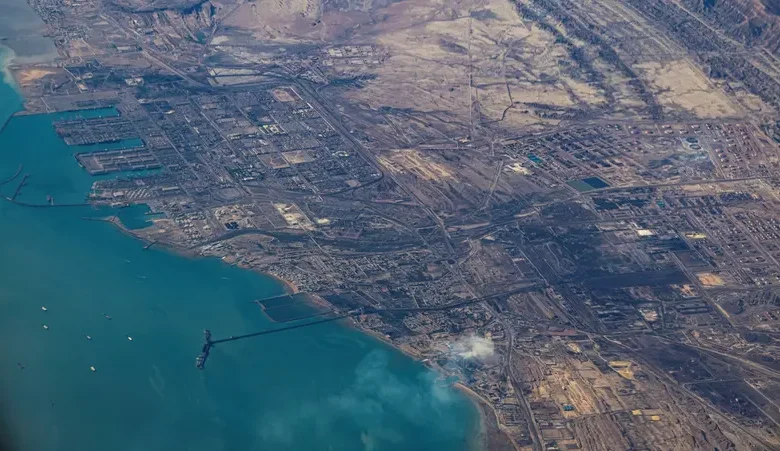
The United Arab Emirates plans to accelerate the construction of a new oil pipeline that will double its export capacity through Fujairah by 2027, according to Reuters.
New Oil Pipeline
The Abu Dhabi Media Office (ADMO) stated on Friday that the new pipeline will further boost its ability to bypass the Strait of Hormuz.
During an executive committee meeting, Abu Dhabi Crown Prince Sheikh Khaled bin Mohamed bin Zayed has instructed the Abu Dhabi National Oil Company (ADNOC) to fast-track the West-East Pipeline project.
The ADMO also noted that construction is underway, and the pipeline is anticipated to begin operating in 2027.
However, it did not specify the project’s original timeline.
The UAE’s existing Abu Dhabi Crude Oil Pipeline (ADCOP), also known as the Habshan–Fujairah pipeline, boasts a capacity of up to 1.8 million barrels per day.
It has also proven vital to the country’s strategy of maximizing direct crude exports from its Gulf of Oman coastline.
Crucially, the UAE and Saudi Arabia stand out as the only Gulf producers with pipeline infrastructure enabling crude exports beyond the Strait of Hormuz.
Meanwhile, Oman owns an extensive coastline along the Gulf of Oman.
Iran War
On February 28, the United States and Israel launched strikes on Iran, targeting its leadership and triggering a new conflict in the Middle East.
Iran has been responding with a retaliatory counterattack in Bahrain, Kuwait, Saudi Arabia and Abu Dhabi as a retaliatory move, while launching barrages of missiles and drones toward Israel.
Consequences of War
The conflict has spread across the Middle East, leaving thousands dead, triggering unprecedented disruptions to energy supplies especially after the blockade of the Strait of Hormuz.
The adversaries remain locked in a standoff over the Strait of Hormuz, as Iran tightens its control over maritime traffic while the United States continues to enforce a blockade on Iranian ports.
Moreover, Iran has closed the narrow waterway between Iran and Oman, disrupting the flow of roughly a fifth of global oil supplies that normally pass through to Asia and other markets.
As a result, energy prices have surged, forcing governments to ration fuel and stoking fears of an economic downturn as inflationary pressures increase.
Related Topics:
UAE Was “Active Partner” in US-Israeli War: Iranian FM
Kuwait, UAE Intercept Iranian Drones in amid Regional Tensions
UAE Abruptly Quits OPEC and OPEC+ Effective 1 May