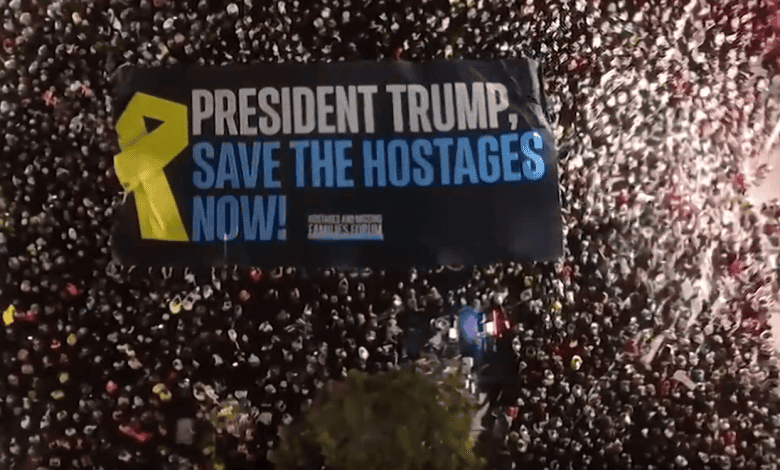
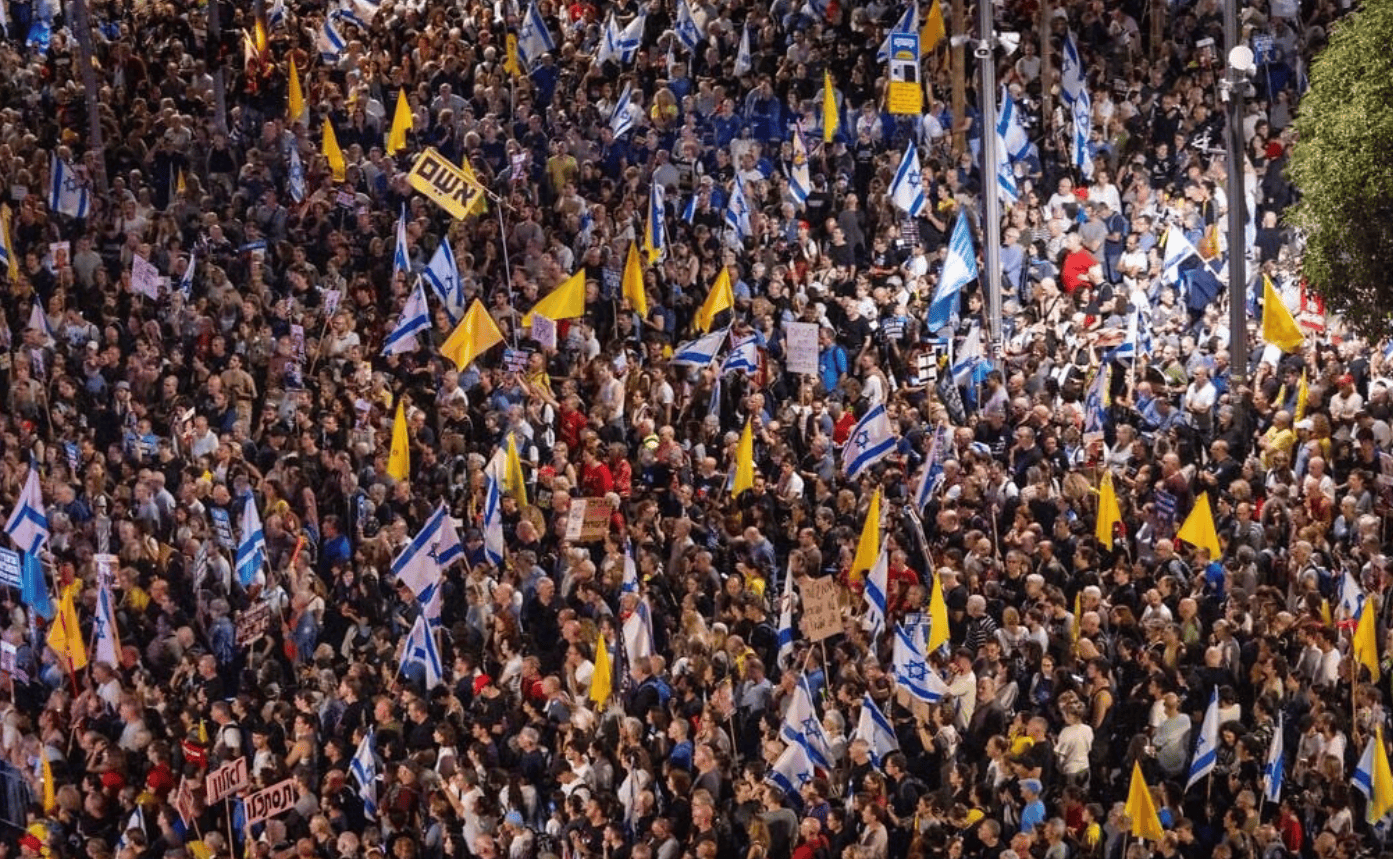
Tens of thousands of Israelis took to the streets on Saturday night, urging the US President, Donald Trump, to put an end to the war in Gaza and return the hostages, reported Reuters.
The protests come as the Israeli military expands its assault on Gaza City, amid fears among the hostages families that the intensified bombardment could put the lives of their relatives at risk.
Protests in Israel
The protests started shortly after the Israeli military struck a high-rise building in Gaza City. The demonstrators rallied at a public square outside the military headquarters at Tel Aviv, carrying images of the hostages and waving Israeli flags.
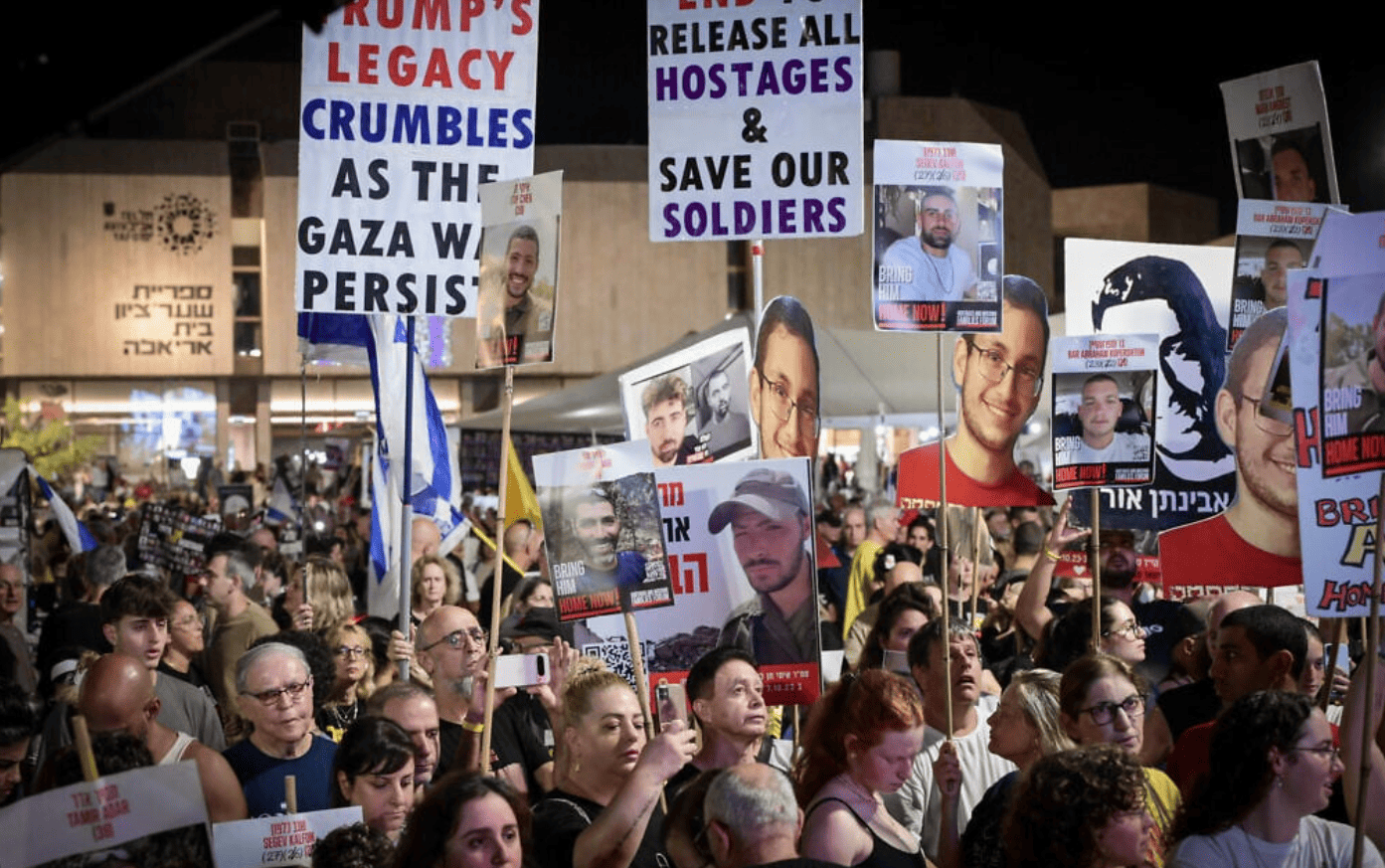
Many of the protesters called on Trump to force an end to the war, with some of them holding signs saying: “Trump’s legacy crumbles as the Gaza war persists.” Other signs read: “PRESIDENT TRUMP, SAVE THE HOSTAGES NOW!”
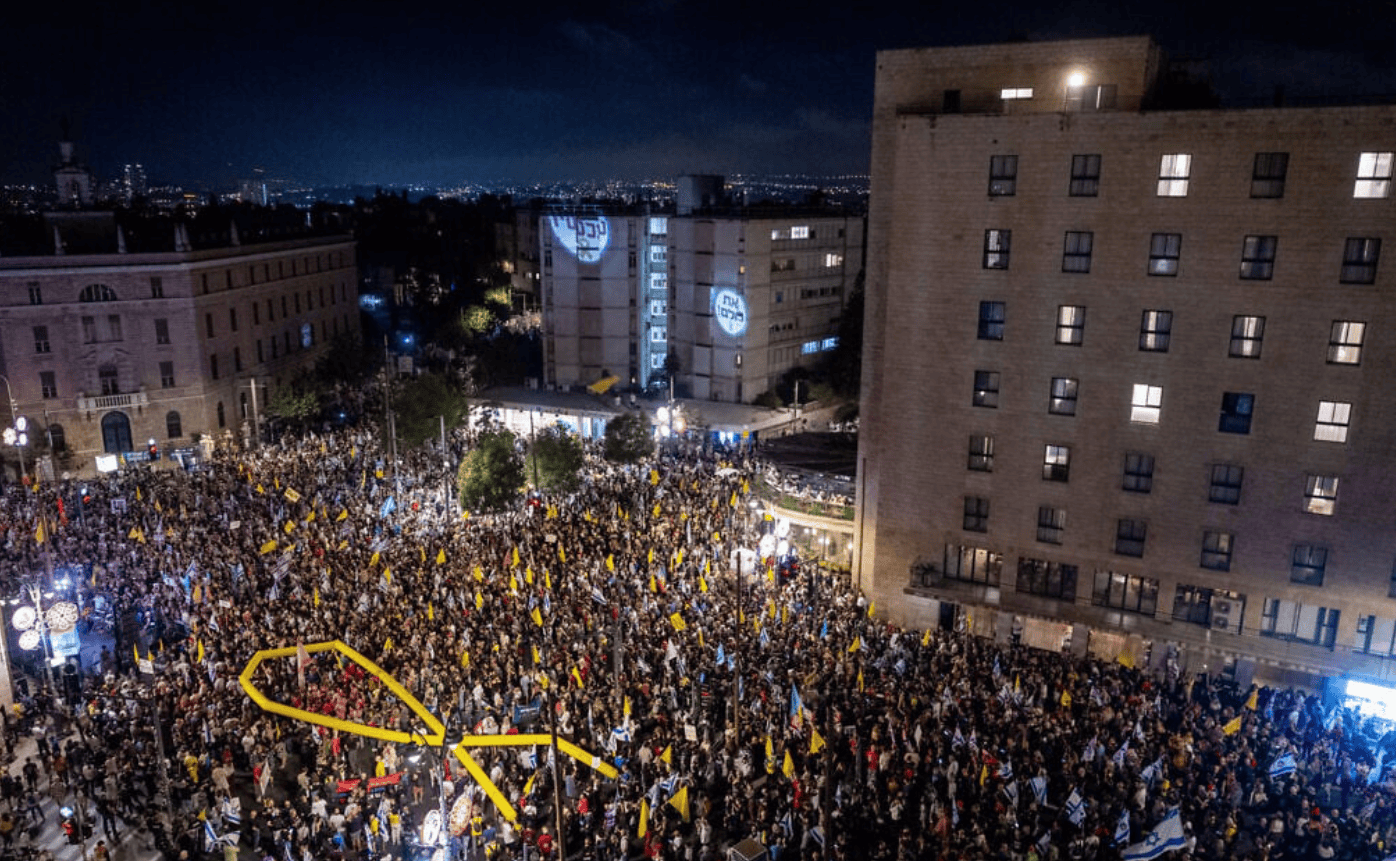
Meanwhile, tens of thousands of demonstrators protested in Jerusalem, outside the residence of the Israeli Prime Minister, Benjamin Netanyahu, calling him a “traitor” and the “worst enemy of the Jewish people,” according to the Times of Israel.
On Wednesday, the families of the hostages began a “Day of Disruption” protests across Israel, demonstrating against the expansion of the war in Gaza and the call-up of tens of thousands of reservists, demanding a deal that end the fighting and release the remaining hostages. The protests were marked with violence as demonstrators set ablaze garbage bins and cars, including near the residence of Netanyahu.
Trump’s Position
During his presidential campaign, Trump pledged he would end the wars in Gaza and Ukraine. However, his efforts have proved futile as both Israel and Hamas failed to agree on a deal. Commenting on the large-scale protests in Israel, the US President said that the demonstrations complicate the Israeli government’s position.
“The big protests in Israel about the hostages put Israel in a tough position. I’ve never seen anything like it, the level of love they have for their children,” he told reporters on Friday.
Furthermore, Trump said that he was engaged in “very deep negotiations” with Hamas, warning the Palestinian group of consequences if they did not release the hostages. “We said let them all out, right now let them all out. And much better things will happen for them but if you don’t let them all out, it’s going to be a tough situation, it’s going to be nasty,” he said.
Hostage Video
As the war in Gaza marked its 700th day, Hamas released a video of two Israeli hostages, Guy Gilboa-Dalal and Alon Ohel, being driven through Gaza City. In the footage, Gilboa-Dalal expressed fears over the planned Israeli takeover of the city. “I heard that you’re going to carry an assault on Gaza City, and this idea is giving me nightmares. What does it mean? It means we’ll die here,” he said.
He urged his government to end the war. “We just want this to end. We want to go back to our families. We’re found adjacent to the military. We’re scared, there are explosions here, gunfire. Please return us,” the Israeli hostage pleaded.
The video sparked fear among the families of the hostages, which was further exacerbated by Trump’s remarks about the number of the living hostages. “There could be some that have recently died, is what I’m hearing. I hope that’s wrong, but you have over 30 bodies in this negotiation,” he told reporters on Friday.
Netanyahu’s Insistence on War
Opposition to the war in Gaza has been on the rise among some segments of the Israeli society, according to Reuters. Many opinion polls show that most Israelis want Netanyahu’s government to negotiate a permanent ceasefire that would return the hostages home.
In mid-August, Hamas accepted a ceasefire proposal from Arab mediators Egypt and Qatar, involving a 60-day truce during which a number of Palestinian prisoners would be freed in return for half of the remaining Israeli hostages and discussions for a comprehensive deal or a permanent ceasefire would begin. The deal was almost identical to a previous proposal by the US Special Envoy, Steve Witkoff, which Tel Aviv had accepted. However, Israel has not responded to the proposal.
Then on Wednesday, the Palestinian movement said it was ready to enter into a comprehensive deal that would free all the living hostages in return for an agreed-upon number of Palestinian prisoners, an end to war, and the opening of border crossings to deliver all the Gaza Strip’s necessities. It also added that it was open to the formation of an “independent national administration of technocrats” to run Gaza.
However, Netanyahu dismissed the statement, calling it “another spin by Hamas” and vowing to press ahead with the occupation of Gaza City, which the Israeli military has controlled 40% of it.
On Saturday, Hamas renewed its commitment to the agreement proposed by mediators on August 18, emphasizing the group’s “openness to any ideas or proposals that achieve a permanent ceasefire, a full withdrawal of Israeli forces from the Gaza Strip, the unconditional entry of aid, and a genuine prisoner exchange through serious negotiations mediated by intermediaries.”