
Saudi Arabia Urges for an End to Gaza Crisis at BRICS Summit 2025
Saudi Arabia has urged for intensified international efforts to alleviate the humanitarian suffering in Gaza and bring the 21-month war to an end.
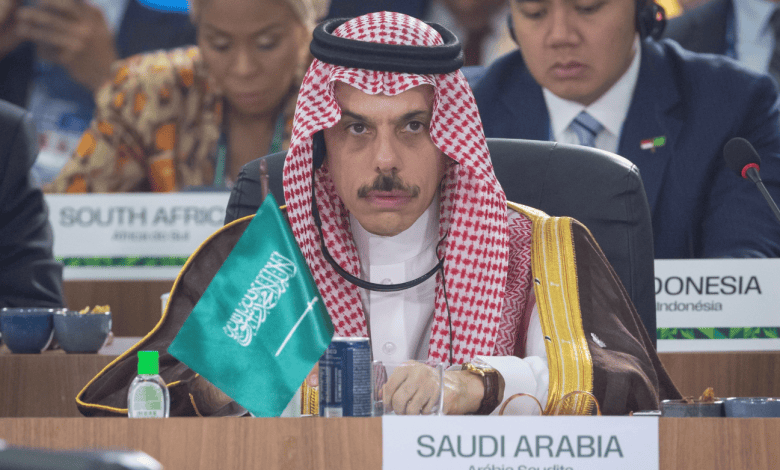
The remarks came during the opening session of the second day of the 17th BRICS Summit in Rio de Janeiro, Brazil, which Saudi Arabia attended as an invited country.
Gaza Crisis
On behalf of the Saudi Crown Prince and Prime Minister, Mohammed bin Salman, the Saudi Foreign Minister, Prince Faisal bin Farhan, participated in the BRICS Summit, reported the Saudi Press Agency (SPA). On Monday, Prince Faisal took part in a session titled “Environment, United Nations Climate Change Conference (COP30), and Global Health.”
During his speech, the Saudi Foreign Minister stressed the importance of shared responsibility to avoid escalation, maintain security and avoid conflict expansion in the light of the global challenges and crises.
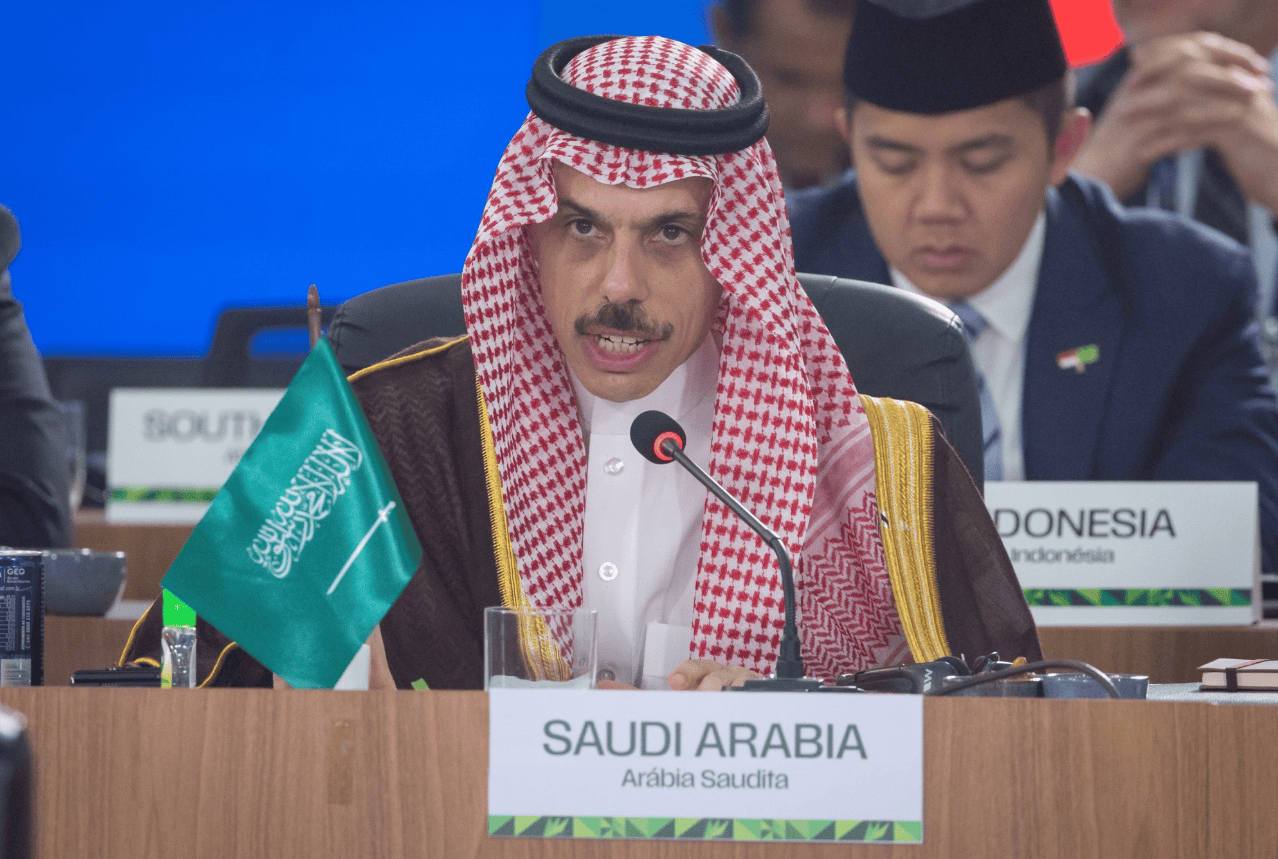
Within this context, Prince Faisal pointed to the catastrophic situation in Gaza. He denounced the Israeli attacks on health infrastructure and the targeting of civilians as a flagrant violation of international humanitarian law and a direct challenge to the rules-based international order.
International Responsibility
The Saudi Foreign Minister called on the international community to assume its responsibilities to ensure the delivery of humanitarian aid and the protections of civilians in Gaza, stressing that the humanitarian suffering “cannot be overlooked.”
Moreover, Prince Faisal urged the international community to exert serious efforts to bring the crisis in Gaza to an end and achieve a lasting and comprehensive peace based on the two-state solution in accordance with international law.
BRICS Concerns over Gaza
In their joint declaration, the BRICS leaders stressed their grave concern over the situation in the Gaza Strip, amid the ongoing Israeli strikes and the blockade of humanitarian aid into the enclave. “We also condemn attempts to politicize or militarize humanitarian assistance,” they said.
They urged parties to engage in negotiations to reach “an immediate, permanent and unconditional ceasefire, the full withdrawal of Israeli forces from the Gaza Strip and all other parts of the Occupied Palestinian Territory, the release of all hostages and detainees held in violation of international law, and sustained and unhindered access and delivery of humanitarian aid.”

The BRICS group originally comprised Brazil, Russia, India, China and South Africa in a united bloc that promotes a multipolar economic world order and supports the growth and development of the Global South.
The group has expanded to include Iran, Egypt, the UAE, Ethiopia and Indonesia. The BRICS also has 10 strategic partner countries, including Belarus, Cuba, Vietnam, Nigeria and Thailand. Saudi Arabia has also received an invitation to the bloc, but has yet to confirm its membership.
Climate Cooperation
At the start of his speech, the Saudi Foreign Minister praised Brazil’s active efforts as a president for BRICS this year, extending Saudi Arabia’s appreciation to the country for hosting the summit. Furthermore, he expressed the Kingdom’s aspirations to promote productive cooperation across multilateral platforms in pursuit of shared development and future opportunities.
In the light of this, Prince Faisal reaffirmed the significance of strengthening cooperation in the fields of climate and health. He underscored Saudi Arabia’s commitment to the UN Framework Convention on Climate Change and the Paris Agreement.

Prince Faisal also called for a practical and balanced approach that takes into account the diverse capacities and circumstances of different countries. With regards to this, he congratulated Brazil for hosting the upcoming COP30, hoping the summit will succeed in achieving tangible outcomes to tackle climate change challenges.
Addressing Water Scarcity
The Saudi Foreign Minister shared the Kingdom’s successful experience in addressing water scarcity, by developing advanced methods and technologies to tackle environmental challenges and manage water resources. He also noted that Saudi Arabia has spearheaded efforts to establish the Global Water Organization, which aims to ensure equitable access to this vital resource.
In terms of health, Prince Faisal bin Farhan outlined the comprehensive reforms implemented under Saudi Vision 2030 to enhance the health sector. These reforms focused on prevention and integrated care.
Moreover, he showcased Saudi Arabia’s expertise and efficiency in crowd management, including managing large gatherings during Hajj and Umrah, as well as developing planning and early-warning systems. These efforts have further consolidated the Kingdom’s position as a regional hub for preparedness and response to health emergencies in line with international standards.