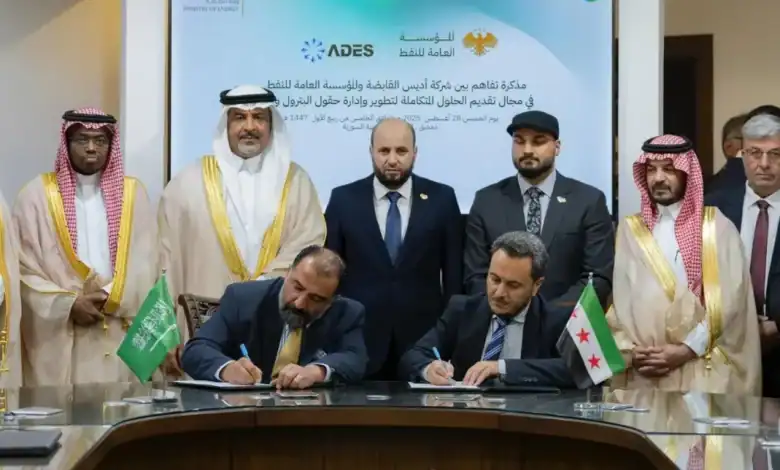
The Syrian Petroleum Company has signed four agreements with Saudi firms focused on technical support and oil and gas field development in Syria. According to the Syrian News Agency (SANA), this signing at the Ministry of Energy marks a crucial step in Syria’s efforts to enhance its energy sector through regional and international collaborations.
In September, Saudi Arabia announced a significant grant of 1.65 million barrels of crude oil to aid Syria’s post-conflict reconstruction efforts, to stabilize Syria’s economy and support its recovery from years of civil war. Moreover, the grant, coordinated through the Saudi Ministry of Energy, is part of Riyadh’s broader strategy to foster regional stability and strengthen diplomatic ties with Damascus.
Furthermore, the crude oil supply, valued at hundreds of millions of dollars, will help alleviate Syria’s severe energy shortages affecting industries and basic services.
Broader Implications
Energy experts note that Syria’s infrastructure has suffered massive damage, particularly in the oil sector, which is among the hardest hit. This assistance will help restart critical energy facilities and boost local production capacity, aiding economic recovery. Additionally, it will indirectly support economic activity by ensuring power for essential manufacturing, agriculture, and transportation sectors.
Saudi officials emphasize that the grant comes without conditions, highlighting humanitarian concerns and regional cooperation over political agendas. Furthermore, this initiative may signal a shift toward renewed engagement between Gulf states and Syria after years of diplomatic isolation.
This move follows recent diplomatic efforts to reintegrate Syria into the regional framework, including talks hosted by Gulf member countries. The oil grant is one of Riyadh’s largest single aid contributions to Damascus since the start of Syria’s conflict over a decade ago.
Syria’s government welcomed the crude oil shipment as a vital lifeline amid ongoing economic challenges like inflation and fuel shortages. However, experts suggest this aid will provide temporary relief, but wider economic reforms and investment remain crucial for sustainable reconstruction.