MSF Documents Systematic RSF Sexual Violence against Women in Sudan’s Darfur
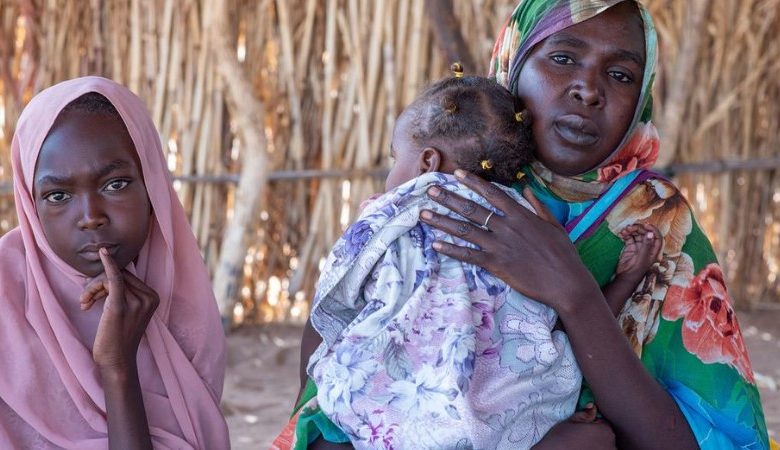
A new report by medical charity Doctors Without Borders (MSF) revealed that Sudan’s Rapid Support Forces (RSF) fighters and allied militias are responsible for widespread and systematic sexual violence against women in Darfur.
The report concluded that the RSF uses sexual violence as a weapon of war and a systematic means of controlling civilians, in violation of international humanitarian law.
The war in Sudan broke out in April 2023 between the RSF and the Sudanese Armed Forces (SAF), triggering what the UN called “the world’s largest humanitarian and displacement crisis.”
Sexual Violence in Darfur
The report, released on Tuesday, details clear patterns of widespread sexual violence and systematic abuse across Darfur, based on victim and survivor testimonies and data from MSF medical programs.
It covers the period between January 2024 and November 2025, during which at least 3,396 victims and survivors of sexual violence – 97% of them women and children – sought treatment in MSF-supported facilities across North and South Darfur.
“This represents only a fraction of the true scale, as many victims and survivors cannot safely reach care,” the MSF report warned.
“Sexual violence is a defining feature of this conflict – not confined to frontlines, but pervasive across communities,” MSF emergency health manager Ruth Kauffman said.
RSF Abuses
According to the report, victims’ testimonies and MSF medical data accused the RSF and their allied militias of committing widespread and systematic sexual violence against women in Darfur, which is under the paramilitary group’s control.
The data also showed patterns of systematic abuse, with armed men identified as the perpetrators of these assaults. In North Darfur, armed men were identified as the perpetrators in more than 95% of reported cases, while 60% of cases in South Darfur involved multiple perpetrators.
El-Fasher Atrocities
Following the fall of El-Fasher – the capital city of North Darfur state – to the RSF in late October 2025, the MSF treated over 240 victims who escaped to Tawila. Most of these victims endured attacked during their daily life activities, while searching for a safe haven or in displacement camps.
“Overcrowded shelters, lack of basic security, and unsafe conditions – including distant water points, insecure bathing areas and limited latrines – further increase their vulnerability,” the report noted.
The RSF faces mounting accusations of systematic human rights abuses, including targeted killings, sexual violence and the displacement of civilians based on their ethnic identity.
An earlier report by the UN Human Rights Office (OHCHR) concluded that the RSF committed “widespread atrocities that amount to war crimes and possible crimes against humanity” during its takeover of El-Fasher.
Targeted Groups
The MSF report noted that children were also impacted by the RSF crimes. In South Darfur, 20% of survivors were under 18, including 41 children younger than five. In North Darfur’s Tawila area, 27% of survivors in late 2025 were children.
Furthermore, the report pointed to an ethnic dimension, with accounts of the deliberate targeting of non-Arab communities, such as the Zaghawa, Massalit and Fur, as a means of humiliation and terror.
This echoes previous RSF atrocities, such as the dismantling of the Zamzam camp. A recent report by a UN fact-finding mission found that the RSF committed acts of genocide in El-Fasher city, by carrying out a “coordinated campaign of destruction against non-Arab communities in and around El-Fasher,” specifically the Zaghawa and Fur.
The report also said that the RSF’s systematic pattern of ethnically targeted killings, sexual violence, destruction, and public statements explicitly calling for the elimination of non-Arab communities confirms their genocidal intent.
Weapon of War
According to the MSF report, victims and survivors face hurdles to accessing appropriate care, including insecurity, stigma and limited protection services.
It concluded that the RSF fighters and allied militias use sexual violence as a weapon of war and a systematic means of controlling civilians, in violation of international humanitarian law.
“This war is being fought on the backs and bodies of women and girls. Displacement, collapsing community support systems, lack of access to healthcare, and deep-rooted gender inequalities, are allowing these abuses to continue across Sudan,” Kauffman said.
In this context, the MSF called on all warring parties, particularly the RSF and allied militias, to cease and prevent sexual violence and hold perpetrators accountable.
“We also call on the United Nations, donors and humanitarian actors to urgently scale up health and protection services in Darfur and all of Sudan,” it urged.