By: Moktar Ould Dahi
Mauritania’s Ambassador to Saudi Arabia

Over the past decades, mining has become a critical driver of growth and a key source of employment. In this article, Moktar Ould Dahi, Ambassador of Mauritania to Saudi Arabia, explores the sector’s current impact and its promising future horizons.
Mauritania’s Mining Sector
The mining sector in Mauritania is classified as a leading and promising sector—leading at present, as evidenced by its contribution of 23% of budgetary revenues, 78% of the country’s total export revenues, and 18.9% of the Gross Domestic Product (GDP), as well as providing tens of thousands of direct and indirect job opportunities.
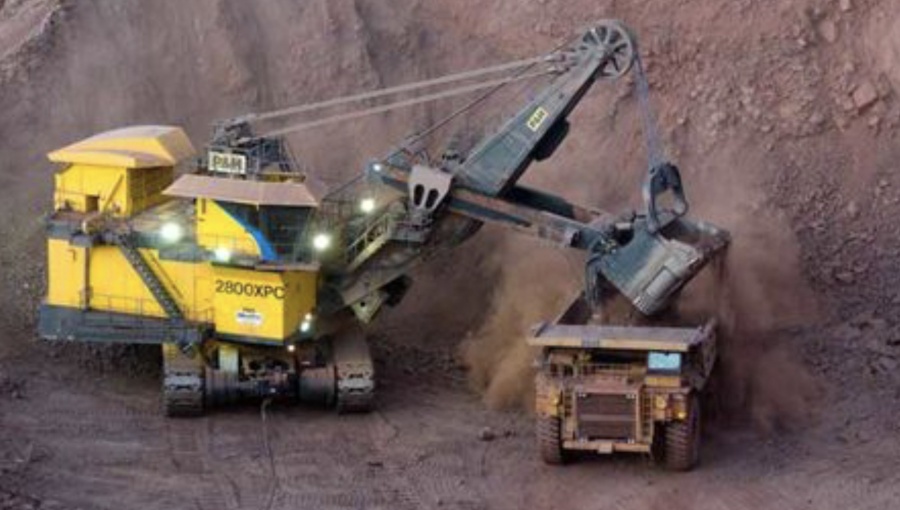
It is also a promising and ambitious sector for the future, as confirmed by the mineral map, which indicates 900 mineral occurrence points across the country’s vast area of 1.2 million km². Some of these minerals have been found in very large reserves (including Africa’s largest iron ore reserve) and are already being produced. The government holds an ambitious investment vision for the mining sector aimed at multiplying and diversifying production.
This vision rests on 3 pillars:
- Increasing the production of clean energy.
- Conducting precise geological mapping for critical minerals used in the energy transition, with an aim for processing and manufacturing.
- Developing the necessary infrastructure—roads, ports, and maps that facilitate transport and export—as well as providing water resources for processing, and investing in “environmentally friendly mining.”
Despite confirming 900 mineral occurrences and substantial reserves of various minerals, including:
- 6 billion tons of gypsum ore
- 15 billion tons of iron ore (the largest reserve and second-largest producer in Africa)
- 250 million tons of phosphate
- 150 million ounces of gold
- 28 million tons of copper ore
- 100 million pounds of uranium
- 400 million tons of black earth
Only 4 out of 16 licensed operations are currently active (as of 2025) in production and export of iron, gold, copper, and black earth. In 2024, Mauritania’s exports included:
- 14.3 million tons of iron
- 620,000 ounces of gold
- 13 million tons of copper
There are four major upcoming projects, including:
- Two in iron production and export (the “Aouj” project in partnership with Glencore, and the “Takamul” project with SABIC of Saudi Arabia)
- A uranium production project in partnership with Aura Energy of Australia
- A project for the production and export of phosphate
Encouragingly, the other 12 licenses, currently in the testing and confirmation phase, have reached advanced stages and are expected to transition to production and export of minerals like iron, gold, uranium, phosphate, and black earth.

Rising Global Interest
There is growing international interest in Mauritania’s mining sector. The relevant institutional bodies have issued 129 exploration licenses for minerals such as gold, uranium, copper, iron, phosphate, quartz, and chromium. These are still within the customary timeline for exploration procedures, as outlined in the mining code. It is expected that more than four of these will soon transition to exploitation and export.
To attract investors, Mauritania’s mining code offers competitive and attractive tax incentives compared to other mineral-producing countries. These include:
- The exploitation license is granted via a Council of Ministers decree, valid for up to 30 years and renewable
- The state receives 10% of the company’s capital for free, and can acquire another 10% through purchase
- The company must begin exploitation within two years of license issuance
- The exploiting company is exempt from customs duties, taxes, and the commercial and industrial profit tax for three years from the date of its first shipment
Mauritania will host the seventh edition of the “Mauritanides” event from September 8–10, 2025. This is a well-organized and content-rich forum dedicated to investment opportunities in the mining sector, including lectures and exhibitions, bringing together all relevant stakeholders.
I take this opportunity to call on all investors and stakeholders in the mining sector in Saudi Arabia to register and actively participate in this high-level development event. By the grace of Allah, it will lead to the establishment of Mauritanian-Saudi investment partnerships in the extraction and production of minerals in Mauritania.

Stable, Resource-Rich Destination for Investment
All indicators point to abundant and diverse mineral wealth in Mauritania, alongside encouraging tax incentives, and a business-friendly climate. This is all backed by a stable political and security environment, reinforced by a natural democratic political scene, effective military and security strategies (praised by experts), and government policies focused on social justice and strengthening the rule of law.
Related Topics :
Khorayef, Silveira Discuss Cooperation Opportunities in Mining Sector
Mining Sector Accelerates Saudi Arabia’s Bold Economic Vision
Bangladesh in Turmoil: Violent Protests Roil the Country, Government Extends Curfew
Saudi Arabia to Increase Oil Production to 12.3 mln bpd in 2028