

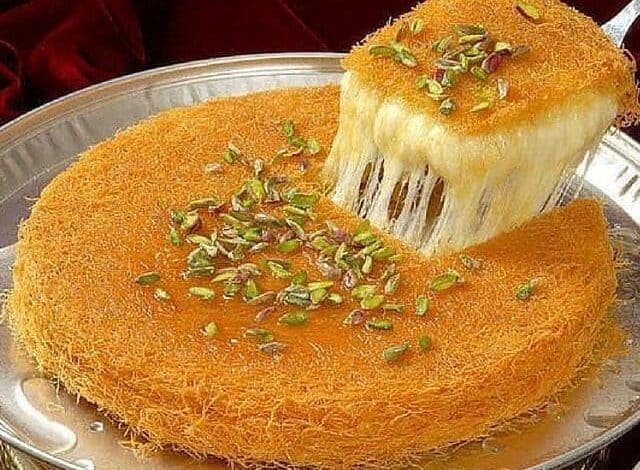
Knafeh, a beloved Middle Eastern dessert, finds a special place in the hearts and on the dining tables of Saudi Arabia during the holy month of Ramadan. This article explores the significance of knafeh in the Ramadan celebrations in Saudi Arabia, the recipe, and its variations.
Knafeh & Ramadan Celebrations
The preparation of knafeh during Ramadan is an act of communal joy and celebration. It is a time when families gather in the kitchen, sharing stories and laughter as they assemble this delightful dessert. Serving it during iftar or suhoor (the pre-dawn meal) is a gesture of hospitality, inviting all to partake in the warmth and generosity that the month of Ramadan embodies. Beyond its delicious taste, it fosters a sense of belonging and togetherness among those who share it.
How to Make Knafeh?
Preparing Saudi Knafeh involves a delightful mix of sweet, cheesy, and buttery flavors, wrapped in a crispy, golden exterior. This version of knafeh combines traditional Middle Eastern techniques with flavors beloved in Saudi cuisine. Here is a simple guide to make Saudi Knafeh at home.
Ingredients:
Preparing Saudi Knafeh involves a delightful mix of sweet, cheesy, and buttery flavors, wrapped in a crispy, golden exterior. This version of knafeh combines traditional Middle Eastern techniques with flavors beloved in Saudi cuisine. Here’s a simple guide to making Saudi Knafeh at home.
Ingredients:
- For the Knafeh Base:
- 500g knafeh dough (shredded phyllo dough)
- 200g unsalted butter, melted
- For the Filling:
- 400g Akkawi cheese, soaked in water to desalt and then drained
- 200g mozzarella cheese, shredded (for added stretchiness)
- For the Syrup:
- 2 cups sugar
- 1 cup water
- 1 teaspoon lemon juice
- 1 tablespoon rose water or orange blossom water (for aroma)
- For Garnishing:
- Ground pistachios
- Dried rose petals (optional)
Instructions:
- Instructions:
- Prepare the Syrup:
First, in a saucepan, combine sugar, water, and lemon juice. Then, bring to a boil and simmer until the sugar is fully dissolved.
After that, add rose water or orange blossom water, simmer for another minute, then set aside to cool. - Prepare the Knafeh Dough:
Then, thoroughly defrost the knafeh dough. Tear or cut the dough into smaller pieces for easier handling.
Next, in a mixing bowl, combine the dough with melted butter, ensuring the dough strands are fully coated. - Prepare the Cheese Filling:
If using Akkawi cheese, ensure it has been soaked in water for at least a few hours, changing the water occasionally to desalt it.
Following this, drain the cheese and mix them together. Some prefer to lightly fry the cheese mixture to enhance its flavor, but this is optional. - 4. Assemble the Knafeh:
First, preheat your oven to 180°C (350°F).
Second, in a baking dish, spread half of the buttered knafeh dough evenly at the bottom.
Third, layer the cheese mixture over the dough.
Forth, cover the cheese with the remaining knafeh dough, pressing gently to compact the layers.
Fifth, bake in the preheated oven for about 30-40 minutes, or until the knafeh is crispy and golden brown on top. - Finishing Touches:
Remove the knafeh from the oven and immediately pour the cooled syrup over the hot knafeh, ensuring even coverage.
Allow it to soak for a few minutes, then insert it onto a serving platter if desired.
6. Garnish and Serve:
Garnish it with ground pistachios and dried rose petals for added color and flavor.
Finally, serve warm or at room temperature, ideally with a side of fresh cream or yogurt to balance the sweetness. - Prepare the Syrup:
Regional Varieties
The versatility of knafeh allows for numerous variations across Saudi Arabia, reflecting the diverse culinary traditions of its regions. Some prefer it with a gooey cheese center, while others enjoy a creamier filling. The toppings and syrups also vary, from rose water and orange blossom to simple sugar syrups, each adding a unique twist to the classic recipe. This diversity in preparation ensures that knafeh remains a beloved staple, with each household boasting its signature version.
Finally, enjoying knafeh during Ramadan or at any celebration provides a taste of Saudi hospitality and the rich culinary traditions of the Middle East. This dessert is not only a feast for the taste buds but also a heartwarming expression of cultural heritage and communal joy.
Related Topics:
Maamoul: Traditional Saudi Arabian Cookie
How to Make Saudi Gahwa (Coffee)
Indulging in Saudi’s Sweet Tradition: Exploring Delight of Lukaimat