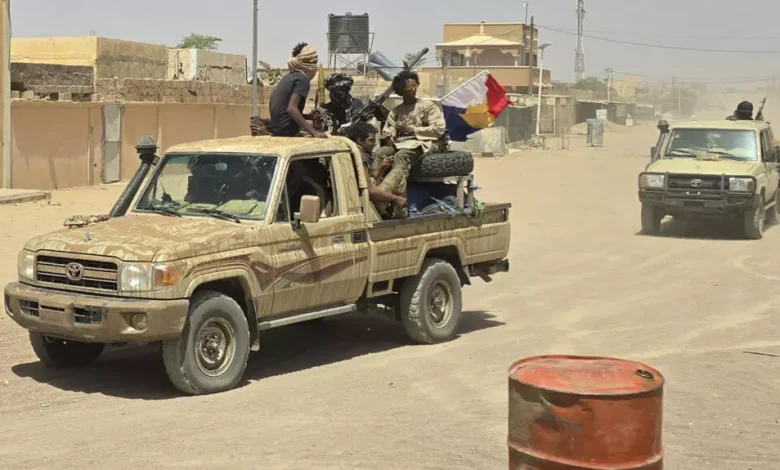
Russia confirmed on Thursday that its forces will remain in Mali to support the military rulers despite recent rebel warnings, following a series of surprise attacks by Tuareg separatists that forced Russian troops to abandon a key northern town.
Kremlin Rejects Withdrawal Demands
Kremlin spokesperson Dmitry Peskov explicitly denied reports of a planned retreat after the Africa Corps paramilitary unit pulled out of Kidal, informing reporters that Russia remains present because the Malian authorities declared a clear necessity for their military assistance.
“Russia will continue, including in Mali, to fight against extremism, terrorism and other negative manifestations,” Peskov stated during the briefing. He further emphasized that Moscow will continue providing vital assistance to the current authorities as they battle various insurgent groups.
The announcement coincided with a high-profile memorial service for Defence Minister Sadio Camara, who died during a Saturday residence attack. Camara served as the primary architect of Mali’s strategic shift toward Moscow and away from former colonial ruler France.
Junta leader Assimi Goita paid his respects at the ceremony while dressed in combat fatigues before the minister’s flag-draped coffin. This service drew defense ministers from Niger and Burkina Faso, highlighting the regional Alliance of Sahel States’ growing military unity.
Rebels Vow Regime Collapse
Conversely, Tuareg separatists from the Azawad Liberation Front (FLA) demand that Russian forces withdraw permanently from all existing Malian positions. FLA spokesperson Mohamed Elmaouloud Ramadane told reporters in Paris that the rebels intend to seize control of Gao and Timbuktu.
“The regime will fall, sooner or later,” Ramadane warned, signaling a potential escalation in the long-running northern security crisis. Since 2012, Mali has struggled with violence from groups linked to Al-Qaeda and Islamic State alongside various persistent separatist movements.
Russia’s Africa Corps, overseen by the Moscow Defence Ministry, continues to replace the former Wagner Group in these strategic operations. Despite the loss of key personnel and territory, the Kremlin remains committed to its geopolitical foothold within the Sahel region.