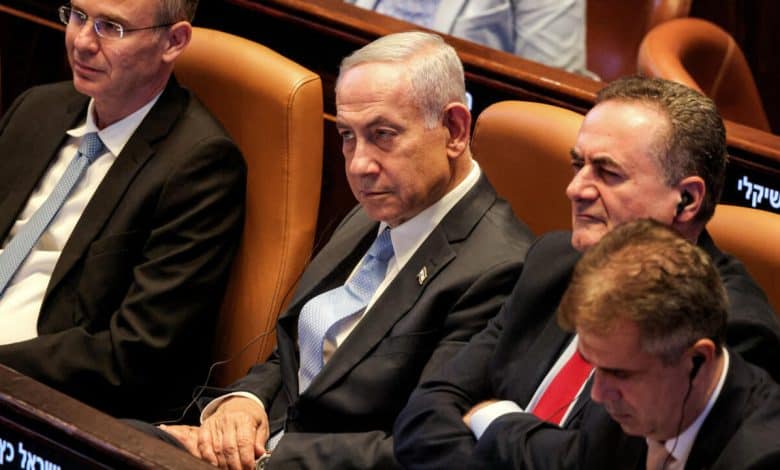
Israeli Prime Minister Benjamin Netanyahu’s government narrowly escaped collapse on Thursday, as opposition lawmakers failed to pass a bill dissolving parliament, with 61 members voting against the motion and 53 supporting it.
The opposition aimed to exploit tensions over military service exemptions for ultra-Orthodox communities, after protests from within Netanyahu’s coalition had raised doubts about his grip on power. However, most ultra-Orthodox lawmakers ultimately withheld support, preserving the government.
Six-Month Wait Before Next Attempt
However, opposition leaders now face a six-month delay before retrying to force elections. Yair Lapid, the centrist opposition leader, claimed the coalition was fracturing. “When governments begin to fall, they fall,” he declared defiantly.
Before the vote, Likud’s Yuli Edelstein announced a breakthrough on ultra-Orthodox conscription. “Only a real, effective bill expanding military recruitment will emerge,” he stated, signaling compromise. Yet specifics remain undisclosed, fueling speculation.
Communications Minister Shlomo Karhi insisted the government was “stronger than ever.” Far-right Finance Minister Bezalel Smotrich warned that early elections during wartime would endanger Israel’s security. “History will not forgive those dragging us into elections mid-war,” he cautioned.
Exemptions vs. Conscription: A Longstanding Divide
Mandatory military service in Israel excludes ultra-Orthodox men who study Jewish scripture full-time. This policy, rooted in Israel’s founding era, faces renewed scrutiny amid Gaza war demands for manpower. Netanyahu balances pressure from Likud to draft more ultra-Orthodox men against coalition partners’ demands for permanent exemptions.
Ahead of the vote, coalition officials negotiated with ultra-Orthodox leaders to delay proceedings. Netanyahu’s allies flooded parliament with procedural bills, buying time to secure loyalty. Analysts suggest the standoff highlights the coalition’s fragility.
Despite threats to back the opposition, ultra-Orthodox parties ultimately chose exemption guarantees over destabilizing the government. Lapid accused Netanyahu of enabling “tens of thousands” of exemptions for young ultra-Orthodox men.
Netanyahu’s narrow escape masks deeper divisions, as his coalition relies on far-right and ultra-Orthodox factions whose priorities clash. With Gaza war pressures mounting, sustaining unity will test his political survival skills.
The government endures, for now, yet unresolved tensions over conscription, coalition loyalty, and wartime leadership threaten Netanyahu’s tenure. Israel’s political landscape remains volatile, poised for further upheaval.