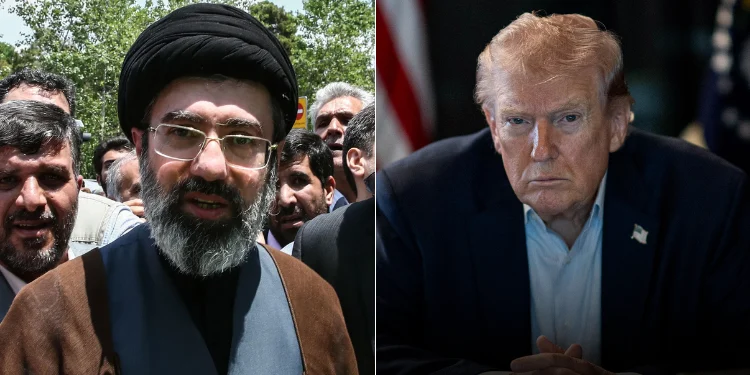
Iranian officials are currently reviewing a US ceasefire proposal, but they have no plans for direct negotiations. Iranian Foreign Minister Abbas Araqchi clarified that while messages have been exchanged through intermediaries, this does not constitute dialogue. “Messages being conveyed through our friendly countries and us responding by stating our positions or issuing the necessary warnings is not called negotiation or dialogue,” Araqchi stated during a recent television interview.
Contradictory Claims from Trump
US President Donald Trump asserted that Iranian leaders are eager to negotiate a deal to end nearly four weeks of fighting. He claimed, “They want to make a deal so badly, but they’re afraid to say it because they will be killed by their own people.” However, Trump did not specify who the U.S. is negotiating with in Iran, especially after the recent deaths of high-ranking officials in the conflict.
The ongoing conflict has led to severe economic and humanitarian consequences worldwide. Fuel shortages are spreading, prompting businesses and governments to scramble for solutions. The Strait of Hormuz, a vital passage for global oil and liquefied natural gas, remains effectively closed. This closure has caused rising costs and disrupted supply chains, affecting industries from airlines to agriculture.
Sultan Al Jaber, CEO of Abu Dhabi’s state oil company ADNOC, condemned Iran’s actions as “economic terrorism.” He emphasized, “When Iran holds Hormuz hostage, every nation pays the ransom.” The World Food Program warns that tens of millions could face acute hunger if the conflict persists into June.
US Proposal Details
The US has sent a 15-point proposal to Iran via Pakistan, which includes reopening the Strait of Hormuz, reducing Iran’s enriched uranium stockpiles, and curbing its missile program. However, a senior Israeli defense official expressed skepticism about Iran’s willingness to accept these terms. Israel insists that any agreement must preserve its right to conduct pre-emptive strikes.
As tensions rise, missile exchanges continue across the Gulf. The Israeli military reported a series of strikes targeting Iranian infrastructure. Admiral Brad Cooper, head of US Central Command, stated that the US has targeted over 10,000 sites in Iran, significantly degrading its military capabilities.
The Pentagon is preparing to deploy thousands of airborne troops to the Gulf, adding to the existing Marine contingents. This move aims to provide President Trump with more options for a potential ground assault.
Meanwhile, UN Secretary-General Antonio Guterres warned that the world is “staring down the barrel of a wider war.” He urged nations to prioritize diplomacy over escalation, stating, “It is time to stop climbing the escalation ladder – and start climbing the diplomatic ladder.” As the situation develops, the international community watches closely, hoping for a resolution to the ongoing conflict.