
Hormuz Blockade: Trump Threatens NATO, Presses China amid Allies Reluctance
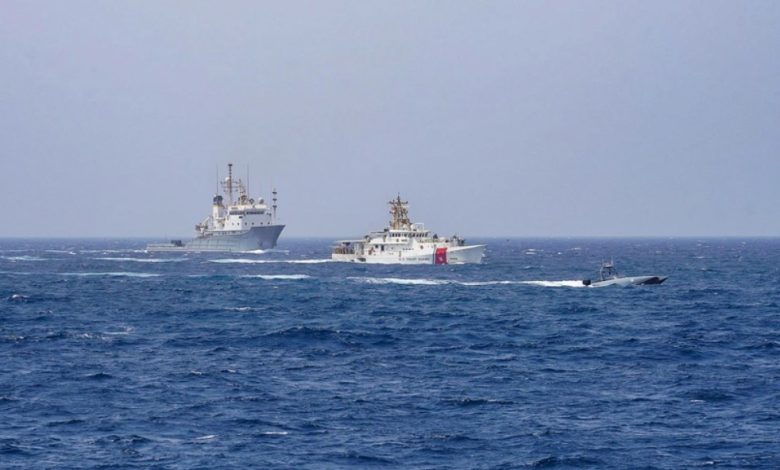
US President Donald Trump is seeking help from other countries to reopen the Strait of Hormuz and ease the soaring oil prices that resulted from the closure of the strategic waterway.
Trump issued a warning to NATO allies and suggested he may postpone his upcoming visit to China, increasing pressure on countries to secure passage through Hormuz as Brent Crude hit $104.73 per barrel on Monday.
However, Trump’s calls were met with reluctance, as allies Japan and Australia said they are not sending warships to the Strait, while Europeans and South Korea are still considering the request.
Reopening Strait of Hormuz
Over the past days, Trump has made several calls for countries to provide help for the US navy in reopening the Strait of Hormuz and securing oil tankers through the vital maritime corridor amid increased Iranian threats.
“I’m demanding that these countries come in and protect their own territory because it is their territory. It’s the place from which they get their energy,” Trump told reporters aboard Air Force One on the way from Florida to Washington.
Later, in a post on Truth Social, Trump said he hopes that “China, France, Japan, South Korea, the UK, and others” will send warships to secure the Strait of Hormuz.
Trump reiterated his demand in another post, arguing that “Countries of the World that receive Oil through the Hormuz Strait must take care of that passage.” He added that the US will coordinate with these countries to streamline shipping through the strait.
NATO Threat
Trump threatened NATO with a “very bad future” if European countries did not contribute warships to help in reopening the Strait of Hormuz.
“We have a thing called NATO. We’ve been very sweet. We didn’t have to help them with Ukraine. Ukraine is thousands of miles away from us . . . But we helped them. Now we’ll see if they help us,” he said in an interview with the Financial Times.
The US President suggested that NATO countries should send minesweepers and military units to counter Iranian attacks that have paralyzed traffic through the critical waterway.
“We’re hitting them very hard. They’ve got nothing left but to make a little trouble in the strait but these people are beneficiaries and they ought to help us police it. We’ll help them. But they should also be there,” Trump said.
“If there’s no response or if it’s a negative response I think it will be very bad for the future of NATO,” he warned.
Allies Reluctance
US allies have been reluctant to send warships to the region, amid concerns of being dragged to the conflict. Japan, which gets 95% of its oil from the Middle East, said it had no plans to send ships.
“We have not made any decisions whatsoever about dispatching escort ships. We are continuing to examine what Japan can do independently and what can be done within the legal framework,” Japanese Prime Minister Sanae Takaichi told the parliament on Monday.
Similarly, Australia rejected Trump’s request. “We won’t be sending a ship to the Strait of Hormuz. We know how incredibly important that is, but that’s not something that we’ve been asked or that we’re contributing to,” Australian Transport Minister Catherine King said during an interview with ABC on Monday.
South Korea, for its part, said it would carefully consider Trump’s request.
European Discussions
European governments have been cautious in responding to Trump’s demand. The European Union (EU) will meet in Brussels on Monday to discuss two types of naval missions to help reopen the Strait of Hormuz.
“EU Foreign Ministers will discuss how to better protect shipping in the region, including contributions from our Aspides naval mission,” the EU’s foreign policy chief, Kaja Kallas, said.
Aspides is an EU naval mission operating in the Red Sea since February 2024 in response to Houthi attacks on international shipping.
While acknowledging that Iran poses a threat to the freedom of shipping and global economy, German Foreign Minister Johann Wadephul said that he was “very skeptical” that expanding the EU’s naval mission would improve security, ruling out Germany’s participation.
Meanwhile, Britain and Canada discussed the need to cooperate with the US to reopen the Strait of Hormuz. Trump previously criticized the UK for not cooperating in the Iran operation, saying that London only offered to send warships after the US undermined Tehran’s military capabilities.
Pressing China
Trump has also ramped up pressure on China to take part in reopening the Strait of Hormuz. During his interview with the Financial Times, the US President suggested he may delay his trip to China, during which he will meet with Chinese leader Xi Jinping later this month.
“I think China should help too because China gets 90% of its oil from the Strait,” Trump said, adding that he prefers to know Beijing’s position before his visit.
The Strait of Hormuz is a crucial waterway linking the Arabian Gulf with the Gulf of Oman and the Arabian Sea, serving as the main shipping route for crude oil from the Gulf region to the rest of the world.
Around fifth of daily global oil supplies (about 20 million barrels per day), as well as fifth of global liquefied natural gas (LNG) supplies, pass through Hormuz, according to the US Energy Information Administration (EIA).