US-UK Dispute Resurfaces as Trump Says Britain’s Help Not Needed in Iran War
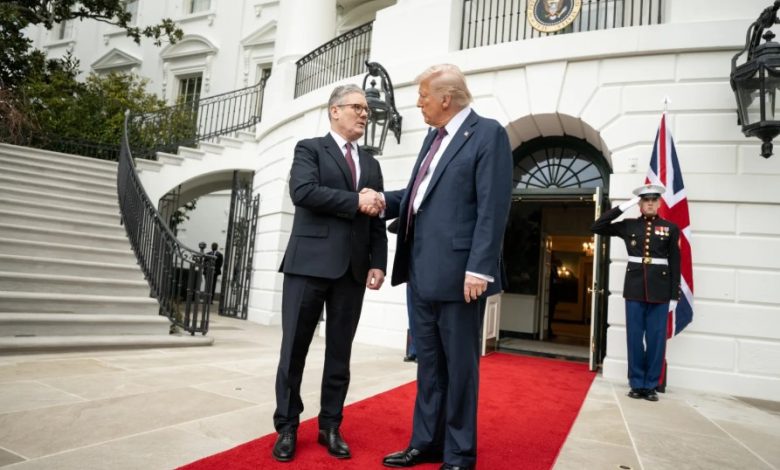
Tensions renewed between Washington and London after US President Donald Trump criticized UK Prime Minister Keir Starmer over the lack of immediate British support for the US in its war on Iran.
Trump’s criticism came as the UK permitted the US to use its military bases for defensive operations against Iran, despite London’s initial rejection.
Trump Rebukes Starmer
Trump said that the UK was considering deploying two aircraft carriers to the Middle East to support US operations against Iran. However, he slammed Starmer for the late decision, saying that Washington no longer needs London’s help.
“The United Kingdom, our once Great Ally, maybe the Greatest of them all, is finally giving serious thought to sending two aircraft carriers to the Middle East. That’s OK, Prime Minister Starmer, we don’t need them any longer – But we will remember. We don’t need people that join Wars after we’ve already won!” Trump posted on Truth Social on Saturday.
The US carried out a joint campaign with Israel against Iran on February 28, eliminating Tehran’s leadership and top commanders in a series of airstrikes that dismantled Iran’s air defenses.
In response, Iran launched retaliatory strikes targeting Israel and US bases and assets across the region, violating the sovereignty of several Gulf countries including Saudi Arabia, Qatar, Bahrain, Kuwait and the UAE.
Trump doubled down on his remarks, saying that the US does not need UK bases in this stage of the war. “It’s not the right time. It would have been nice to have them two weeks ago,” he told reporters aboard Air Force One on Saturday.
British Bases for Defensive Operations
Trump’s rebuke came after the UK’s decision to allow US forces to use RAF Fairford base in Gloucestershire and Diego Garcia in the Indian Ocean for defensive purpose, although Starmer ruled out joining offensive action.
Last week, Starmer agreed to a US request to use British military bases for defensive strikes against Iranian missile sites. He said that the reason behind accepting the request was the “collective self-defense” of allies and protecting British lives, adding that the US would use British bases for the “specific and limited defensive purpose” of destroying Iran’s missiles “at source.”
On Saturday, the UK Defense Ministry confirmed that the US has started using the UK bases for “specific defensive operations” to prevent Iran from firing missiles into the region.
Furthermore, British officials said they were considering the deployment of an aircraft carrier to the Middle East in light of the recent military escalation, according to the Guardian.
“HMS Prince of Wales has always been on very high readiness and we are increasing the preparedness of the carrier, reducing the time it would take to set sail for any deployment,” a spokesperson for the UK Defense Ministry said.
UK Reluctance to Join War
The UK has maintained a cautious stance regarding the US strikes on Iran, declining to join the wider offensive campaign in the Middle East. In an opinion piece for the Sunday Mirror, Starmer noted that “at moments like this, the country needs seriousness, not political games,” adding that his government “is focused on protecting British people at home and abroad.”
Starmer agreed to let the US forces use British bases after a suspected Iranian drone hit the UK’s Akrotiri base in Cyprus. Yet, he defended his initial position, saying that the UK government “does not believe in regime change from the skies,” according to BBC.
“President Trump has expressed his disagreement with our decision not to get involved in the initial strikes, but it is my duty to judge what is in Britain’s national interest,” he told British MPs.
US Criticism
Trump has repeatedly expressed frustration with Starmer. In an interview with the Daily Telegraph on Monday, Trump said that Starmer’s decision to allow US forces to use UK bases “took far too long.”
A day later, he said the UK Prime Minister “has not been helpful” in an interview with the Sun, telling reporters on the same day that “this is not Winston Churchill that we’re dealing with.”
Meanwhile, US State Secretary Marco Rubio indirectly criticized the UK and countries that refused to join the US-Israeli strikes on Iran, such as Spain.
“At a time when we have learned that an ally, when you need them, may not be there for you, these are countries that have been there for us. We want you to see that when you are a friend and ally to the United States, it is a good thing and it is reciprocated back the other way,” he said on Saturday.
Despite this, Starmer insisted that the special relationship with the US remains intact. “Look, the special relationship is in operation right now. We’re sharing intelligence on a 24/7 basis in the usual way. That is the special relationship,” he told reporters on Thursday.