The US has officially started utilizing British military bases for defensive operations against Iran during the escalating Middle East conflict, as the United Kingdom government announced on Saturday this significant change in strategic cooperation between the two historic allies.
Britain’s Ministry of Defence confirmed that the US military began using specific sites to prevent Iran from firing missiles. These operations aim to stabilize the region following the outbreak of hostilities between the US-Israeli coalition and Iran last week. Initially, Prime Minister Keir Starmer hesitated to provide any military support, which reportedly frustrated US President Donald Trump.
However, Starmer eventually approved a US request to utilize two vital British military installations for a strictly limited defensive purpose. These locations include RAF Fairford in Gloucestershire and the strategically critical Diego Garcia base within the Chagos Islands.
Heightened Activity at RAF Fairford
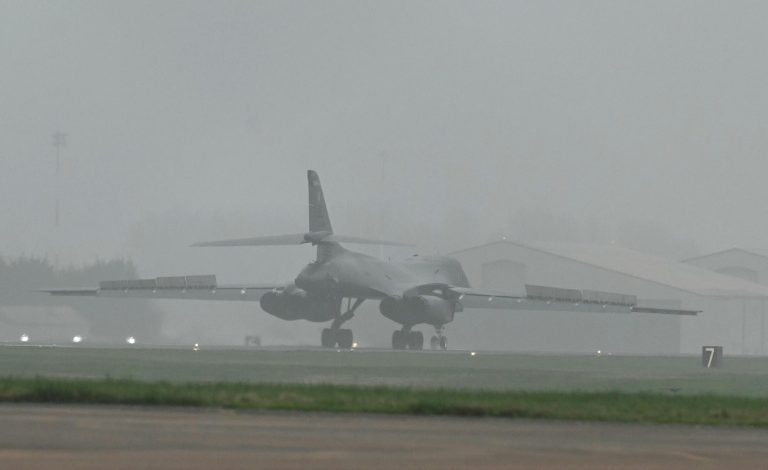
Witnesses at RAF Fairford reported an immediate increase in military presence following the official announcement on Saturday morning. An AFP photographer observed a US Air Force B-1 Lancer bomber landing at the Gloucestershire site during the afternoon. Furthermore, an American C-5 Galaxy transport plane sat on the runway as anti-war protesters gathered outside the base gates.
This military activity marks a sharp reversal from Starmer’s earlier stance, which had previously strained relations with the White House. President Trump recently mocked the Prime Minister’s initial reluctance, suggesting that Starmer lacked the resolve of Winston Churchill.
Political Pressures and Public Sentiment
Starmer, a former human rights lawyer, defended his original caution by emphasizing the necessity of a lawful military basis. He insists that he changed his position only because Iranian drone and missile strikes now directly threaten British interests. Nevertheless, many Labour lawmakers remain wary of foreign entanglements due to the lingering political shadow of the 2003 Iraq War.
Domestic polling suggests that the British public remains deeply skeptical about entering another conflict in the Middle East. A recent Survation poll indicates that 56% of Britons supported Starmer’s initial decision to avoid involvement in the strikes. Consequently, the Prime Minister must now balance his international obligations with a cautious electorate and a divided political party.