Israel Suffers Critical Interceptor Shortage amid Concerns over US Stocks: Reports
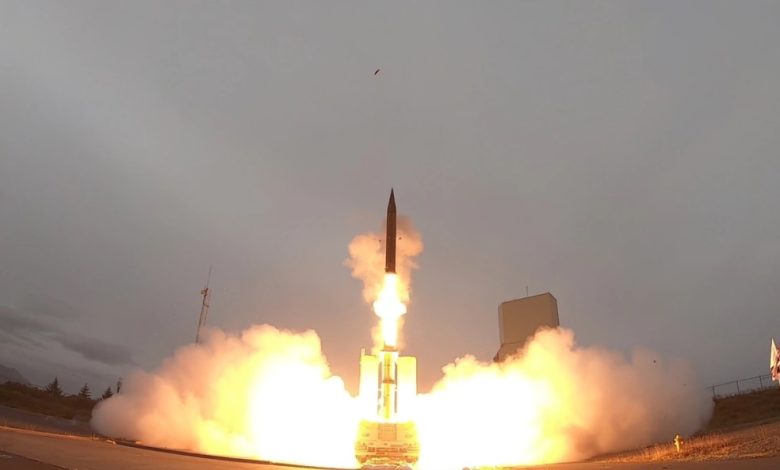
Israel has informed the US of a critical shortage in its interceptor stocks amid the raging war with Iran.
The US and Israel launched a joint attack on Iran on February 28, 2026, killing its Supreme Leader Ali Khamenei and several senior commanders. Iran has retaliated by targeting Israel and US assets across the region.
Interceptors Depleted
Israel conveyed to the US this week that its ballistic missile interceptors are running critically low, Semafor reported citing US officials.
The Israeli interceptor stock was already low, as a result of the 12-day war with Iran in June 2025. During the current conflict, Iran is using cluster munitions, which may strain the interceptors, according to CNN.
The US knew of this interceptors’ shortage for months. “It’s something we expected and anticipated,” a US official said. However, it remains unclear whether Washington will support Israel with interceptors.
Although Israel has other defensive options to down Iranian missiles, such as fighter jets, interceptors have proved their effectiveness in repelling against long-range missiles. Meanwhile, the Iron Dome is dedicated to neutralizing short-range missiles.
Commenting on Semafor’s report, Israeli military officials dismissed claims about interceptor shortage, saying that they are “prepared and ready to handle any scenario,” reported the Times of Israel.
US Stockpiles
Despite multiple media reports about the depletion of US interceptor stocks, the American official dismissed these claims. “We have all that we need to protect our bases and our personnel in the region and our interests,” the US official said, noting that Israel is working to find solutions to address their shortage.
In a statement to Semafor, Chief Pentagon spokesman Sean Parnell emphasized that the Defense Department “has everything it needs to execute any mission at the time and place of” Trump’s choosing.
Furthermore, White House press secretary Karoline Leavitt stressed that the US has “more than enough” of interceptors to achieve Trump’s goals in Iran and elsewhere.
“The United States Military’s accomplishments alongside the Israel Defense Forces speak for themselves – Iranian drone attacks are down 95 percent, ballistic missile attacks are down 90 percent, and the regime’s dismal situation will only get worse,” she told Semafor.
Concerns over Interceptors
The ongoing war with Iran has raised concerns over the US interceptor stockpile. The joint US-Israeli attack has triggered an Iranian response involving swarms of suicide drones and a variety of short- and medium-range ballistic missiles.
As reported by the Wall Street Journal on March 1, the Pentagon is currently deploying THAAD, Patriot, and Standard Missile interceptors at a rate far exceeding their replacement capacity.
During the 12-day war, the US used more than 150 THAAD interceptors, nearly quarter of US inventory at the time, according to the Center for Strategic and International Studies (CSIS).
In light of this, Kelly Grieco, a senior fellow at the Stimson Center think-tank, warned that the US and Israel could run out of interceptors before Iran runs out of missiles.
Israeli estimates put Iran’s ballistic missiles at 2,500, “almost certainly more than the combined ballistic missile interceptor totals of Israel and the United States,” Grieco told AFP.
Conflict Duration
Since the beginning of the war, Trump and his administration officials have issued contradictory claims regarding the duration of the US-Israeli operation. On March 1, Trump suggested it was intended to take “four to five weeks.”
However, by March 6, Trump said the war would only end with Iran’s “unconditional surrender.” On March 9, he shifted his rhetoric again, saying that the war was “very complete, pretty much” and “very far ahead of schedule.”
Most recently, on March 14, Trump announced that the US “has beaten and completely decimated Iran, both Militarily, Economically, and in every other way.”
Meanwhile, Israeli officials said on Saturday that the military has prepared for a long war with Iran, which could last for several more weeks.
This ambiguity has raised alarms over the duration of the conflict and its impact on the consumption of interceptors. In this context, Joe Costa, director of the Atlantic Council’s defense program, noted that a prolonged conflict with Iran could severely deplete US stocks of critical air defense interceptors needed for other priorities.
“It depends on how effective the US and Israel will be in neutralizing Iran’s launch capability of missiles and drones,” he said.