Ancient DNA Secrets: Saudi Cave Reveals 1,800-Year-Old Cheetah Mummies

Scientists have made a groundbreaking discovery in a cave near Arar, Saudi Arabia, where they uncovered the mummified remains of cheetahs dating back 1,800 years. This remarkable find includes seven mummies and 54 additional cheetah bones, with researchers believing this cave served as a denning site for female cheetahs, providing a unique environment that naturally mummified the bodies.
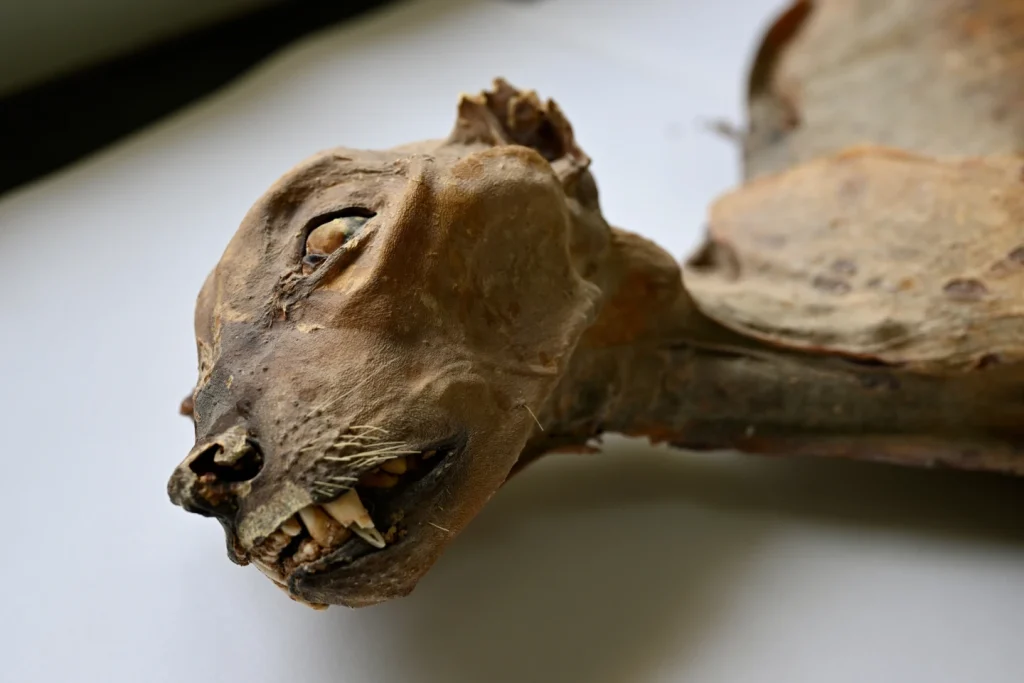
Joan Madurell-Malapera from Italy’s University of Florence expressed astonishment at the discovery, stating, “It’s something that I’ve never seen before.” The mummification process, which prevents decay, has preserved these large cats in a way rarely seen outside of Egypt. The mummies exhibit cloudy eyes and shriveled limbs, resembling dried husks.
For the first time, scientists successfully extracted DNA from these mummies, with genetic analysis revealed that the remains are closely related to modern cheetahs from Asia and northwest Africa. This information could significantly aid efforts to reintroduce cheetahs to the Arabian Peninsula, where they have been extinct for decades due to habitat loss and unregulated hunting.

Significance of the Findings
Consequently, the discovery of these mummified cheetahs sheds light on a lost population that once roamed the Arabian Peninsula. Ahmed Boug, a study author from the National Center for Wildlife in Saudi Arabia, noted that finding such intact evidence of ancient cheetahs is “entirely without precedent.” The dry conditions and stable temperatures of the cave likely contributed to the preservation of these remains.

Moreover, the discovery offers invaluable insights into the past, highlighting the rich history of the regions and the ongoing efforts of scientists and archaeologists to uncover and understand our shared heritage. As researchers continue to analyze these findings, they pave the way for future conservation and historical studies.