
Netanyahu Stresses Opposition to Palestinian State ahead of UN Vote on Gaza Plan
The Israeli Prime Minister, Benjamin Netanyahu, and members of his government reiterated on Sunday their opposition to the establishment of a Palestinian State.
This came a day ahead of the UN Security Council (UNSC) vote on a US-backed draft resolution to endorse President Donald Trump’s peace plan for Gaza, which leaves the door open to future Palestinian statehood.
Israeli Opposition
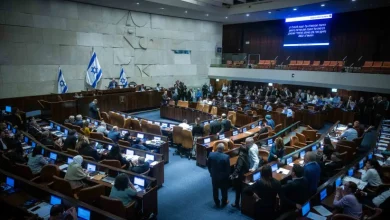
During a cabinet meeting on Sunday, Netanyahu stressed his opposition to Palestinian statehood, vowing to block any attempt to establish a state for the Palestinians, reported AFP.
“Our opposition to a Palestinian state on any territory has not changed one bit,” he said, emphasizing that he has been averting any progress toward a Palestinian State for decades despite internal and external pressures.
Netanyahu has been facing increased pressure from his far-right coalition members, urging him to take a tough stance on the calls for Palestinian independence. This included Finance Minister Bezalel Smotrich, who criticized Netanyahu for failing to respond to the recent wave of western recognitions of Palestinian statehood.
“Formulate immediately an appropriate and decisive response that will make it clear to the entire world – no Palestinian state will ever arise on the lands of our homeland,” Smotrich wrote on X.
Netanyahu, for his part, told his cabinet that “I do not need affirmations, tweets, or lectures from anyone.”
Moreover, several Israeli ministers, including Defense Minister Israel Katz, Foreign Minister Gideon Saar and National Security Minister Itamar Ben Gvir, voiced strong opposition to Palestinian statehood, although they did not explicitly mention the draft resolution.
UNSC Gaza Resolution
The UNSC members will vote Monday on a US proposal that authorizes the establishment of an International Stabilization Force (ISF) with a mandate to operate in Gaza for at least two years. This force will work with Israel and Egypt and newly trained Palestinian police to help maintain security and demilitarize the Gaza Strip.
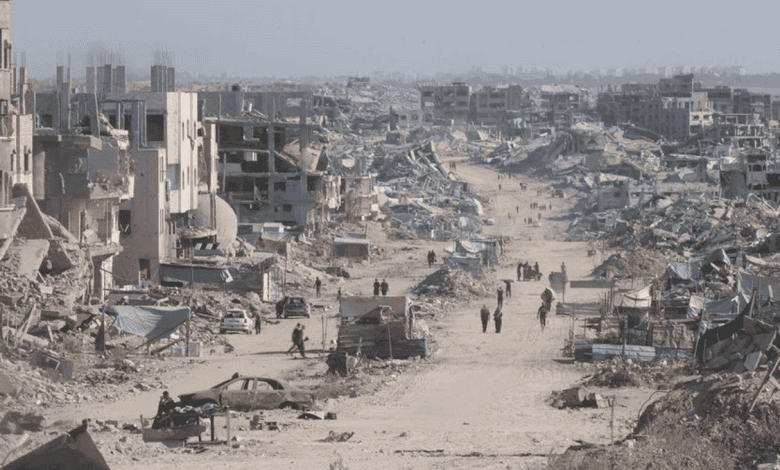
The resolution also authorizes the formation of the Board of Peace” – a transitional governing body with a two-year mandate, tasked with overseeing funding coordination and establishing the blueprint for Gaza’s reconstruction.
In its latest version, the draft resolution leaves the door open to a possible Palestinian State. Upon the completion of the Palestinian Authority’s reforms and Gaza redevelopment, “the conditions may be in place for a credible pathway to Palestinian self-determination and statehood,” it says.
“The US will establish a dialogue between Israel and the Palestinians to agree on a political horizon for peaceful and prosperous coexistence,” the resolution adds.
In order to pass, the draft resolution needs 9 votes and no veto by any of the UNSC’s permanent members (Russia, China, France, Britain and the US).
Regional Backing
The resolution has the backing of regional countries, after the US revised it with stronger language on Palestinian self-determination. In a joint statement on Friday, the US, Saudi Arabia, Egypt, Qatar, the UAE, Indonesia, Pakistan, Jordan, and Türkiye voiced their “joint support for the Security Council Resolution currently under consideration.”
They also emphasized that “this is a sincere effort, and the Plan provides a viable path towards peace and stability, not only between the Israelis and the Palestinians, but for the entire region,” calling for the resolution’s “swift adoption.”
Furthermore, the US State Secretary, Marco Rubio, praised Trump’s peace plan for Gaza, expressing hope that the UNSC would adopt the resolution. “I think we’re making good progress on the language of the resolution, and hopefully we’ll have action on it very soon. We don’t want to lose momentum on this,” he said on Wednesday.
Hamas Position
In response to the US proposal, Hamas and the Palestinian factions said the resolution is biased toward Israel and deprives the Palestinians of their right to handle their own affairs, calling the resolution an attempt to impose an international mandate on Gaza, according to the Associated Press (AP).
In a statement on Sunday, the Palestinian groups demanded the exclusion of Israel from the ISF and said that the force must be under the direct supervision of the UN. Moreover, the groups rejected any mention of the disarmament of Gaza in the resolution.
Russia Counter-Draft
Voicing opposition to the US proposal, Russia has presented a competing draft to the UNSC members, which excludes the creation of the Board of Peace or the immediate deployment of an international force in Gaza.
However, the Russian proposal includes a stronger language regarding the establishment of a Palestinian State, according to a draft seen by AFP. It asks the Council to express its “unwavering commitment to the vision of the two-state solution.”
Moscow justified its counter-proposal, saying that “the rationale behind Russia’s draft resolution on Gaza is to enable the Security Council to define clear modalities for deploying a peacekeeping contingent and establishing administration in Gaza, while ensuring that these modalities are fully in line with universally recognized international legal standards.”
Additionally, it said that “it is also crucial to preserve the international legal framework for the Middle East peace process, which has been developed over many decades on the basis of the two-State solution.”