From Saudi Arabia to the World: KAUST Launches World’s Largest Coral Restoration Facility
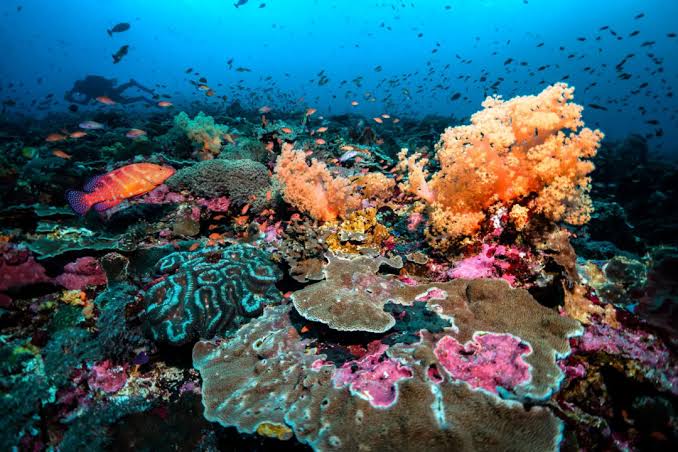
Driving the news: King Abdullah University of Science and Technology (KAUST) has opened an advanced coral restoration facility on the Red Sea coast, and the university calls it the largest of its kind in the world. The step moves reef recovery from small projects to large-scale operations.
Why it matters: The KAUST Coral Restoration Initiative (KCRI) aims to restore 100 hectares of Red Sea reefscape by 2040. Consequently, Saudi Arabia now has a working model that other countries can adopt. The message is simple: from Saudi Arabia to the world.
What KAUST Opened
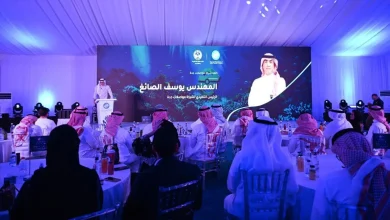
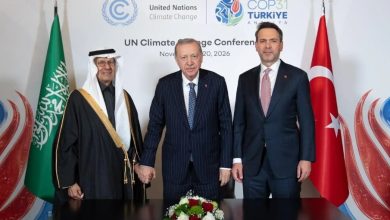
KAUST announced the opening at the COP31 climate conference in Antalya, Turkey. The facility brings together advanced technology and engineering solutions. Scientists and engineers developed them through years of research and collaboration. As a result, teams can now meet the scientific and operational demands of restoring reefs at scale.
The site includes a land-based coral nursery and an advanced research center with a capacity of up to 360,000 corals a year. That figure marks a major leap. The pilot nursery at Hadda Beach in NEOM began trials in March 2024 and covers 1,000 square meters. It produces about 40,000 corals a year. The new facility therefore multiplies output ninefold.
How the Initiative Works
KCRI rests on four pillars. They are a large land-based nursery, sea-based nurseries, more than 50 research programs and an artificial intelligence monitoring system.
The AI layer deserves attention. KAUST uses eCoral, a digital twin of the reef system, to decide where to plant corals and to guide later monitoring. Meanwhile, the team conditions corals to withstand warmer waters before returning them to the reef. The initiative also draws on the Coral Research and Development Accelerator Platform (CORDAP), an international effort that advances coral conservation science.
People matter as much as technology. Saudi scientists, divers and aquarists are building specialised skills in coral cultivation, marine science and reef restoration. Amr Atiah, KAUST’s vice president of campus and community, said he hopes the initiative will draw more young Saudis into the field.
Ian Campbell, senior vice president of KAUST’s National Transformation Institute, set the tone. “Opening the facility is not the finish line,” he said. He added that success will depend on results in the Red Sea, the expertise built in the Kingdom and the benefits for reefs elsewhere.
By the numbers:
- 100 hectares: the Red Sea reefscape KCRI aims to restore by 2040.
- 2 million corals: the planting goal across 100 hectares at Shushah Island by 2030. The island lies roughly 20 km off the NEOM coast.
- 360,000 corals a year: the new facility’s maximum output, compared with 40,000 at the pilot nursery.
- 50+ research programs: the science that backs the restoration work.
- 7 techniques and 5 nursery designs: the options the initiative examined to maximise productivity.
- 84%: the share of the world’s reef area that the 2023–2025 bleaching event affected, according to NOAA, making it the most severe on record.
- 25% and 500 million: reefs support about a quarter of marine species and the livelihoods of more than 500 million people.
- SAR 750 million (about $200 million): the size of the high-tech investment fund in KAUST’s wider strategy, which also produced KCRI. The Crown Prince announced the fund when he launched that strategy. KAUST has not published a separate KCRI budget.
The Science Behind the Plan
KAUST did not start from zero. Its researchers have driven several coral breakthroughs over the past few years.
Probiotics for corals. In 2022, KAUST opened what Arabic media called the world’s first coral “biobooster” village. Professor Raquel Peixoto said her group showed that beneficial bacteria can ease heat stress and disease and even prevent coral death. Her team later built the first coral probiotics village in the Red Sea, a permanent underwater laboratory.
Proof on a real reef. In a September 2026 Cell Reports study, researchers dosed Acropora valida colonies near KAUST during a 2022 heatwave that pushed temperatures to nearly 32°C (90°F). The treated corals kept better photosynthetic performance and pigmentation than untreated corals.
Protection beyond the coral. A separate 18-month field test showed that probiotics can buffer neighbouring reef communities during an extreme marine heatwave. Earlier, a January 2025 study revealed that microorganisms living inside corals help determine their survival at soaring temperatures.
Faster growth in the nursery. At the pilot site, staff use micro-fragmentation techniques and merge fragments to speed growth and boost survival.
Peixoto calls the Red Sea “a living laboratory.” Its corals survive in some of the world’s warmest and saltiest waters, so they offer lessons for reefs elsewhere. However, she also urges caution. Probiotics cannot replace action on the root causes of warming seas, she stresses.
What’s next: Time matters as scientists warn that a strong El Niño, forecast to intensify through early 2027, could expose weakened reefs to renewed heat stress. In response, KCRI will keep scaling its nurseries, testing heat-tolerant corals and refining its AI models.
The project also supports national goals. The Saudi Green Initiative aims to protect 30% of the Kingdom’s land and sea areas by 2030. Moreover, Jerry Thomas, KCRI’s head of strategy and operations, has credited the team’s dedication and passion for the 100-hectare ambition near Shushah Island. He said the effort could reach even further.
Carlos Duarte, a KAUST distinguished professor and CORDAP executive director, calls KCRI a beacon of hope for the Red Sea and a potential model for reef restoration worldwide. In short, the opening turns years of research into a living, scalable system.