Protecting Two-State Solution: Saudi Arabia Leads Rejection of Israeli E1 Plan
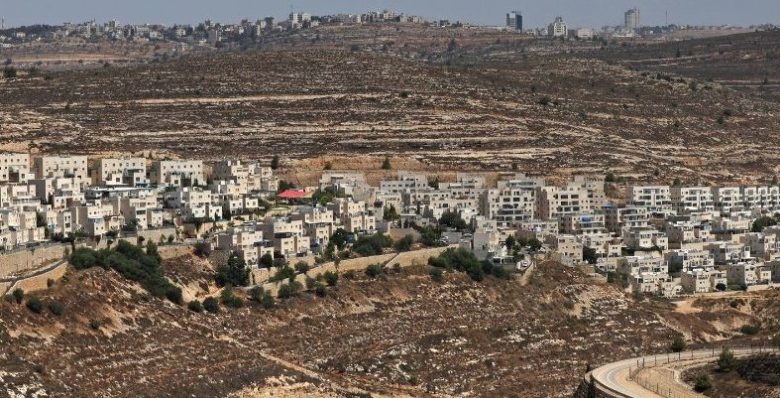
Saudi Arabia, alongside 7 Islamic nations, has drawn the line against Israel’s E1 settlement plan in the occupied West Bank.
The Israeli settlement expansion threatens the two-state solution – an internationally-backed initiative that envisions an independent Palestinian State co-existing peacefully alongside Israel.
A Unified Islamic Stance
The Big Picture: Saudi Arabia, Jordan, the UAE, Indonesia, Pakistan, Türkiye, Qatar, and Egypt issued a joint statement on Friday, August 21, 2026, strongly condemning Israel’s illegal settlement expansion in the Occupied Palestinian Territory and denouncing escalating violence against Palestinian civilians and property.
Between the Lines: The foreign ministers of the eight nations voiced their categorical rejection of the “E1” settlement plan and related settlement activities east of occupied East Jerusalem, warning that this scheme marks a dangerous escalation that undermines the geographical contiguity of the Occupied Palestinian Territory and threatens the viability of an independent Palestinian State along the 1967 borders, with East Jerusalem as its capital.
This stance aligns with Saudi Arabia’s firm position that the only path to achieving a just and comprehensive peace is the launch of a serious political process leading to the implementation of the two-state solution.
Israel’s E1 Settlement Plan
The Deep Dive: Israel has moved forward with the E1 settlement project, inviting bids for the construction of more than 1,200 housing units in E1 near Jerusalem. This plan aims to divide the occupied West Bank into north and south, severing the territorial contiguity of a future Palestinian state. It will also separate East Jerusalem from the rest of the West Bank.
Why It Matters: According to international consensus, East Jerusalem is the capital of a future Palestinian State, based on the 1967 borders. Israeli settlement expansion violates relevant UN Security Council resolutions, most notably Resolution 2334 (2016), which demands that Israel cease settlement activities in the occupied West Bank, including East Jerusalem, and the advisory opinion of the International Court of Justice (ICJ) affirming the invalidity of annexing the occupied Palestinian territories.
Threatening Peace Efforts
State of Play: The joint statement of the eight Arab and Islamic nations warned that the Israeli settlement expansion directly threatens international peace efforts, particularly US President Donald Trump’s Comprehensive Plan, which unequivocally rejects annexation and forced displacement, as well as Trump’s firm commitment to not allow annexation of the West Bank. It also emphasized that the two-state solution is the only viable path towards a just, comprehensive and lasting peace.
Backstory: Earlier in August, Jordan hosted a Ministerial Meeting in Support of Jerusalem and Its Holy Sites to discuss the dangerous and unprecedented Israeli escalation in the occupied city of Jerusalem and its Islamic and Christian holy sites, and to launch joint action to confront all illegitimate Israeli measures that are driving the region towards further conflict. In his speech, the Saudi Foreign Minister stressed that protecting Jerusalem is a fundamental pillar of any just and lasting peace. He also expressed the Kingdom’s strong condemnation of Israel’s military violations in Gaza, which pose a direct threat to the Gaza Comprehensive Peace Plan.
Demanding Immediate Action
Zoom In: The foreign ministers of the eight nations warned that Israeli practices risk escalating tensions and jeopardize prospects for lasting peace and stability in the region.
The Demands: The ministers outlined clear demands to maintain regional security and protect Palestinian rights:
- Accountability: Support all efforts aimed at ensuring accountability, including sanctions against entities/individuals facilitating illegal settlement activities and an end to financial backing for expansion.
- Halting Settlement Expansion: Immediate action to stop the E1 settlement plan and revoke all administrative and construction steps taken under it.
- Rejecting Demographic Alteration: Categorical rejection of measures aimed at altering the geographic and demographic character of the Occupied Palestinian Territory.
- Immediate Action: A call for the UN Security Council and international community to fulfill their responsibilities and take urgent and effective measures to halt illegal settlement expansion, and to ensure the protection of the Palestinian people and their rights, including their right to self-determination, and realizing their independent state.
Saudi Arabia’s Firm Stance
The Context: Riyadh has repeatedly reiterated its categorical rejection of any attempts to alter East Jerusalem’s legal and historical status quo or its historic Islamic and Christian identity, stressing that East Jerusalem is the capital of Palestine and emphasizing that all unilateral measures, including settlement construction and land confiscation, are null and void and generate no legal right or factual reality.
What He Said: “Protecting (Jerusalem) and safeguarding its historical and legal status is one of the fundamental keys to achieving a just and lasting peace, and to building a future defined by security, stability, and prosperity for all peoples of the region.” – Prince Faisal bin Farhan, Saudi Arabia’s Foreign Minister.
Mobilizing Efforts
The Anchor: For decades, the Kingdom has been a steadfast supporter of Palestinian rights, most notably the establishment of an independent and sovereign Palestinian State. To this end, Saudi Arabia launched several initiatives to resolve the longstanding Palestinian-Israeli conflict and promote regional peace and stability.
- March 2002: Launched the Arab Peace Initiative which called for the normalization of relations between Arab states and Israel in exchange for a complete Israeli withdrawal from territories occupied in 1967, a just solution for Palestinian refugees, and establishment of an independent Palestinian State with East Jerusalem as its capital.
- September 2024:Launched the Global Alliance for the Implementation of the Two-State Solution, in partnership with Norway and the European Union (EU).
- July and September 2025:Co-chaired the High-Level International Conference for the Implementation of the Two-State Solution with France at the UN Headquarters, yielding the landmark New York Declaration.
The Impact: The Saudi-led Arab Peace Initiative is widely viewed as the cornerstone for peace efforts to resolve the longstanding Palestinian-Israeli conflict. Moreover, Riyadh’s recent efforts to mobilize international support for the two-state solution drove many Western countries to officially recognize the State of Palestine, while cementing the New York Declaration as the primary international roadmap toward a sovereign Palestinian State.