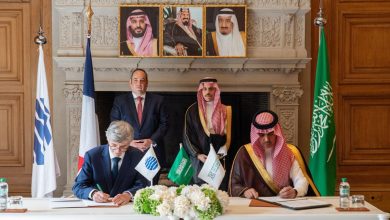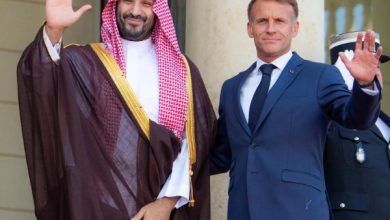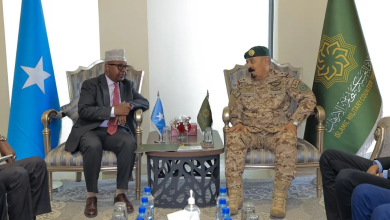
Saudi Arabia and Italy have reaffirmed their alignment on several key issues, most notably the need to safeguard freedom of navigation and maritime security in critical global waterways.
Recent regional military escalations have posed serious threats to shipping through the Strait of Hormuz and the Bab al-Mandab Strait – two strategic chokepoints for world energy and trade. Serving as vital anchors connecting the Red Sea, the Arabian Gulf, and Europe, Riyadh and Rome have stepped in to guarantee maritime security.
Securing Global Maritime Corridors
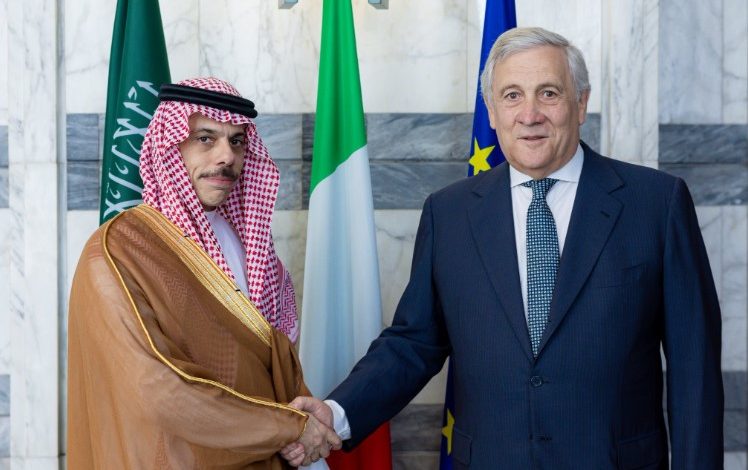
The Big Picture: Saudi Foreign Minister Prince Faisal bin Farhan and his Italian counterpart Antonio Tajani held a bilateral meeting in Rome, during which they discussed the latest regional developments and emphasized the robust strategic partnership between their two countries.
Driving the News: In a joint statement on Wednesday, July 29, 2026, the two ministers stressed the need to safeguard freedom of navigation and maritime security in the Strait of Hormuz, the Red Sea, the Bab al-Mandab Strait, the Gulf of Aden and international sea lanes, in accordance with UNCLOS.
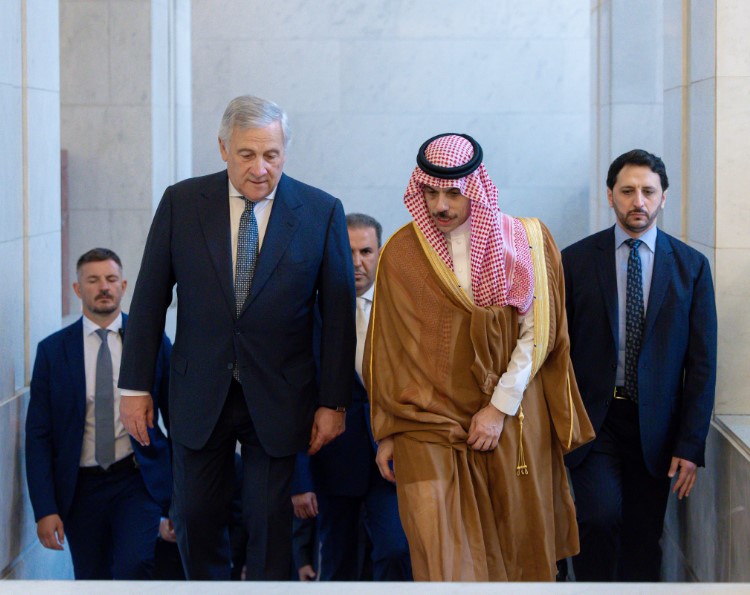
What to Watch: They acknowledged the contribution of the EU naval operation EUNAVFOR Aspides, and of Italy in particular, to protecting merchant shipping. The EU launched the EUNAVFOR ASPIDES military operation in 2024 in response to Houthi attacks against commercial shipping in the Red Sea, Gulf of Aden, and the Indian Ocean.
State of Play: Italy has been an active player in protecting maritime security and freedom of navigation:
- Member of the EU’s EUNAVFOR ASPIDES naval mission.
- Expressing readiness to join a UK-French multinational naval effort to safeguard navigation through the Strait of Hormuz.
Rejecting Unilateral Actions
The Backstory: The recent regional escalation involving the US, Israel, and Iran has posed threats to maritime security amid Iran’s blockade of shipping in the Strait of Hormuz and the Houthi militia threats to target vessels in the Bab al-Mandab Strait, sending shockwaves across global markets.
What They Agreed on: The Saudi and Italian Foreign Ministers condemned the Houthi threats to maritime security and freedom of navigation in the Red Sea and the Bab al-Mandab Strait. They also underscored the strategic importance of the Strait of Hormuz, opposing any unilateral measures that could restrict maritime transit. Moreover, they reaffirmed their commitment to the Rome Coalition on Fertilizer Access and Food Security in Hormuz to strengthen supply chains and food security, particularly for vulnerable countries in Africa and the Mediterranean.
Between the Lines: In response to the recent military tensions, Saudi Arabia has actively stepped in to safeguard global energy and supply chains by adopting a range of decisive measures to ensure operational continuity through its Red Sea ports and deter threats:
- Activating alternative routes.
- Boosting transit services.
- Maintaining uninterrupted shipping line bookings.
- Targeting the Houthi terrorist militia’s military sites from which the attacks against maritime shipping originated.
The Defense Pillar
The Anchor: Riyadh and Rome have a shared commitment to bolstering defense capabilities as a tool to reduce instability and protect civilians and infrastructure. Consequently, they continue to develop their cooperation in the defense industries and advanced technologies.
Key fields of cooperation:
- Training
- Logistics
- Military doctrine
- Technological innovation
- Maritime security
- Protection of critical infrastructure
- Cyberspace
- Outer space
- Advanced systems
What He Said: “Saudi Arabia and Italy are aware that modern, trained armed forces, equipped with advanced technology, are not instruments for confrontation, but for deterrence and stability,” – Guido Crosetto, Italian Defense Minister, wrote on February 7, 2026.
Joint Consultative Committee
The Joint Consultative Committee (JCC) between Saudi Arabia and Italy focuses on defense and security issues. It aims to boost bilateral cooperation in the defense sector, with the ultimate goal of integrating all defense capabilities and resources. Launched in early December 2023, the JCC is co-chaired by the Saudi Chief of General Staff, Gen. Fayyadh Al-Ruwaily, and the Italian Chief of Defense, Gen. Luciano Portolano.
During the JCC’s second meeting in December 2025, both sides agreed to expand joint military exercises and training activities, in addition to increasing the exchange of personnel at military education and training institutions. They also highlighted the importance of boosting military-industrial co-production under Government-to-Government (G2G) frameworks.
Defense Industrial Cooperation
Why It Matters: As Italy recognizes Saudi Arabia as a pivotal stabilization force, defense industrial cooperation between Riyadh and Rome has evolved from traditional off-the-shelf procurement into joint manufacturing, technology transfer, and local supply chain development.

Between the Lines: In line with the objectives of Vision 2030, Saudi Arabia aims to localize more than 50% of its military spending by the end of the decade. These efforts are spearheaded by the General Authority for Military Industries (GAMI), alongside Saudi Arabian Military Industries (SAMI), the Kingdom’s commercial defense champion. By the end of 2024, the localization rate of military spending reached around 25%, surging from 4% in 2018.
Integration Push
Italian defense firms are integrating directly into the Kingdom’s defense ecosystem, under the leadership of GAMI and SAMI.
- Armed Maritime Patrol Aircraft (C-27J Spartan): The Royal Saudi Naval Forces became the global launch customer for the armed maritime patrol variant of Leonardo’s C-27J Spartan. The contract covers four aircraft equipped with anti-submarine warfare (ASW) capabilities, anti-ship missiles, MU90 torpedoes, and ATOS mission surveillance suites to patrol Red Sea and Gulf choke points.
- Next-Gen Combat Air (GCAP Alignment): Italian leadership is actively supporting Saudi Arabia’s inclusion in the trilateral 6th-generation Global Combat Air Program (GCAP) alongside Italy, the UK, and Japan. Strategic MoUs with MISA and GAMI lay the groundwork for joint aerospace R&D, sensor fusion, and uncrewed autonomous systems.
- Helicopter Assembly & MRO: Framework agreements with Leonardo to establish local helicopter assembly lines and in-Kingdom Maintenance, Repair, and Overhaul (MRO) facilities for both military and commercial fleets.
- Naval Warfare & Torpedo Systems: Precision naval defense contracts, including a €200+ million deal with Wass Submarine Systems (a Fincantieri subsidiary) for MU90 lightweight torpedoes and advanced acoustic sensors.
- Space Reconnaissance & Satellite Tech: Government-to-Government (G2G) initiatives covering Low-Earth-Orbit (LEO) satellite constellations equipped with Synthetic Aperture Radar (SAR) for continuous maritime domain awareness and border monitoring.
- Radars & Electronic Warfare: Joint technical development with Saudi entities covering localized sensor arrays, electronic warfare platforms, and counter-unmanned aerial systems (C-UAS).
Political Alignment
The Context: The Saudi and Italian Foreign Ministers met on the sidelines of the 10th meeting of the Global Coalition for the Implementation of the Two-State Solution meeting, which the Kingdom co-chaired alongside Norway and the EU, as well as the meeting of the Co-chairs of the Working Groups of the New York Conference.

The Big Picture: Their joint statement reflects deep diplomatic convergence between Riyadh and Rome, leveraging Saudi Arabia’s regional leadership and Italy’s standing within the G7 and EU to push for de-escalation and long-term peace frameworks.
Gaza and the Palestinian Cause
Go Deeper: Prince Faisal bin Farhan and Tajani reiterated their support for the implementation of UNSC Resolution 2803 and the Comprehensive Plan to End the Gaza Conflict. They called for preserving the ceasefire in Gaza, demilitarizing the Strip, ensuring the unhindered delivery of humanitarian aid, initiating early recovery, and backing the reform efforts of the Palestinian Authority.
Furthermore, they condemned the escalating settler violence across the West Bank, firmly opposing any form of annexation – whether partial, total or de facto – and the forcible displacement of Palestinians.
Yemen
On the Yemen front, they urged all parties to engage in a constructive political process with the aim of reaching a comprehensive and lasting peace settlement. Importantly, they denounced the Houthi attacks targeting Saudi civilian infrastructures and critical facilities, as well as the threats posed to maritime security and freedom of navigation in the Red Sea and the Bab al-Mandab Strait. They also reaffirmed the ongoing commitment to providing essential humanitarian and development aid to support the Yemeni people.
The Economic Aspect
The ministers praised the growing bilateral relations, emphasizing their determination to further strengthen cooperation across all key sectors, expanding on the strategic partnership between Riyadh and Rome.
Between the Lines: They also reviewed the upcoming joint activities related to the next edition of the Salone del Mobile.Milano in Riyadh as an example of fruitful bilateral cooperation in the design sector with a focus on industrial excellence, young talents, innovation and creativity.

Flashback: Saudi Arabia and Italy elevated their ties into a formal Strategic Partnership, establishing the Strategic Partnership Council in January 2025 during a summit in AlUla bringing together Saudi Crown Prince and Prime Minister Mohammed bin Salman and Italian Prime Minister Giorgia Meloni.
Saudi-Italian Economic Partnership:
- Green Hydrogen Corridor: Strategic MoU between the Saudi Ministry of Energy and Italy’s Ministry of Energy establishing a clean energy corridor to export green hydrogen from Saudi giga-projects (like NEOM) to European markets through Italian port terminals.
- IMEC & Port Logistics: Bilateral commitment under the India–Middle East–Europe Economic Corridor (IMEC) framework, with Italy positioning its Mediterranean gateways (Genoa and Trieste) to link Saudi Red Sea logistics hubs to European maritime trade.
- Undersea Digital & Telecom Links: Joint investments in high-capacity undersea fiber-optic cable networks connecting Saudi Arabia’s growing digital infrastructure with European telecommunication hubs through Italy.
- Offshore & Gas Engineering (Saipem): Multi-billion-dollar Long-Term Agreement (LTA) contracts between Aramco and Italian industrial giant Saipem covering offshore engineering, subsea pipeline installations, and gas compression infrastructure across major Saudi fields (including Marjan, Berri, and Safaniya).
- De-carbonization & Clean Energy Tech: Strategic engineering partnerships between Aramco, ACWA Power, and Italian technological leaders to advance Saudi Arabia’s net-zero transition through utility-scale solar infrastructure, green hydrogen production, and commercial carbon capture and storage (CCS) hubs.
- Power Grid Interconnection: Bilateral studies led by Italian grid operators (Terna) and Saudi energy entities exploring grid integration and high-voltage direct current (HVDC) power transmission.
By the Numbers:
- €10 billion+: Initial strategic agreement package signed at the AlUla summit, spanning energy, defense, logistics, and cultural heritage.
- €10+ billion: Annual bilateral trade volume between Saudi Arabia and Italy, making the Kingdom one of Italy’s top trading partners in the MENA region.
- 500+: Italian companies actively operating or investing in Saudi Arabia across infrastructure, energy, defense, and luxury design.