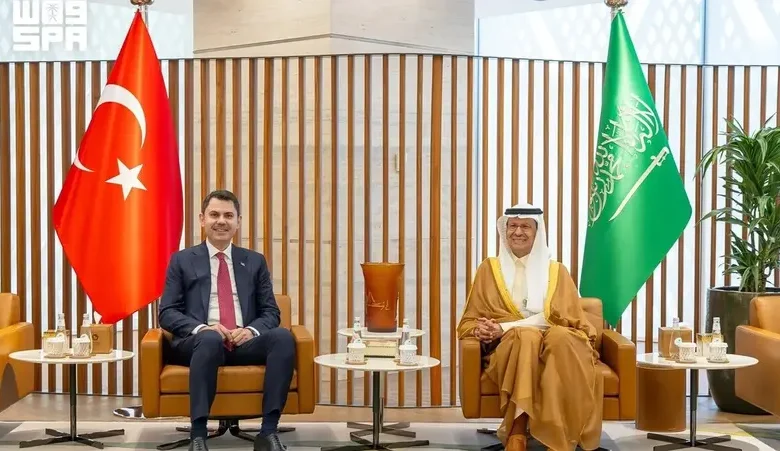
As part of international preparations for the 31st Conference of the Parties to the United Nations Framework Convention on Climate Change (COP31), Saudi Minister of Energy Prince Abdulaziz bin Salman bin Abdulaziz received Murat Kurum, Türkiye’s Minister of Environment, Urbanization and Climate Change and President of COP31, in Riyadh. The meeting reflected both countries’ commitment to strengthening cooperation on climate and energy issues and coordinating efforts ahead of the conference, which will be hosted in the Turkish city of Antalya next November.
The meeting comes at a time of growing international momentum to accelerate the implementation of climate commitments amid increasing challenges related to emissions reduction, climate finance, and energy security. Coordination among influential energy-producing nations is therefore seen as essential to the success of international negotiations and the achievement of practical, implementable outcomes.

During the meeting, both sides discussed ways to strengthen joint efforts in support of the objectives and principles of the United Nations Framework Convention on Climate Change (UNFCCC) and the Paris Agreement. They emphasized the importance of achieving inclusive, balanced, and practical outcomes that take into account the national circumstances of member states while balancing climate protection with economic development and energy security.
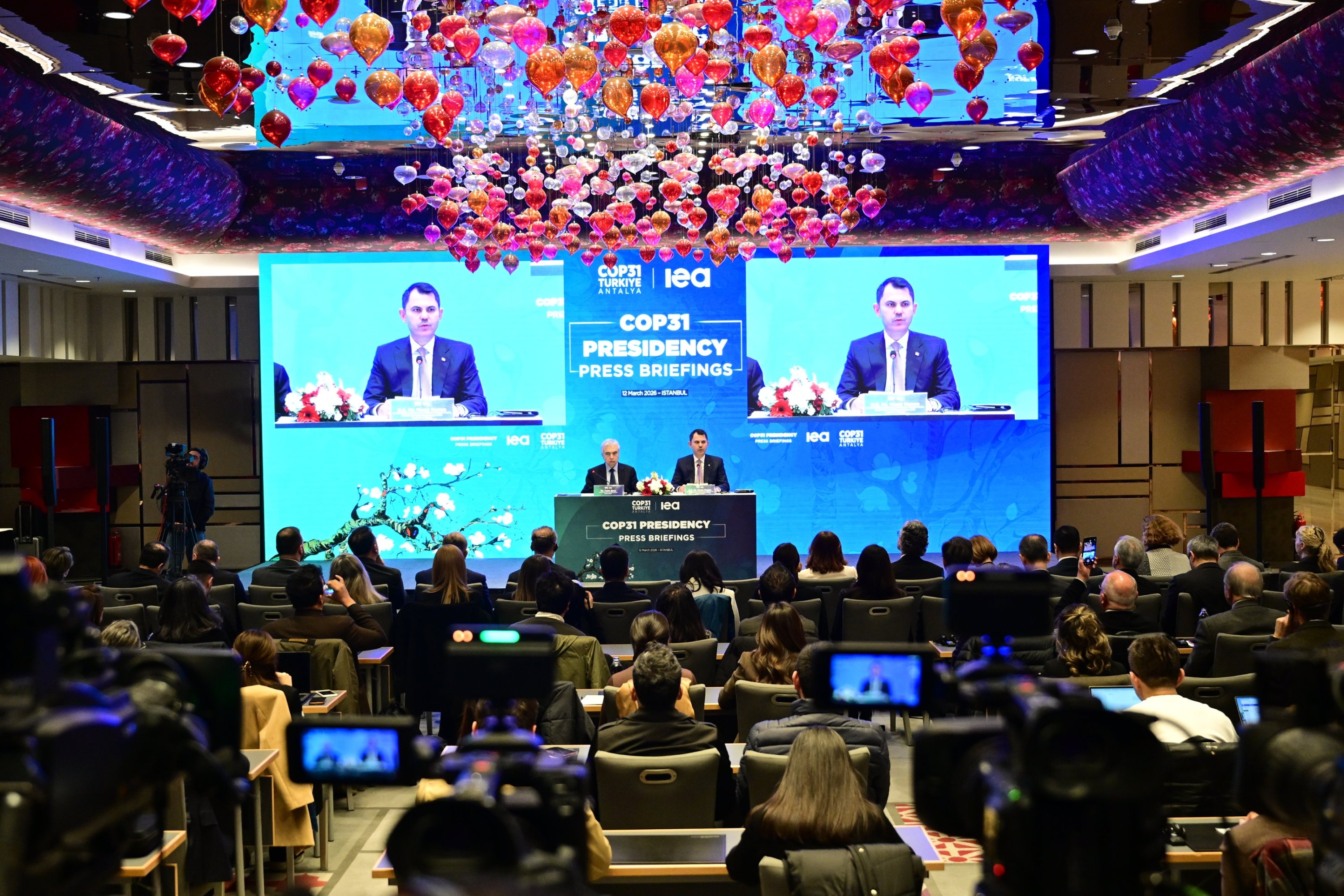
COP
The Conference of the Parties (COP) is the world’s largest international platform for negotiating climate policy. Representatives of member countries meet annually to review progress in implementing the Paris Agreement, discuss ways to accelerate emissions reductions, expand climate finance, support developing countries, and advance technological solutions to mitigate climate change. COP31 is expected to be a significant milestone in monitoring the implementation of international commitments and strengthening cooperation among governments and international institutions in clean energy and innovation.
During the meeting, Prince Abdulaziz bin Salman reviewed Saudi Arabia’s key initiatives to address climate change, foremost among them the Saudi Green Initiative, one of the Kingdom’s flagship sustainability programs. The initiative aims to expand the use of renewable energy, increase afforestation efforts by planting billions of trees, protect natural habitats, and improve energy efficiency, thereby reducing emissions, enhancing quality of life, and promoting sustainable development.
CCE
The meeting also highlighted the Circular Carbon Economy (CCE) approach adopted by Saudi Arabia as a comprehensive and practical framework for managing carbon emissions. The model is based on four key pillars: reducing emissions, reusing carbon, recycling carbon, and removing carbon from the atmosphere using advanced technologies. The Kingdom considers this approach a realistic pathway to achieving climate neutrality while continuing to utilize conventional energy resources more efficiently and sustainably, thereby safeguarding global energy security while supporting the transition to a low-carbon economy.
In this context, both sides reviewed the Kingdom’s progress in clean energy projects. Over recent years, Saudi Arabia has significantly expanded solar and wind energy developments, invested in low-carbon hydrogen production, and advanced carbon capture, utilization, and storage (CCUS) technologies. These projects align with the objectives of Saudi Vision 2030, which seeks to diversify the economy, promote sustainability, increase the share of clean energy in the national energy mix, and maintain the Kingdom’s position as a leading global energy supplier.
Clean Energy Ministerial
The discussions extended beyond national initiatives to include several international and regional programs aimed at accelerating innovation in the energy sector and strengthening intergovernmental cooperation. These included the Clean Energy Ministerial (CEM), an international platform for exchanging expertise and advancing technological solutions to support the energy transition, as well as Mission Innovation, a global partnership dedicated to accelerating research and development in clean energy technologies and increasing investment in innovation. Meetings under these initiatives are scheduled to take place during the final quarter of this year.
The meeting reaffirmed Saudi Arabia’s continued role in supporting international efforts to address climate change through a balanced approach that combines environmental protection, energy security, and sustainable economic development. It also underscored the importance of cooperation with Türkiye, as the host country of COP31, in building consensus to ensure the conference delivers practical outcomes that address global climate challenges while recognizing the differing national circumstances and development needs of participating countries.
As COP31 approaches, Saudi Arabia continues to strengthen its presence in international climate discussions by drawing on its national initiatives and extensive expertise in the energy sector. This reinforces the Kingdom’s role as a key partner in shaping practical solutions that support the objectives of the Paris Agreement and promote a balanced transition toward a more sustainable future—one that combines emissions reductions, innovation, and global energy security.
Related Topics:
Turkey to Host COP31 Climate Summit, Australia to Lead Government Talks
Cyprus Urges Turkey to Forgo Two-State Demand to Advance EU Membership
Turkey Pushes for Pakistan-Afghanistan Peace with High-Level Visit
6.1-Magnitude Earthquake Strikes Western Turkey