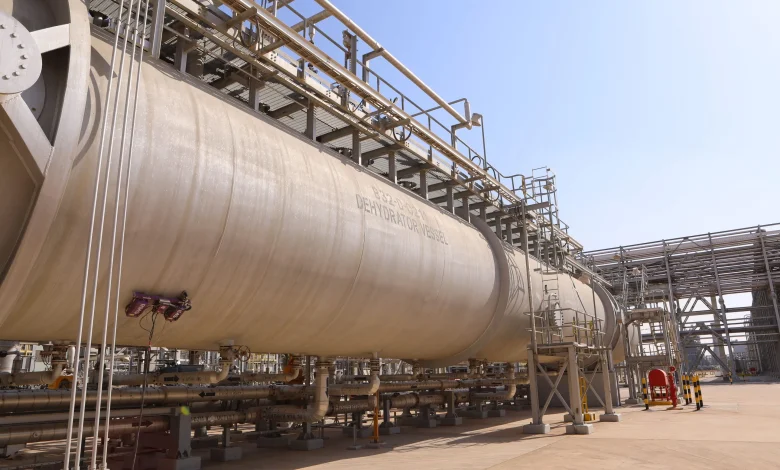
Saudi Arabia is considering a major expansion of its East-West oil pipeline to the Red Sea, according to a Reuters report citing five sources familiar with the matter.
Why it matters: The move would let the Kingdom, and potentially its neighbors, move more crude without crossing the Strait of Hormuz, a route that has faced repeated disruptions since February’s Iran war.
The big picture: Aramco built the 1,200-kilometer pipeline, also known as Petroline, in the early 1980s. It now carries up to 7 million barrels per day (bpd) of crude to the Red Sea port of Yanbu, a ceiling Aramco reached this year by converting a parallel natural-gas-liquids line into a second crude channel. Aramco CEO Amin Nasser said in May that about 2 million bpd feed west coast refineries, while the remaining 5 million bpd head to export markets.
New Capacity, New Partners
Saudi officials are in preliminary talks with regional neighbors about lifting pipeline capacity by up to 2 million bpd, the sources told Reuters. Details remain unsettled. It’s unclear whether Aramco would upgrade existing infrastructure or build an entirely new line, though one source said the plan includes a smaller second pipe for refined products. Any expansion would take years, cost billions of dollars, and require changes to Saudi crude’s pricing mechanism, another source said.
Zoom in: Kuwait, Bahrain and Qatar all lack a route that bypasses Hormuz entirely. Iraq’s pipeline to Turkey, meanwhile, continues to run well below capacity amid recurring disputes and shutdowns.
What they’re saying: Kuwait Petroleum Corporation CEO Sheikh Nawaf Al-Sabah addressed the gap at last month’s Atlantic Council Global Energy Forum. “We are in discussions with our brothers in Saudi Arabia and in the emirates to look at how to expand the pipeline system that they have to accommodate Kuwaiti barrels,” he said.
Qatar faces steeper technical hurdles since it exports mainly liquefied natural gas rather than crude. Still, three sources said Doha is weighing several alternatives, including routing through Saudi Arabia.
Yanbu’s Real-World Limits
Yes, but: The pipeline’s 7-million-bpd capacity tells only part of the story. Yanbu’s loading terminals can realistically handle closer to 3 million to 4 million bpd of crude for export under current conditions, since domestic refineries draw off roughly 1 million bpd before any oil reaches a tanker. That gap helps explain why Riyadh launched five new logistics corridors this year linking Gulf ports to the Red Sea, part of a broader push to cut the region’s dependence on Hormuz.
Zaid Belbagi, managing partner at London-based Hardcastle Advisory, put the wider shift in strategic terms. “The recent talks about new pipeline corridors involving Saudi Arabia, Kuwait and Qatar reflect a broader strategic reality. The conflict has focused minds regionally on the perils of relying solely on Hormuz,” he said.
The UAE, the only other Gulf state with meaningful Hormuz-bypass capacity, has completed half of a new pipeline that will double its crude capacity to Fujairah once it comes online next year. Its existing Abu Dhabi line already moves up to 1.8 million bpd, a sign that Gulf energy infrastructure is adapting quickly to a changed security landscape.