Inside the Hexagon: How Saudi Arabia Reinforces National Data Sovereignty
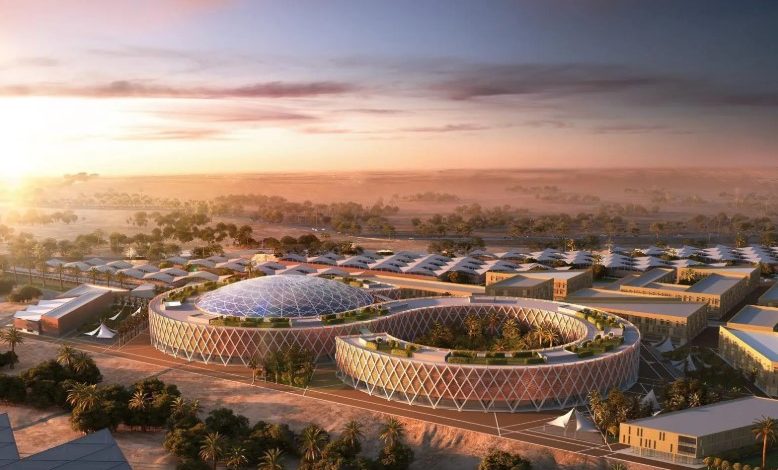
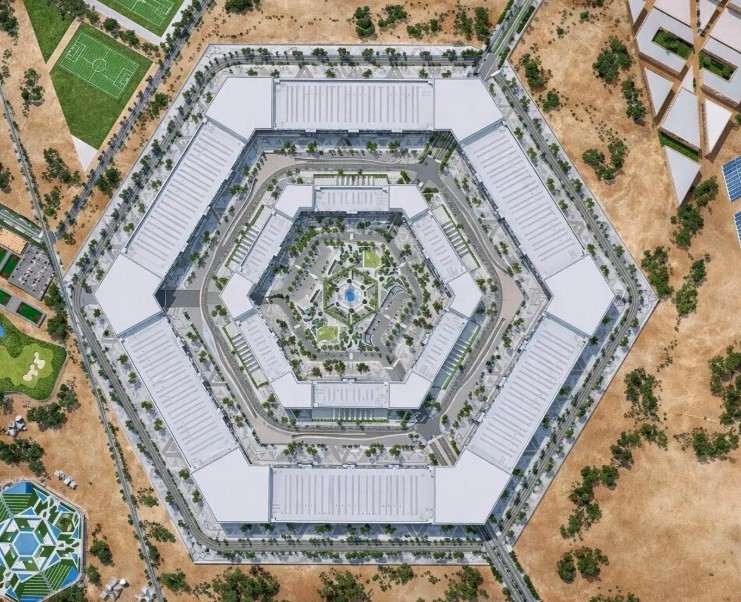
As the towering physical structures of Saudi Arabia’s giga-projects astonish the world, a different type of megaproject is being quietly built. The Hexagon Data Center in Riyadh is taking shape, set to become the world’s largest government-owned data center.
Spanning more than 30 million square feet, the Hexagon has a capacity of 480 megawatts and a LEED Gold-certified footprint, perfectly positioned to anchor the Kingdom’s national data sovereignty.
The Hexagon: A Strategic Leap in Data Sovereignty
The Saudi Data and Artificial Intelligence Authority (SDAIA) laid the foundation stone for the Hexagon Data Center in January 2026. According to Enterprise AM, the project’s first operational phase is scheduled to enter service by the end of 2026, with the remaining phases due by mid-2027.
In line with the objectives of Saudi Vision 2030, this megaproject aims to transform the Kingdom into a global data hub, ensuring data sovereignty and security, fostering innovation, and establishing Saudi Arabia among the world’s leading data- and AI-driven economies.
The Context: Every piece of data we access, from photos to bank transactions, digital apps, and government data, is saved on a “cloud” – a physical hard drive inside a massive concrete building somewhere on Earth. This fact raises questions about the exact location of those buildings and the laws governing the computers inside them.
The Hexagon serves as a sovereign fortress, integrating and consolidating over 290 government systems into a single domestic hub. Therefore, SDAIA ensures that citizen records, traffic analytics, and sensitive data stay within Saudi borders.
With this move, Saudi Arabia writes its own digital rules and data protection regulations, shielding itself against foreign tech monopolies.
World-Class Digital Infrastructure
The Hexagon Data Center is designed to meet Tier IV classification from the Uptime Institute – the highest global standard for data centers. This classification indicates that the facility has complete fault tolerance and 99.995% availability.
The project has also gained global recognition in engineering, resilience and energy efficiency, receiving several international certifications, including TIA 942 and ISO/IEC 22237.
Furthermore, it meets the US Green Building Council’s LEED Gold standards for energy-efficient and sustainably designed facilities.
Energy Efficiency & Sustainability
Between The Lines: The Hexagon Data Center utilizes innovative solutions, advanced energy-efficiency measures, and smart cooling, including direct liquid cooling and hybrid cooling systems, to reduce power consumption.
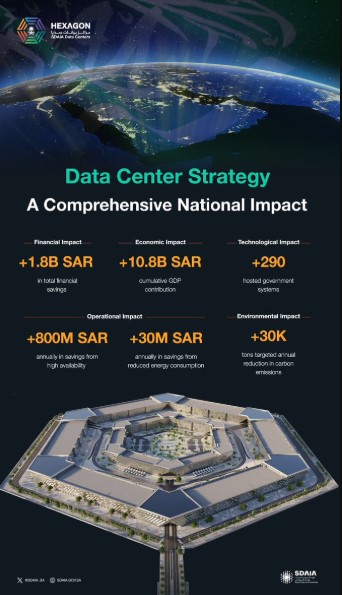
The project also integrates renewable energy into operations, in line with its LEED Gold standard classification. It is expected to cut carbon emissions by 30,000 tons annually, aligning with the Saudi Green Initiative (SGI) and positioning it among the world’s largest green data centers.
The Hexagon & Vision 2030
As part of the ambitious Vision 2030, Saudi Arabia aims to build a sustainable knowledge-based economy and secure global leadership in advanced technologies.
The Big Picture: SDAIA lies at the heart of the Kingdom’s efforts to achieve the objectives of Vision 2030 to solidify Saudi Arabia’s position as a global hub for advanced technologies.
Through a series of national initiatives, SDAIA built one of the most advanced integrated data ecosystem in the Middle East and positioned the Kingdom as a major player in the global digital economy and a leading destination for top international tech companies.
As a result of these efforts, Saudi Arabia has topped several global indicators, including the Global AI Index for government strategy.
By The Numbers: The Hexagon Data Center is expected to generate a cumulative economic impact exceeding SAR 10 billion and save more than SAR 1.8 billion annually.
The project will also save SAR 800 million annually from high availability and over SAR 30 million annually from reduced energy consumption.
The Hexagon Data Center is the first of a future network of centers. These centers are projected to strengthen the national economy through non-oil resources and significantly enhance quality of life by advancing the digital maturity of government applications that serve citizens and residents across Saudi Arabia.