US, Iran Exchange Fresh strikes, Jeopardizing Fragile Middle East Ceasefire
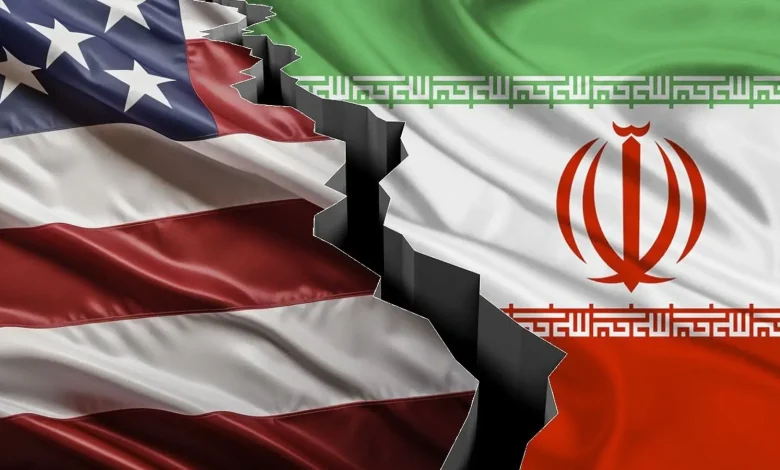
The US and Iran exchanged military strikes late Friday and into Saturday, threatening to unravel a fragile ceasefire as diplomats race to contain the wider Middle East conflict.
US Central Command (CENTCOM) said it struck Iranian missile and drone storage facilities and coastal radar positions in response to what it called “unwarranted aggression against commercial shipping.” It described the operation as “a powerful response to yesterday’s attack on a commercial ship that was transiting the Strait of Hormuz.”
President Donald Trump had denounced the earlier incident as an Iranian drone strike, declaring, “Obviously, this is a foolish violation of our ceasefire agreement.” Vice President JD Vance subsequently warned on X that “violence will be met with violence” should Iran carry out further attacks.
Hours later, Iran’s Revolutionary Guards said they had targeted US sites across the Gulf region in retaliation. “If the aggression is repeated, our response will be broader than this,” the Guards said, according to Iranian state television.
Hormuz Shipping and Nuclear Talks in the Balance
The exchanges deepened concern over efforts to keep the Strait of Hormuz open while Washington and Tehran negotiate a final settlement to the conflict, which began on 28 February with US and Israeli strikes on Iran. Around half of the 42 vessels that transited the strait on Thursday used a non-approved southern route along Oman’s coastline, according to tracking platform Kpler.
Additionally, the UN maritime agency also confirmed that a rescue operation freeing 115 vessels and 2,500 seafarers had halted following the attack. Nevertheless, oil prices fell sharply, reflecting cautious optimism that traffic through Hormuz, a waterway that normally handles around a fifth of global oil and gas exports, would continue recovering.
Meanwhile, the UN nuclear watchdog’s chief, Rafael Grossi, warned that any final US-Iran deal must include strong verification mechanisms. “The government of Iran has declared quite clearly that this is not their intention,” Grossi said of nuclear weapons development.
“But of course, intentions are not enough. We have to have a very strong verification system in place… as soon as is practicable.” An interim agreement requires Iran to dilute its pre-war stockpile of enriched uranium, estimated at 440 kilograms, enriched to 60%, under IAEA supervision.
Diplomatic Progress and Regional Divisions
On a separate diplomatic front, Israel and Lebanon signed a trilateral accord with the US at a Washington ceremony. Secretary of State Marco Rubio, flanked by Israeli and Lebanese envoys, called it a framework for “lasting peace and security,” though he cautioned, “It’s the beginning of the beginning. There’s a lot of work ahead.”
Israeli Prime Minister Benjamin Netanyahu welcomed the agreement as a victory against Iran, while Lebanese President Joseph Aoun described it as a “first step” toward restoring civilian sovereignty in the south, with Hezbollah strongly rejecting the deal.
However, Lebanese MP Hassan Fadlallah warned it would undermine the broader US-Iran ceasefire process, and Hezbollah supporters took to the streets of Beirut in protest.