Saudi Arabia’s non-oil exports, including re-exports, recorded strong growth in 2025, rising 18.9 percent year on year as a sharp increase in re-export activity helped offset softer domestic export performance, according to official data.
Figures released by the General Authority for Statistics (GASTAT) showed total non-oil exports reached SR366.08 billion ($97.04 billion) during the year. While national non-oil exports excluding re-exports edged down by 0.1 percent, re-exported goods surged by 64.4 percent.
This performance improved the Kingdom’s non-oil export-to-import ratio to 38.5 percent in 2025, up from 35.3 percent in 2024, despite imports expanding by 8.8 percent over the same period.
The results underline the increasing importance of trade, logistics, and re-export activities within Saudi Arabia’s Vision 2030 agenda, which aims to diversify the economy, reduce reliance on oil revenues, and strengthen the Kingdom’s position as a regional commercial hub.
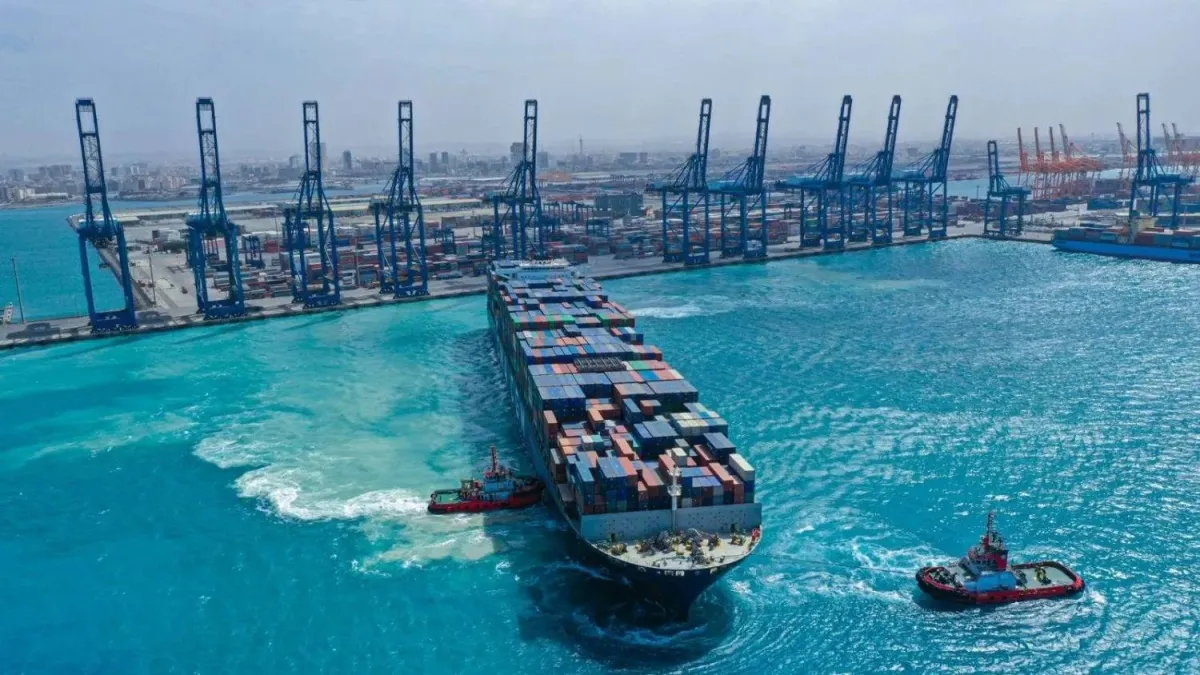
GASTAT
GASTAT stated that the rise in the export-to-import ratio was driven by stronger non-oil export growth compared with imports during the year.
By sector, chemical products remained the largest contributor to non-oil exports, representing 22.5 percent of the total and posting annual growth of 4.7 percent.
Machinery, electrical equipment, and related components followed closely, accounting for 22.4 percent of non-oil exports and recording a notable 91.8 percent increase.
Overall merchandise exports grew 2.1 percent to SR1.16 trillion, even as oil exports declined by 4 percent. As a result, oil’s share of total exports dropped from 73.1 percent in 2024 to 68.7 percent in 2025.
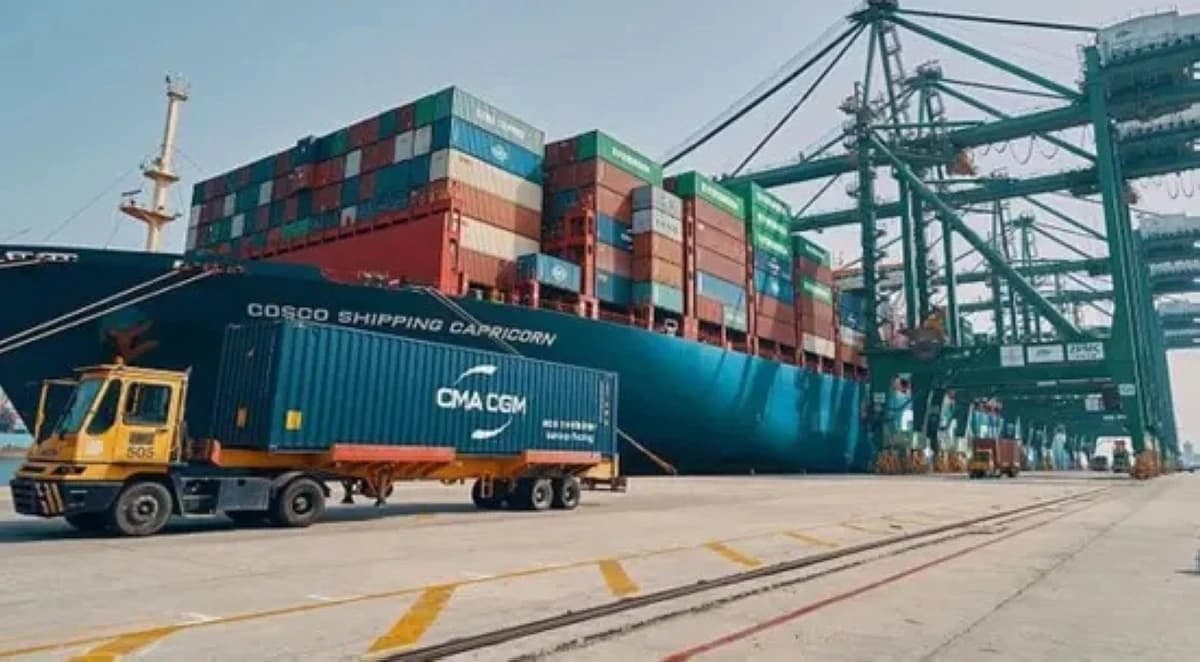
China maintained its position as Saudi Arabia’s largest export destination, receiving 14.6 percent of total merchandise exports, followed by the UAE at 10 percent and India at 9.4 percent. Other key export markets included South Korea, Japan, the United States, Egypt, Bahrain, Poland, and Malta.
On the import side, Saudi Arabia’s total imports increased 8.8 percent year on year to SR949.82 billion, while the merchandise trade surplus narrowed by 19.2 percent.
China also remained the Kingdom’s largest source of imports, accounting for 27.5 percent of the total, ahead of the United States at 8.2 percent and the UAE at 5.7 percent. India, Germany, Japan, Italy, France, Switzerland, and Egypt were also among the leading suppliers, with the top 10 countries contributing 65.9 percent of total imports.
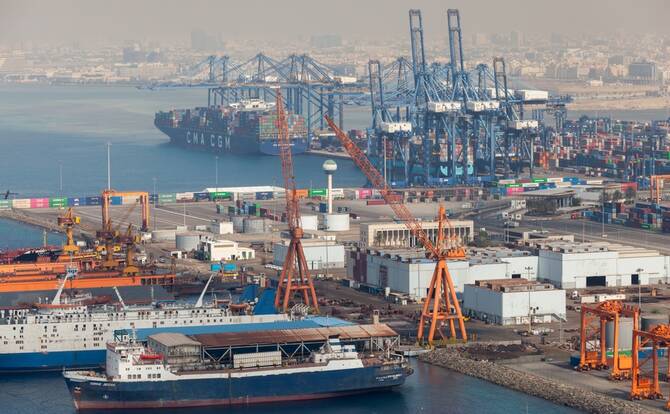
King Abdulaziz Port
King Abdulaziz Port in Dammam was the main gateway for imports, handling 26.6 percent of incoming goods. It was followed by Jeddah Islamic Seaport (22.1 percent), King Khalid International Airport in Riyadh (13.8 percent), King Abdulaziz International Airport in Jeddah (10.4 percent), and King Fahad International Airport in Dammam (5.4 percent).
For non-oil exports, King Abdulaziz International Airport in Jeddah ranked as the leading export outlet, accounting for 14.2 percent of total shipments, followed by Jeddah Islamic Port (11.7 percent), King Fahad Industrial Seaport in Jubail (11.1 percent), King Khalid International Airport in Riyadh (10.6 percent), and Jubail Seaport (7.9 percent).
Related Topics:
Saudi Arabia, Netherlands Discuss Trade Cooperation
ROSHN Green Initiative Center: Inspiring Future Environmental Leaders
Saudi Arabia Welcomes Foreign Real Estate Investors Outside Holy Cities
All You Need to Know about Hajj Rituals: A Step-by-Step Guide