
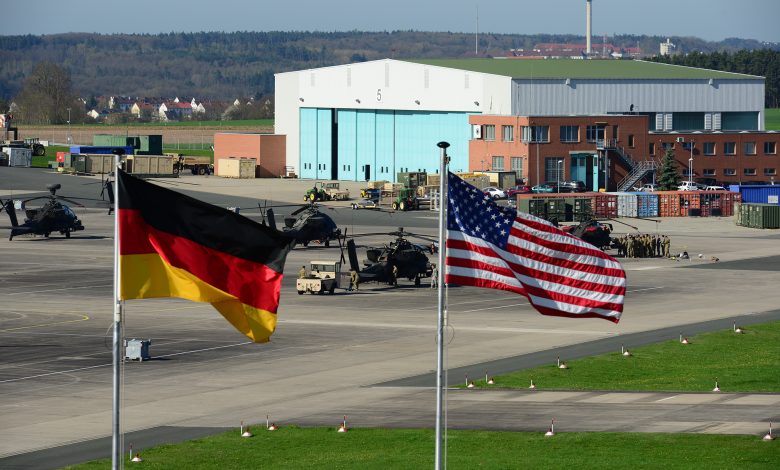
The Pentagon announced Friday that US Defense Secretary Pete Hegseth has ordered the withdrawal of approximately 5,000 troops from Germany within the next year. This decision reflects growing tensions between Washington and European allies over Middle East policy.
The move follows President Donald Trump’s recent threats to reduce US forces in NATO ally Germany. Trump criticized German Chancellor Friedrich Merz earlier this week, after Merz had stated that Iran was “humiliating” Washington during negotiations.
“We expect the withdrawal to be completed over the next six to twelve months,” Pentagon spokesman Sean Parnell said. Additionally, Parnell noted: “This decision follows a thorough review of the Department’s force posture in Europe and is in recognition of theater requirements and conditions on the ground.”
A Growing Diplomatic Rift
Trump escalated criticism Tuesday, claiming Merz “thinks it’s OK for Iran to have a Nuclear Weapon. He doesn’t know what he’s talking about!” Furthermore, the President faces mounting pressure to end the conflict involving Iran. The situation has increased costs for American consumers and unsettled allies.
Meanwhile, Trump indicated he may also reduce troops in Italy and Spain due to their war opposition. “Italy has not been of any help to us and Spain has been horrible, absolutely horrible,” Trump told reporters. When asked about withdrawals, he added: “Yeah, probably, I probably will. Why shouldn’t I?”
German Foreign Minister Johann Wadephul responded on Thursday during a Morocco visit, stating that Germany was “prepared” for a US troop reduction. He added discussions continue “closely and in a spirit of trust in all NATO bodies.” However, Wadephul emphasized that major American bases remain essential, noting that the Ramstein Air Base has “an irreplaceable function for the United States and for us alike.”
“Vital Partner”
The European Union affirmed Thursday that US troop deployments in Europe serve Washington’s interests, calling the United States “a vital partner in contributing to Europe’s security and defense.”
Trump redirected criticism at Merz, urging him to focus on ending the Ukraine war instead of “interfering” on Iran, as European powers remain on high alert following Russia’s 2022 invasion of Ukraine. Additionally, recent drone incursions and shifting US defense commitments have elevated security concerns.
Chancellor Merz has prioritized national security, announcing unprecedented military investments, and reaffirmed support for Ukraine, as Germany serves as the second-largest aid supplier after the US. Nevertheless, Merz’s popularity has declined, with a recent poll showing that the far-right Alternative for Germany (AfD) as the country’s most popular party.