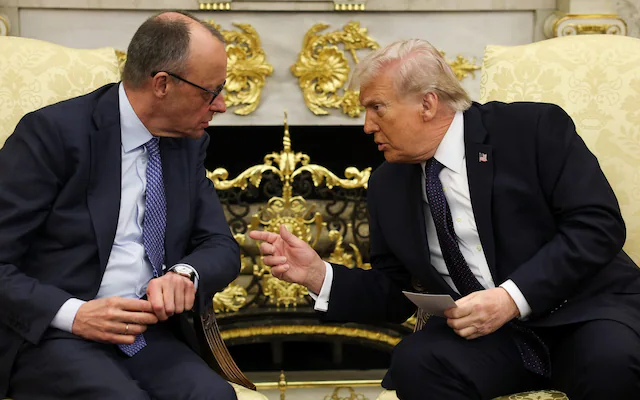
President Donald Trump confirmed on Wednesday that the United States is currently considering a significant reduction of troops in Germany, following an escalating diplomatic row with Chancellor Friedrich Merz regarding the ongoing war involving Iran and Israel.
“The United States is studying and reviewing the possible reduction of Troops in Germany,” Trump posted on Truth Social. He further noted that officials would reach a final determination over the next short period of time regarding these numbers.
Although the Congressional Research Service reported 35,000 troops in 2024, German media now estimates the total is nearer 50,000. Trump previously threatened cuts to European allies during both terms, often citing his long-standing criticisms of the NATO alliance. However, Washington now appears determined to punish allies who refuse to support the war or contribute to Hormuz peacekeeping.
Diplomatic Friction and Fallout
Hours before the post, Secretary of State Marco Rubio spoke with German Foreign Minister Johann Wadephul about the Strait. Merz became a target of Trump’s ire after suggesting that Iran is “humiliating” the US at the negotiating table. Consequently, Trump lashed out on Tuesday, claiming the German leader “doesn’t know what he’s talking about” regarding nuclear weapons.
Despite the public friction, Merz played down the row during a press conference in Berlin on Wednesday morning. “From my point of view, the personal relationship between the American president and myself remains just as good as before.” Nevertheless, Merz maintained his doubts about the conflict, stating that Germany and Europe suffer considerably from the war’s consequences.
Beyond Germany, Washington is considering other retaliatory measures against Western allies who have not provided sufficient help against Iran. Recent reports suggest the US might try to suspend Spain from NATO or review its position on the Falkland Islands. While Washington recently reiterated its neutrality over the islands, the threat remains a potent tool in this shifting diplomatic landscape.