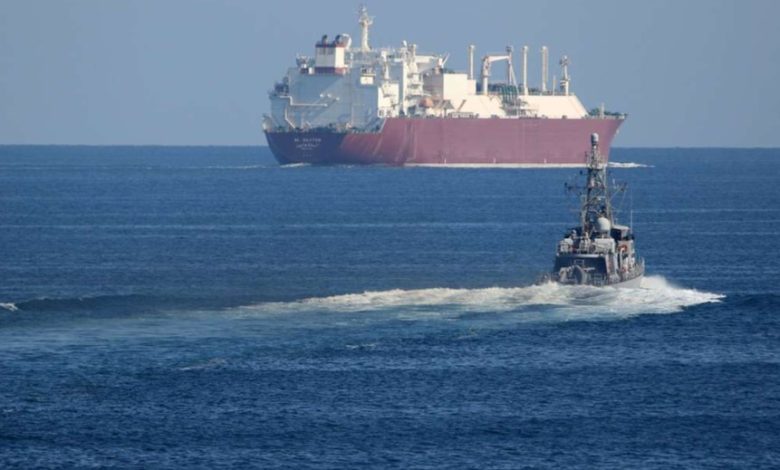
Three commercial vessels were hit by “unknown projectiles” near the Strait of Hormuz, raising concerns over global energy supplies.
The attacks followed a warning by Iran’s Revolutionary Guards that it would stop oil shipments across the vital chokepoint as war intensifies between the US and Israel on one side and Iran on the other side.
Thai Ship Damaged
According to maritime security firms, three vessels near the Strait of Hormuz were hit by “unknown projectiles” on Wednesday.
The first ship, the Thai-flagged Mayuree Naree dry bulk vessel, was targeted by “two projectiles of unknown origin” while sailing through Hormuz off Oman, the ship’s Thai-listed operator Precious Shipping said in a statement.
The strike triggered a fire and damaged the engine room, leaving three crew members missing, while the remaining 20 crew members were safely evacuated. The missing members are “believed to be trapped in the engine room,” Precious Shipping said.
Later, the UK Maritime Trade Operations (UKMTO) said that the fire was extinguished, with “no environmental damage” resulting from the incident.
Two Vessels Targeted
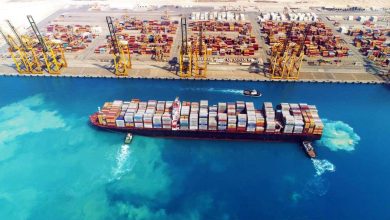
Unknown projectiles also hit two vessels off the coast of the UAE earlier on Wednesday. According to two maritime security firms, the Japan-flagged container ship ONE Majesty suffered minor damage from an unknown projectile 25 nautical miles (46 km) northwest of Ras Al Khaimah.
The ship’s owner, Mitsui O.S.K. Lines, and its charterer, Ocean Network Express (ONE), said that the vessel was targeted while at anchor in the Gulf. However, all crew members are safe and the ship remains fully operational and seaworthy, they added.
Moreover, another unknown projectile hit the Marshall Islands-flagged Star Gwyneth bulk carrier approximately 50 miles northwest of Dubai, damaging the vessel’s hull, with no injuries reported.
Strait of Hormuz: Vital Trade Route
The Strait of Hormuz is a crucial waterway linking the Arabian Gulf with the Gulf of Oman and the Arabian Sea, serving as the main shipping route for crude oil from the Gulf region to the rest of the world.
Around fifth of daily global oil supplies (about 20 million barrels per day), as well as fifth of global liquefied natural gas (LNG) supplies, pass through Hormuz, according to the US Energy Information Administration (EIA).
With Iran controlling the Strait’s northern side, “very few alternative options exist to move oil out of the strait if it is closed,” EIA said, describing Hormuz as a “critical oil chokepoint.”
The UKMTO reported at least 13 attacks on vessels around the Arabian Gulf, Strait of Hormuz and Gulf of Oman since the start of the US-Israeli strikes on Iran, and Tehran’s retaliatory strikes on February 28.
As a result, Major container shipping companies, such as Maersk, Hapag-Lloyd, MSC and CMA CGM, are diverting vessels away from Hormuz and the region, according to logistics firm Freightos.
IRGC Confirmation
Iran’s IRGC confirmed it had attacked two vessels in the Strait of Hormuz. In a statement, carried by the Fars News Agency, the Iranian Revolutionary Guards said it fired upon Thai-flagged bulk carrier Mayuree Naree after “disregarding warnings and insistently attempting to illegally pass through the Strait of Hormuz.”
Furthermore, it acknowledged targeting Liberian-flagged vessel, called “Express Rome,” by projectiles this morning after “ignoring warnings from the IRGC Navy.”
Earlier on Wednesday, a spokesperson for Iran’s Khatam Al-Anbiya military command headquarters warned that Tehran “will never allow even a single liter of oil to pass through the Strait of Hormuz for the benefit of the United States, the Zionists, or their partners.”
“Any vessel, or any oil cargo belonging to the United States, the Israeli regime, or their hostile partners will be considered a legitimate target,” he said in a statement carried by Iranian state TV.
Trump’s Threats
The IRGC’s attacks on ships came in defiance of warnings issued by US President Donald Trump regarding disruption of oil flows through Hormuz. On Tuesday, Trump threatened severe repercussions if Iran blocked transit through the vital strait.
“If Iran does anything that stops the flow of Oil within the Strait of Hormuz, they will be hit by the United States of America TWENTY TIMES HARDER than they have been hit thus far. Additionally, we will take out easily destroyable targets that will make it virtually impossible for Iran to ever be built back, as a Nation, again — Death, Fire, and Fury will reign upon them,” he posted on Truth Social.
After reports emerged that Tehran is laying mines in the waterway, Trump doubled down on his threats. “If Iran has put out any mines in the Hormuz Strait, and we have no reports of them doing so, we want them removed, IMMEDIATELY! If for any reason mines were placed, and they are not removed forthwith, the Military consequences to Iran will be at a level never seen before,” he warned.
In light of this, the US military announced on Tuesday it had destroyed 16 Iranian minelayers near the Strait of Hormuz.
Oil Prices Impacted
Amid mounting concerns over global oil supply disruption, oil prices rebounded on Wednesday. Oil prices remain 20% higher than when the war began, with global benchmark Brent crude rising above $91 a barrel.
This price hike happened despite news that the International Energy Agency (IEA) has requested its members to release a record-breaking 400 million barrels of emergency oil to stabilize the market.
Meanwhile, major economies – including Germany, Austria, and Japan – have already agreed to tap into their strategic reserves to fight the price spikes, according to the Associated Press (AP).