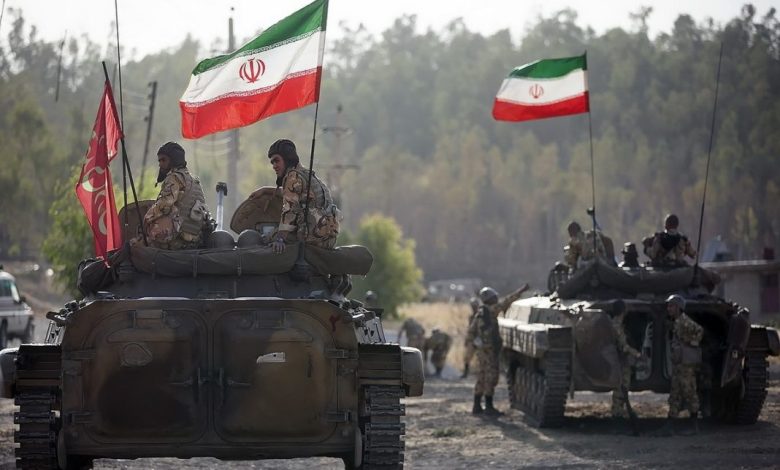
The Iranian Parliament Speaker Mohammad Bagher Ghalibaf accused the US on Sunday of plotting a ground invasion, following the arrival of the USS Tripoli, an amphibious assault ship carrying 3,500 Marines, in the Middle East. Although Washington publicly promotes a negotiated deal, Ghalibaf claims the military deployment signals a different intent.
Threats of Direct Confrontation
“The enemy publicly sends messages of negotiation and dialogue while secretly planning a ground attack,” Ghalibaf stated via the IRNA news agency. He further warned that Iranian forces await American soldiers to “set them on fire” and punish regional allies. Meanwhile, reports suggest the Pentagon is preparing for potential ground operations near the vital Strait of Hormuz.
Iran continues to retaliate against Gulf states, which has sent global energy markets into a volatile tailspin recently. Consequently, regional players met in Pakistan this week to discuss de-escalation strategies as the conflict threatens the world economy.
Violence intensified in Tehran on Sunday as two massive blasts shook the city during the early morning hours. An Israeli missile reportedly struck a building housing Al Araby, leaving the office in ruins and streets covered in debris. “I miss a peaceful night’s sleep,” a local artist told reporters, describing strikes so intense they shook the entire city.
Fear remains a constant companion for many residents living under the shadow of these frequent and heavy aerial bombardments. Farzaneh, a 62-year-old woman, noted that “People wake up each day worried about an uncertain future” during this critical stage.
A Widening Regional Conflict
Beyond the borders of Iran, the conflict has spread to Bahrain, the United Arab Emirates, and the Red Sea. Iranian missiles recently targeted major aluminium plants in the Gulf, causing significant damage and wounding several industrial workers. Simultaneously, Yemen’s Houthis launched their first barrage of cruise missiles at strategic Israeli sites to show solidarity with Palestinians.
The fighting has also devastated Lebanon, where Israeli strikes recently killed three journalists and several emergency first responders. These escalating attacks force thousands of families to flee their homes and seek refuge in temporary vocational institutes. Despite the displacement and lack of resources, mother Nasima Ismail remains determined to keep her children in school. “I want them to complete their education, even if we are left with nothing,” she said during the funeral.