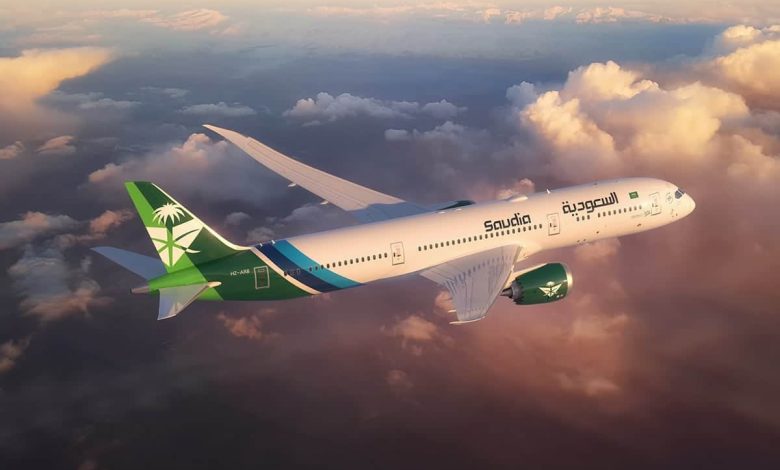
 The big picture: Saudi Arabia’s national flag carrier, Saudia, secured 15th place globally at the 2026 Skytrax World Airline Awards in London. Additionally, the airline captured top regional honors, reinforcing the Kingdom’s rapid ascent into a global transport titan.
Why it matters: The achievement showcases the massive momentum behind Saudi Arabia’s aviation transformation. Saudi Arabia fuels this ambitious growth with SAR 375 billion ($100 billion) in public and private investments under Vision 2030. Consequently, the Kingdom actively expands its air connectivity, modernizes airline fleets, and elevates passenger experience standards across all travel touchpoints.
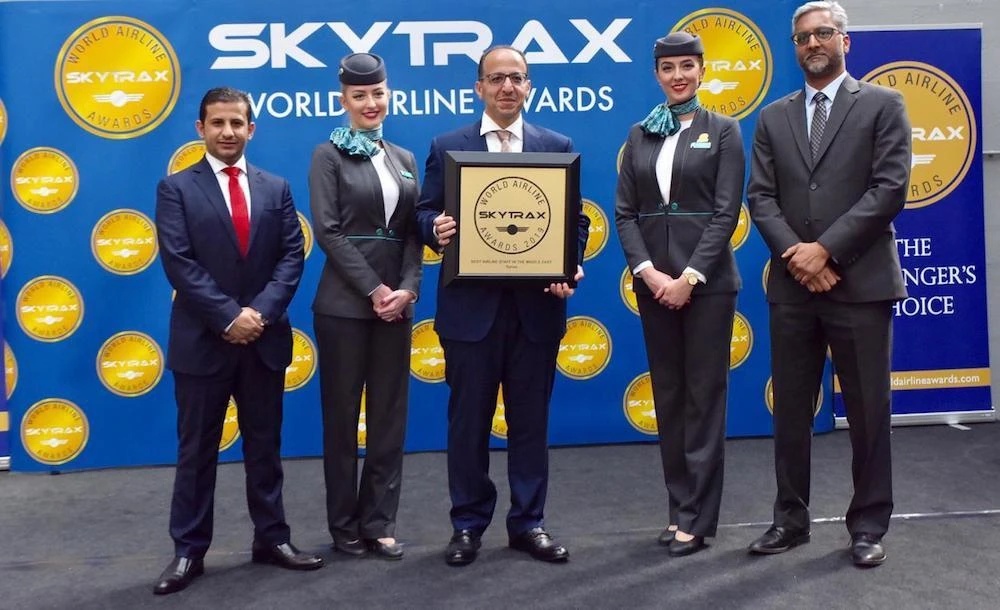
A Record-Breaking Ascent in Global Aviation
Saudia recorded a remarkable upward trajectory in the global Skytrax standings, jumping five positions over just two years. The national carrier climbed from 20th position in 2024 to 17th in 2025, ultimately reaching 15th place globally in 2026.
Beyond its overall global ranking, Saudia won two major regional honors at the London ceremony:
- Best Airline Staff in the Middle East: Saudia retained this prestigious award for the second consecutive year.
- Best Cabin Crew in the Middle East: Saudia secured first place for its outstanding onboard hospitality teams.
The airline staff award evaluates frontline personnel performance across the entire guest journey. Consequently, it reflects seamless integration between ground service employees at airports and cabin crews onboard aircraft.
What they’re saying: Eng. Ibrahim bin Abdulrahman Al-Omar, Director General of Saudia Group, emphasized the human element behind this success:
“These results reflect Saudia’s continuous advancement and strengthen its presence among leading global airlines. This achievement carries particular significance in one of the world’s most competitive industries. Our service and hospitality teams embody the pivotal role of human talent in our transformation journey. Through their efforts, strategies turn into tangible experiences that bring authentic Saudi hospitality to life. We will continue investing in human capital, technology, and products to elevate the travel experience and boost our global competitiveness.”
Saudia currently executes the largest investment in its history to elevate travel experiences. Specifically, the carrier upgrades cabin interiors, installs high-speed inflight Wi-Fi, expands digital services, and trains its workforce to maintain world-class standards.
Rossen Dimitrov, Chief Guest Experience Officer at Saudia, noted that passenger trust drives these accomplishments:
“These results gain true value because they reflect what our guests experience directly. We place the guest at the center of every detail. Achieving first place for cabin crew alongside winning Best Airline Staff for the second consecutive year reflects the consistency of the experience our guests see across their entire journey.”
Regional Dominance and Low-Cost Leadership
Saudi carriers demonstrated exceptional strength across Middle East categories, claiming three of the top ten overall positions in the region. Gulf Cooperation Council (GCC) airlines swept the top regional rankings:
- Qatar Airways
- Emirates
- Saudia
- Etihad Airways
- Flynas
- Oman Air
- Gulf Air
- Flydubai
- Royal Jordanian Airlines
- flyadeal
In the regional airline staff evaluation, Saudia finished first, followed by Qatar Airways, Emirates, Etihad Airways, and flynas. Riyadh Air, the Kingdom’s newly established carrier, secured eighth place in the staff category ahead of its full commercial rollout.
Meanwhile, Saudi budget carrier flynas retained the title of Best Low-Cost Airline in the Middle East for the ninth consecutive year. On the global stage, flynas ranked eighth among all low-cost airlines, while Malaysia’s AirAsia retained the top global spot for the 17th straight year.
Bander Almohanna, CEO and Managing Director of flynas, expressed pride in the achievement:
“We are proud that flynas retained the title of Best Low-Cost Airline in the Middle East at the 2026 World Airline Awards for the ninth consecutive year. Every new award brings greater responsibility and motivates us to build further trust in line with our ‘We Connect the World to the Kingdom’ strategy.”
How the awards work: Skytrax introduced the World Airline Awards in 1999 to measure global passenger satisfaction through independent, impartial voting. The online survey for the 2026 awards ran from September 2025 to August 2026, gathering responses from travelers representing over 100 nationalities. Furthermore, Skytrax funds the entire survey process independently, requiring no registration or entry fees from participating airlines.
Saudi Vision 2030 Drives Aviation Transformation
The stellar performance of Saudia and flynas directly aligns with the Kingdom’s National Aviation Strategy. Saudi Arabia aims to establish itself as an indispensable global logistics hub connecting Asia, Europe, and Africa.
To achieve this goal, Saudi Arabia mobilizes SAR 375 billion ($100 billion) in public and private funding to expand airport infrastructure, airline networks, and fleet capacities. In May 2024, Saudia Group finalized a landmark deal with Airbus for 105 narrowbody aircraft. The order includes 12 A320neo and 93 A321neo aircraft, with deliveries commencing in 2026 to push Saudia’s operational fleet past 161 aircraft.
Simultaneously, Saudi Arabia constructs King Salman International Airport (KSIA) in Riyadh. Designed to handle up to 120 million passengers annually upon completion, the mega-airport will serve as a primary hub alongside Jeddah’s expanding King Abdulaziz International Airport.
By the numbers:
- SAR 375 billion ($100 billion): Total public and private capital backing the Saudi National Aviation Strategy through 2030.
- 15th place: Saudia’s global rank in the 2026 Skytrax World Airline Awards, up five places since 2024.
- 330 million: Target annual passenger volume across Saudi airports by 2030, compared to 140.9 million handled in 2025.
- 250+ destinations: Planned global air route connectivity for Saudi Arabian airlines by the end of the decade.
- 105 aircraft: Firm narrowbody aircraft order placed by Saudia Group with Airbus to modernize its fleet.
- 9 consecutive years: Period flynas has held the title of Best Low-Cost Airline in the Middle East.
- 3 Saudi carriers: Number of Saudi airlines inside the Middle East top 10 overall ranking (Saudia, flynas, and flyadeal).
- SAR 303.75 billion ($81 billion): Total tourism spending in Saudi Arabia during 2025 as the Kingdom pursues 150 million visitors by 2030.
- SAR 75 billion (about $20 billion): aviation’s contribution to the Saudi economy in 2023.
- SAR 375 billion (about $100 billion): estimated investment in aviation infrastructure and development.
What’s next: Saudi Arabia’s aviation sector will accelerate further as new fleet deliveries arrive throughout 2026. Additionally, Riyadh Air’s expanding commercial network and ongoing construction at King Salman International Airport will cement the Kingdom’s position as a dominant force in global commercial aviation.
Th Public Investment Fund (PIF)-owned carrier, which began scheduled passenger flights in June, plans to reach 22 destinations by March 2027 and 100 by 2030. Meanwhile, the General Authority of Civil Aviation plans more than 30 new routes in 2026.
The national aviation strategy targets 330 million passengers, 250 destinations and 4.5 million tonnes of cargo by 2030. Consequently, service quality will matter as much as capacity.