Saudi Arabia Rejects Palestinian Displacement at UN, Backs Statehood on 1967 Borders
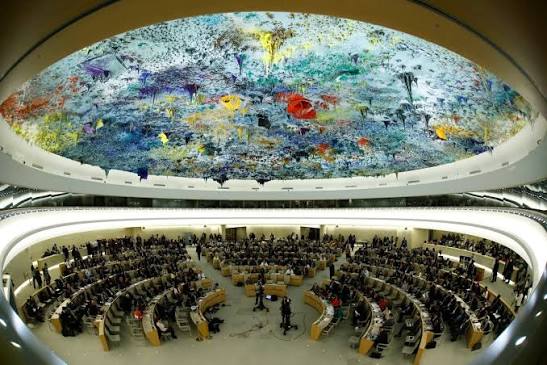
The big picture: Saudi Arabia has forcefully reiterated its categorical rejection of any measures attempting to forcibly displace the Palestinian people from their land. Speaking at the United Nations in Geneva, Saudi diplomats condemned ongoing Israeli military aggression in Gaza and denounced illegal settlement expansion across occupied territories.
Furthermore, the Kingdom stressed that regional stability rests entirely on establishing an independent Palestinian state based on 1967 borders with East Jerusalem as its capital.
Why it matters: Riyadh continues to lead regional and international diplomatic momentum to resolve the Israeli-Palestinian conflict. Consequently, Saudi Arabia frames the two-state solution not merely as a diplomatic preference, but as an absolute prerequisite for comprehensive Middle East security. By coordinating global alliances and providing billion-dollar financial support, the Kingdom reinforces its role as the primary champion of Palestinian rights.
Diplomatic Push at the UN Human Rights Council
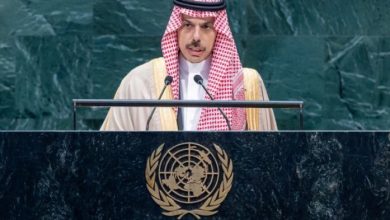
Dr. Salem Al-Qahtani, director general of the General Administration of Humanitarian Affairs at the Saudi Ministry of Foreign Affairs, delivered the Kingdom’s official address during the 63rd session of the UN Human Rights Council in Geneva. He serves as Director General of the General Administration of Humanitarian Affairs at the Saudi Ministry of Foreign Affairs. The delegation presented its statement during a general debate under Agenda Item 7, which addresses human rights in Palestine and other occupied Arab territories.
In his address, Al-Qahtani strongly condemned the continuation of Israeli aggression in the Gaza Strip. He urged international bodies to enforce an immediate ceasefire and guarantee full protection for civilians.
“The Kingdom reiterates that the only path to achieving a just, lasting, and comprehensive peace lies in implementing the two-state solution,” Al-Qahtani stated. He affirmed the inalienable right of the Palestinian people to self-determination. Additionally, he demanded the establishment of a sovereign Palestinian state on the 1967 borders with East Jerusalem as its capital.
Rejecting Displacement and Demanding Accountability
Saudi Arabia rejected any policy designed to alter the geographic or demographic character of the occupied Palestinian territory.
Al-Qahtani condemned the expansion of illegal settlement activities and settler violence. He warned that these actions systematically erode the prospects for peace.
Meanwhile, Riyadh expressed strong appreciation for nations that recently granted formal recognition to the State of Palestine. The Kingdom welcomed growing international accountability measures, including trade restrictions on products originating from illegal Israeli settlements.
Marking one year since the adoption of the New York Declaration, Saudi Arabia highlighted its work within the Global Alliance for the Implementation of the Two-State Solution. The Kingdom launched and co-chairs this international coalition alongside the European Union and Norway.
Al-Qahtani emphasized the coalition’s core stance: Gaza and the West Bank, including East Jerusalem, constitute a single Palestinian territorial unit. Therefore, Israel must end its military occupation completely.
Saudi Arabia’s Historic Leadership and Financial Support
Saudi Arabia’s diplomatic defense of Palestine builds upon decades of unwavering political and financial commitment.
Historically, the Kingdom has maintained a firm foreign policy linking regional normalization directly to Palestinian statehood. Crown Prince Mohammed bin Salman recently reaffirmed this principled stance during official addresses. He confirmed that Saudi Arabia will not establish diplomatic relations with Israel without an independent Palestinian state.
Beyond global diplomacy, Riyadh provides massive humanitarian relief directly to the Palestinian people. The King Salman Humanitarian Aid and Relief Centre (KSrelief) manages relief programs across the West Bank and Gaza. Specifically, Saudi Arabia funds food security, emergency healthcare, shelter, and water infrastructure.
Additionally, the Kingdom remains one of the largest donors to the United Nations Relief and Works Agency for Palestine Refugees (UNRWA).
During recent escalations in Gaza, Saudi leadership launched extensive national relief operations. KSrelief dispatched air bridges and cargo ships carrying thousands of tons of critical medical and food supplies. Saudi citizens also contributed hundreds of millions of riyals through official public fundraising campaigns to support displaced Gaza families.
Strategic Overview of Aid and Engagement
By the numbers:
- SAR 22.5 billion ($6 billion): Total financial aid and humanitarian relief provided by Saudi Arabia to the Palestinian people over the past two decades.
- SAR 18.75 billion ($5 billion): Direct financial assistance disbursed by Riyadh to support the Palestinian Authority’s budget and municipal services.
- SAR 3.75 billion ($1 billion): Relief channeled through KSrelief and international partners, including UNRWA, WFP, UNICEF, and UNESCO.
- SAR 741 million ($186.6 million): Public donations raised through KSrelief’s national campaign for Gaza relief.
- 1967: The internationally recognized baseline borders for an independent Palestinian state with East Jerusalem as its capital.
- 100+: Sovereign nations and international bodies participating in the Saudi-led Global Alliance for the Implementation of the Two-State Solution.
- 154 projects, more than $540 million (about SAR 2.03 billion): KSrelief has carried out these projects in Palestine since May 2015
- 77 planes, eight ships and 912 trucks: These carried more than 7,699 tons of food, medical supplies and shelter materials into Gaza.
- 20 ambulances and $90 million (about SAR 337.5 million): KSrelief delivered the ambulances to the Palestinian Red Crescent Society and signed relief agreements worth this amount.
Looking Ahead to Middle East Peace
The Kingdom continues building international consensus around Palestinian sovereignty. Saudi diplomats actively engage strategic partners across the United States, Europe, and Asia to enforce international law.
Ultimately, Riyadh views Palestinian statehood as an essential foundation for long-term regional integration.
Without a sovereign Palestinian state, the Middle East cannot achieve genuine stability or lasting prosperity. Saudi Arabia will therefore continue to mobilize global political and economic power until Palestinians secure their full rights.
What’s next: Saudi Arabia keeps its message consistent. It wants the killing in Gaza to stop, and it wants displacement and annexation off the table. It also insists that only statehood on the 1967 lines can deliver lasting peace. The Kingdom now presses that case in Geneva and New York while its aid convoys keep moving.