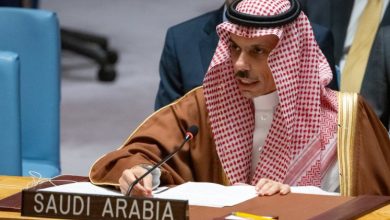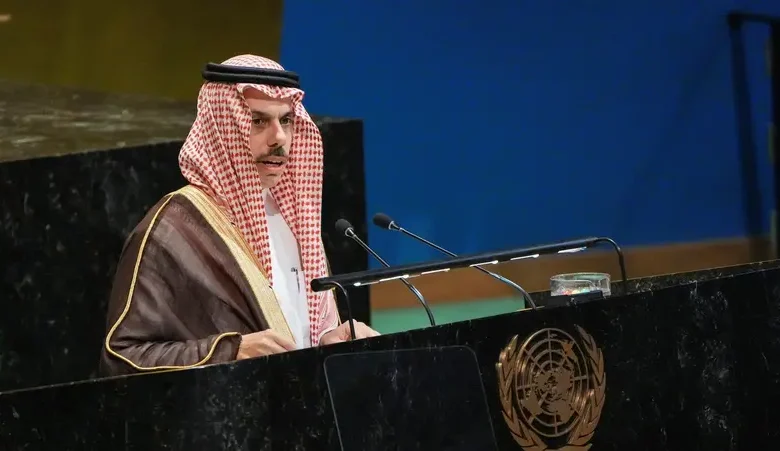
Saudi Minister of Foreign Affairs Prince Faisal bin Farhan bin Abdullah led the Kingdom’s delegation to the 81st session of the United Nations General Assembly in New York. Furthermore, he joined high-level multilateral discussions to address rising Middle East tensions and advance regional diplomatic solutions. During these talks, Prince Faisal reiterated Saudi Arabia’s firm stance on Palestinian rights, maritime security, and regional stability.
Why it matters: Saudi Arabia continues to drive diplomatic efforts across the Middle East. Consequently, Riyadh views an independent Palestinian state as a necessary requirement for sustainable peace. Prince Faisal emphasized that regional stability requires ending the Israeli occupation and safeguarding Palestinian dignity.
Strategic Regional Security and Diplomacy
The big picture: On Tuesday, Prince Faisal attended a multilateral summit following a direct invitation from U.S. President Donald Trump. Furthermore, the high-stakes meeting brought together leaders and foreign ministers from the Gulf Cooperation Council (GCC), Egypt, Iraq, Jordan, Lebanon, Syria, and Turkey.
President Trump hosted the gathering to address regional escalation and economic integration. During the session, leaders evaluated dangerous threats to international shipping routes. Specifically, they focused on navigation freedom through the Strait of Hormuz and the Bab al-Mandab Strait.
Key themes discussed:
- Maritime Defense: Leaders addressed repeated attacks on commercial vessels in vital regional waterways.
- Conflict Containment: Delegates mapped out political and diplomatic paths to prevent broader military confrontation.
- Economic Corridors: President Trump promoted energy security and supported the India-Middle East-Europe Economic Corridor (IMEC).
What they’re saying: Prince Faisal clearly articulated the Saudi vision for Middle East peace during the assembly.
“Israeli security directly depends on Palestinian security and dignity. We must secure their rights to build a stable future,” the Saudi Minister of Foreign Affairs said.
Furthermore, Prince Faisal affirmed that Gaza forms an integral part of occupied Palestinian territory. He warmly praised recent decisions by France, the United Kingdom, and Canada to recognize the State of Palestine. Consequently, he urged other global powers to take similar courageous steps toward a two-state solution.
Financial Support and Palestinian Sovereignty
Between the lines: Diplomatic statements require concrete financial backing to achieve lasting results. Therefore, Saudi Arabia works closely with the United States and international partners to guarantee the financial sustainability of the Palestinian Authority (PA).
Israel continues to freeze crucial clearance revenues and restrict Palestinian economic growth. As a result, the Palestinian Authority faces severe liquidity shortages that threaten essential public services. Saudi Arabia co-founded the Emergency Coalition for the Financial Sustainability of the Palestinian Authority alongside international allies to prevent economic collapse.
Furthermore, Saudi officials stressed that short-term humanitarian assistance cannot substitute for institutional state-building. The Kingdom demands an immediate end to unilateral measures that weaken Palestinian governance.
By the numbers: Saudi Arabia delivers tangible financial commitments alongside international partners to secure regional stability and strengthen governance:
- SAR 337.5 million ($90 million): The direct financial aid package that Saudi Arabia committed to bolster the Palestinian Authority’s fiscal stability.
- SAR 1.125 billion ($300 million): The initial emergency funding target that the international coalition aims to mobilize for Palestinian public institutions.
- 81st Session: The current United Nations General Assembly high-level week bringing world leaders together in New York.
- 11 Nations: The major regional partners attending the summit hosted by President Trump, including GCC members, Egypt, Iraq, Jordan, Lebanon, Syria, and Turkey.
- 2 Strategic Waterways: The Strait of Hormuz and Bab al-Mandab Strait, where nations seek to protect oil trade and commercial navigation.
- 1967 Borders: The internationally recognized framework defining the sovereign borders of the future Palestinian state.
What’s next: Expect Saudi Arabia to keep pairing its Palestinian statehood push with quiet, practical work on Gulf security. Riyadh needs both fronts resolved: a credible political horizon for Palestinians to anchor regional stability, and open, secure shipping lanes to protect its own economy and Vision 2030 ambitions.
Watch for follow-up talks on a maritime security framework for Hormuz and Bab al-Mandeb, further coordination between the Global Alliance members ahead of future UN sessions, and continued Saudi-US engagement on Palestinian Authority financing. Diplomats close to the process say momentum from this week’s meetings could shape the next phase of ceasefire diplomacy heading into the fall.