“Red Sea Decade Expedition” Opens Sea’s “Secrets Box”

The “Red Sea Decade Expedition” launched by the National Center for Wildlife Development (NCW), explored the secrets box of the Red Sea.
Notably, NCW launched this in collaboration with the global research vessel “Ocean Explorer” and the “Al-Azizi” vessel.
Over the course of 19 weeks, the expedition made numerous astonishing discoveries in marine environments, minerals, and more.
What Did Red Sea Decade Expedition Focus on?
The expedition focused on previously unstudied areas, specifically from the southern Red Sea to the Gulf of Aqaba in the north.
Moreover, the expedition aims to provide a comprehensive understanding of the Red Sea’s environment, mammal species, biodiversity, and ecological characteristics.
Additionally, it seeks to create ecological maps of coral reefs, marine grasslands, marine turtles, and other organisms.
Furthermore, the journey involved aerial surveys spanning 3783 square kilometers, along with 133 remotely operated submarine landings and 44 manned submarine landings.
In addition, the Red Decade Expedition conducted surveys of coral reefs in KSA. The surveys uncovered numerous enchanting dive sites and discovered stunning coral reef species.
Expedition Spotting Various Sea Creatures
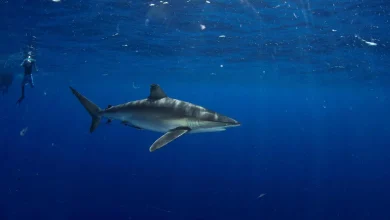
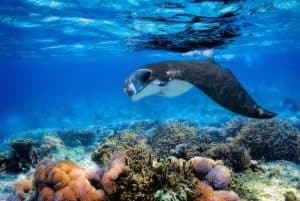
Additionally, the Red Sea Expedition explored large marine creatures including various shark species, manta rays, and whales. Moreover, several blue holes were also discovered along the southern coast of the Red Sea.
The coast’s magnificent geological formations create a diverse and enchanting biological environment, providing a haven for numerous marine creatures such as sea turtles, fish, and marine mammals.
Red Sea Decade Expedition Objectives
According to the NCW‘s announcement, the Red Sea Decade Expedition has six main objectives, which were to study:
- The diversity and distribution of corals in deep waters.
- Marine organisms in deep and mid-depth waters.
- The chemical and physical properties of the Red Sea.
- Biodiversity from start to finish, ranging from the smallest organisms to marine mammals.
- Seabed mapping in coastal and deep-water areas.
- Marine mammal species and habitat diversity.
Related Topics:
Red Sea Global: Leading Way in Eco-Friendly Supply Chain
National Center for Wildlife Development Reopens Riyadh Zoo
Saudi E1 Electric Boat Championship Kicks Off in Red Sea