Netanyahu Orders Lebanon Talks as Israeli Strikes Push US-Iran Truce to Brink
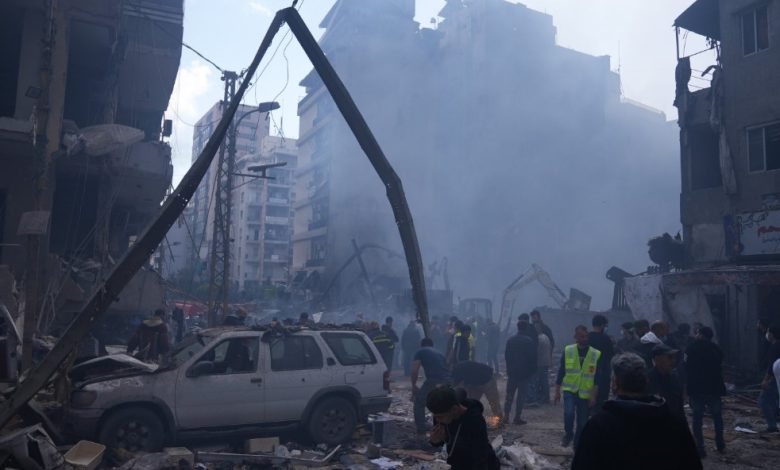
Israel announced it would soon start direct talks with Lebanon to resolve its conflict with Hezbollah, following massive strikes on Beirut and other Lebanese cities.
The announcement followed warnings from Iran of a “strong response” if attacks on Lebanon continue. Both Israel and the US claimed that Lebanon was not part of the two-week ceasefire agreement recently brokered between Washington and Tehran, putting the fragile truce at risk.
Lebanon Negotiations
Israeli Prime Minister Benjamin Netanyahu announced on Thursday that he instructed his Cabinet to begin direct negotiations with Lebanon “as soon as possible,” reported the Associated Press (AP).
“The negotiations will focus on disarming Hezbollah and establishing peaceful relations between Israel and Lebanon,” he said, noting that his decision came in response to requests from Lebanon.
Netanyahu also appreciated “the call made today by Lebanon’s prime minister to demilitarize Beirut.”
The negotiations will begin next week at the State Department in Washington, a source familiar with matter told the AP.
US Ambassador to Lebanon Michel Issa will represent the American side, while Israel’s Ambassador to the US Yechiel Leiter will lead the Israeli team. It remains unclear who will represent Lebanon in the talks.
Hezbollah-Israel Conflict
On Wednesday, just hours after the US and Iran agreed on a temporary truce, Israel pounded Lebanon with a massive wave of airstrikes, in the deadliest day since the conflict erupted on March 2.
Israel’s military announced it had carried out the largest coordinated strike of the war, targeting more than 100 Hezbollah command centers and military sites in Beirut, the Bekaa Valley and southern Lebanon.
The strikes killed at least 254 people and wounded over 1,100 across Lebanon, according to the Lebanese civil defense service.
After a brief pause under the US-Iran truce, Hezbollah resumed attacks on northern Israel on Thursday, firing rockets at the small kibbutz of Manara.
“This response will continue until the Israeli-American aggression against our country and our people ceases,” the Iranian-backed group said in a statement.
Furthermore, Hezbollah said its fighters were engaged in point-blank clashes with Israeli forces in the south Lebanon town of Bint Jbeil, according to Al-Arabiya.
Lebanon Loophole
The US and Iran announced late Tuesday a temporary truce that suspends attacks for two weeks in exchange for the complete, immediate, and safe opening of the Strait of Hormuz.
Pakistani Prime Minister Shehbaz Sharif, a key mediator in the US-Iran ceasefire talks, said that the truce would include Lebanon.
However, Netanyahu said that the ceasefire agreement did not apply to Lebanon and the Israeli military said it would continue operations against Hezbollah.
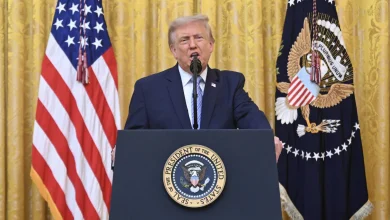
US President Donald Trump echoed similar statements, saying that Lebanon was not part of the ceasefire agreement “because of Hezbollah.”
Iran Response
Iran, for its part, insisted that Lebanon was part of the ceasefire, vowing strong response if Israeli attacks on the country did not stop.
“Ceasefire violations carry explicit and STRONG responses,” Iranian Parliament Speaker Mohammad Bagher Qalibaf posted on X. “Extinguish the fire immediately,” he added.
Meanwhile, Iran’s Revolutionary Guards warned they would “fulfill our duty and deliver a response” if Israel did not halt its attacks on Lebanon.
Furthermore, media reports suggested Iran closed the Strait of Hormuz again later on Wednesday despite the ceasefire, prompting the White House to call on Iran to reopen it “immediately, quickly and safely.”
Ceasefire at Risk
The US and Iran will hold talks in Pakistan over the weekend to consolidate the agreement and turn the fragile ceasefire into a lasting resolution. However, the dispute over Lebanon puts the fragile truce at risk of collapse.
US Vice President JD Vance, who is expected to lead the American negotiating team in Islamabad, said there was a “misunderstanding” regarding Lebanon.
“I think the Iranians thought that the ceasefire included Lebanon, and it just didn’t. We never made that promise,” he said during a visit to Hungary.
“If Iran wants to let this negotiation fall apart… over Lebanon, which has nothing to do with them, and which the United States never once said was part of the ceasefire, that’s ultimately their choice,” he added.
On the other hand, Qalibaf, who will likely lead the Iranian delegation, pointed to a violation of the “workable basis on which to negotiate,” making further talks “unreasonable.”
Similarly, Iran’s President Masoud Pezeshkian said that Israel’s violations of the ceasefire signal deception and non-compliance, rendering negotiations meaningless. “Our hands remain on the trigger. Iran will never forsake its Lebanese brothers and sisters,” he posted on X.