Iran threatened on Sunday to target U.S.-linked infrastructure across the Middle East if Washington follows through on President Donald Trump’s warning to strike Iranian power facilities unless the Strait of Hormuz is reopened.
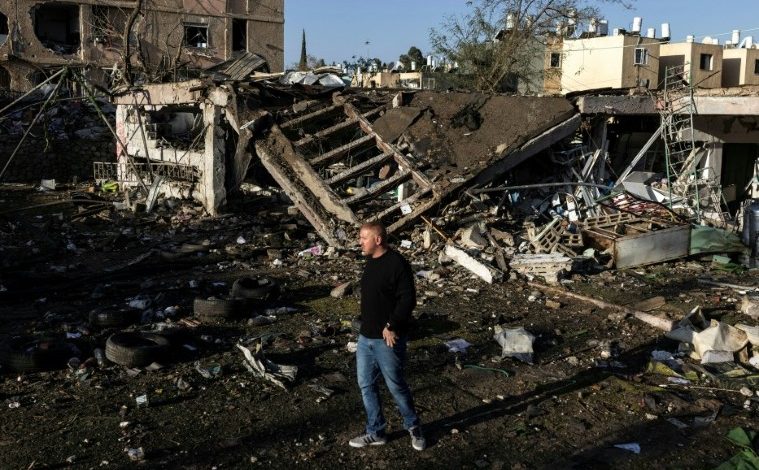
The warning came after Iranian missiles penetrated Israeli air defences and hit two towns in southern Israel, underlining Tehran’s ability to retaliate as the conflict entered its fourth week.
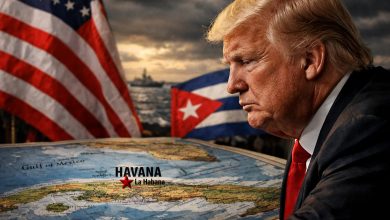
Trump said the United States would “hit and obliterate” Iranian power plants if Tehran did not reopen the strategic waterway within 48 hours, setting a deadline late on Monday.
In response, Iran’s military command said any attack on its facilities would prompt strikes on “all energy, information technology and desalination infrastructure” linked to the United States in the region.
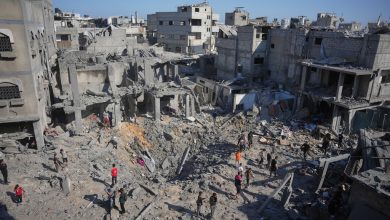
Air raid sirens sounded in Jerusalem early on Sunday as Iran launched a fresh barrage of missiles toward Israel, hours after strikes on Arad and Dimona wounded more than 100 people in one of the most damaging attacks since the war began on 28 February.
“There was a ‘boom, boom!’ My mother was screaming,” Arad resident Ido Franky, 17, said near the impact site.
Air defence systems fail to intercept missiles
Israel said it carried out a new wave of strikes on Tehran on Sunday in response. The military added it was investigating how air defence systems failed to intercept the incoming missiles.
The missile that struck near Dimona landed about 5 km (3 miles) from a sensitive nuclear facility, according to rescuers. Israel maintains ambiguity about its nuclear programme and has not confirmed possessing nuclear weapons.
Iran said the strike was retaliation for an earlier attack on its Natanz nuclear site, where the U.N. nuclear watchdog has warned of risks of escalation.
U.N. nuclear chief Rafael Grossi reiterated calls for restraint to avoid a potential nuclear accident.
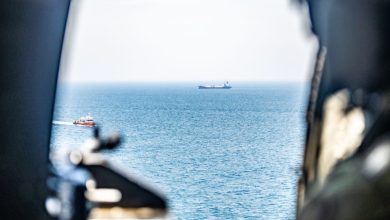
The escalation has heightened concern over the Strait of Hormuz, a vital shipping route for global energy supplies that carries roughly a fifth of the world’s oil and liquefied natural gas.
Oil prices surged above $105 a barrel amid fears of disruption, raising concerns about inflation and global growth.
A group of 22 countries, including Britain, France and Germany, said on Saturday they were prepared to support efforts to ensure safe navigation through the strait.
U.S. Central Command said it had struck an underground Iranian coastal facility this week, aiming to reduce Tehran’s ability to threaten shipping.
Attacks against Gulf states
Iran has also launched attacks against Gulf states it accuses of supporting U.S. operations. Saudi Arabia said it detected ballistic missiles near Riyadh on Sunday, while the United Arab Emirates reported intercepting missiles and drones.
The conflict has spread to Lebanon, where the Iran-backed Hezbollah group said it targeted Israeli forces near the northern border, and to Iraq, where multiple overnight attacks hit a U.S.-linked facility at Baghdad’s international airport, Iraqi officials said.
In Tehran, some residents left the capital over the weekend during the Persian New Year holidays, though others remained as strikes appeared to ease in recent days.
“The only common feeling these days is uncertainty,” said Shiva, a 31-year-old resident. “We have no income, and we don’t know how long we can continue like this.”