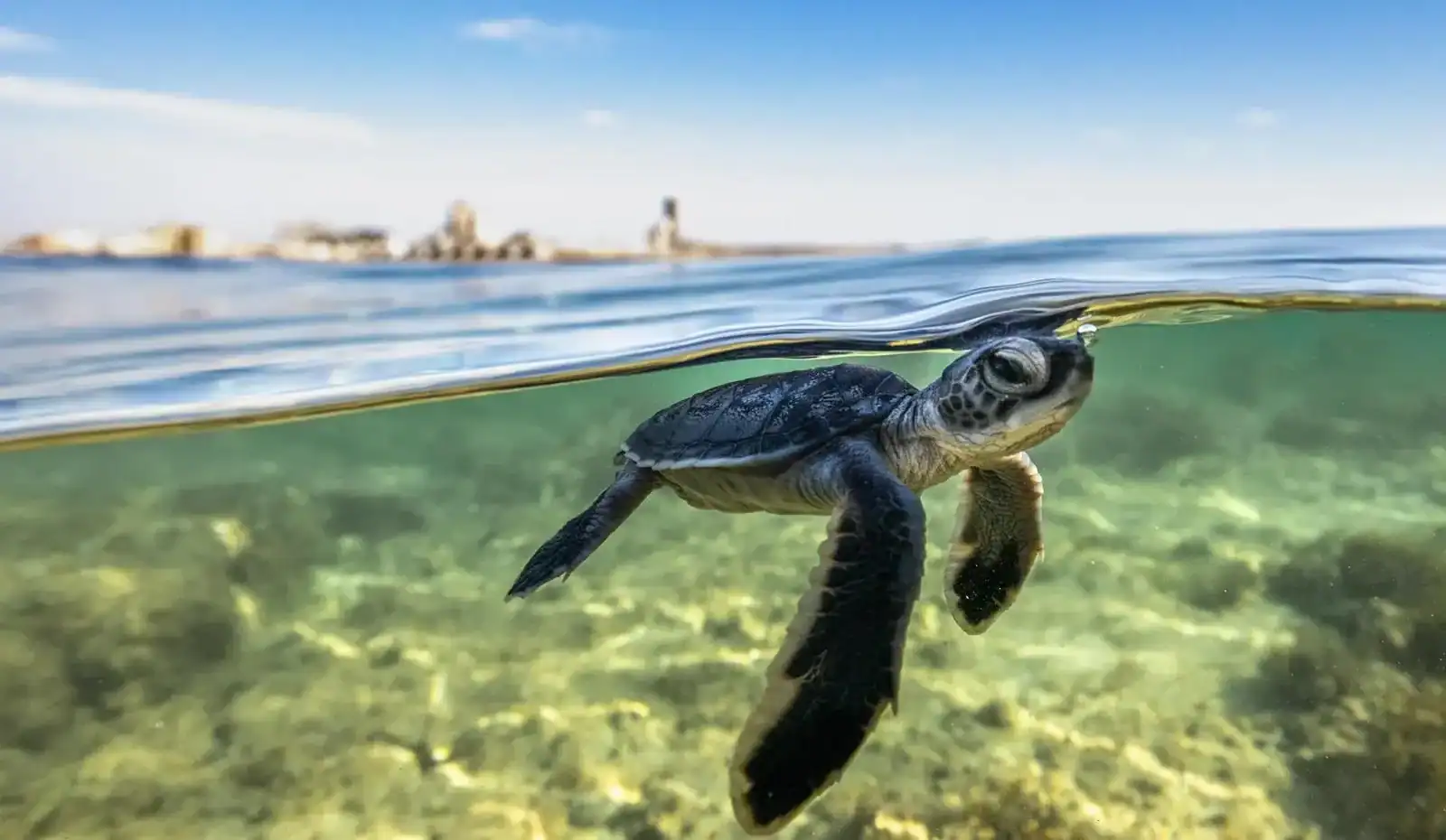
Saudi Arabia has unveiled the discovery of the largest sea turtle nesting site ever recorded in Saudi waters in the Red Sea, the Saudi Press Agency (SPA) reported.
Represented by the General Organization for the Conservation of Coral Reefs and Marine Turtles in the Red Sea (SHAMS), the discovery stands as a living proof of the Kingdom’s protection of sea turtles in the Red Sea.
Four Sisters Islands

Located at the Four Sisters Islands in the Red Sea, this environmental discovery stands as a testament to Saudi Arabia’s unwavering support to the marine ecosystem in line with Saudi Vision 2030.
In the light of this, CEO of SHAMS Dr. Khaled Isfahani stated that the Four Sisters Islands have been designated as a species management area designed basically to safeguard the turtles’ nesting habitats.
Therefore, the area has further boosted the Kingdom’s efforts to protect biodiversity and fulfill the environmental goals.

Crucially, these efforts are an integral part of a broader plan aiming to transform 30% of the Kingdom’s land and sea areas into nature reserves by 2030.
Interestingly, the Four Sisters Islands: Marmar, Dahreb, Malathu, and Jadir significantly boast high density of sea turtle nesting sites.
Currently, over 2,500 turtle nests have been recorded on these islands.

Thus, they became a vital breeding area for endangered turtles in the Red Sea, especially since the turtles that nest there return to the same sites each year.
In other words, they represent a haven for several endangered green turtles and critically endangered hawksbill turtles.
As a result, they secured a prestigious place among the most significant sea turtle nesting sites in the region.
SHAMS

Dr. Isfahani also noted that SHAMS is currently developing a comprehensive management strategy to preserve sea turtle nesting sites along the Red Sea coast.
Through unwavering support and efficient teams, SHAMS has identified over 180 nesting sites.

Moreover, it is intensifying its efforts to foster sustainable tourism and entertainment experiences around this exceptional area.
Such efforts perfectly align with the Saudi Green Initiative and Vision 2030 to protect the Kingdom’s natural heritage and marine biodiversity.
Related Topics:
Take a Look at Rare Species Sand Cat Reappearing in Saudi Arabia
ITBA Unveils Three Endangered Red-Necked Ostriches
Take a Look: Dazzling Geckos Glow in the Dark Desert of Saudi Arabia
Take a Look at Stunning Shots for Color Gradients of Saudi Camels