The International Monetary Fund (IMF) has issued a comprehensive assessment of the economic situation in the Gulf Cooperation Council (GCC) and the outlook for 2026, providing valuable recommendations on how to best leverage fiscal, monetary, financial sector, and structural policies to achieve robust growth in the future.
Based on the report, the GCC economies have shown strong resilience throughout 2025 despite challenging conditions and high uncertainty.
Saudi Arabia is a key driver of the region’s diversification agenda, with non-hydrocarbon investments constituting 85–90% of total capital formation and fueling strong sectoral growth, particularly in hospitality.
GCC Resilience
The IMF report, titled “Enhancing Resilience to Global Shocks: Economic Prospects and Policy Challenges for the GCC Countries,” notes that the GCC economies have maintained resilience in 2025, even with some temporary economic slowdown.
The non-hydrocarbon activity has sustained strong performance, driven by robust domestic demand and progress in economic reforms amid diversification efforts.
Furthermore, the economy has been largely insulated from regional spillovers, and the impact of higher US tariffs remains minor due to the exemption of energy products and limited US trade exposure. Also, inflation has been kept largely under control.
Saudi Non-Oil Performance
According to the IMF report, non-hydrocarbon investments (including government investment) in Saudi Arabia have accounted for 85% to 90% of overall gross capital formation.
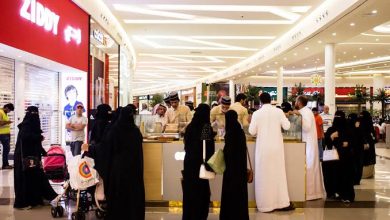
The tourism sector, in particular, is experiencing vigorous growth across Saudi Arabia, Qatar, and the UAE. Within the Kingdom, hospitality-related sectors have seen the fastest growth, with services such as wholesale and retail trade, hotels and restaurants recording strong performance.
Containing Inflation
Inflation across the Gulf Cooperation Council (GCC) region has remained broadly contained, averaging a deceleration to 1.5 percent in 2024 and holding steady at approximately 1 percent through the first seven months of 2025.
This containment is secured by the exchange rate peg, a neutral output gap, and maintained regulated prices and subsidies. Both tradable (around 1%) and non-tradable (below 1%) inflation benefited from moderated commodity prices and appropriately tight monetary policy, respectively.
As for Saudi Arabia, the moderation in non-tradable inflation has been distinctly observed, driven largely by a decrease in rental prices.
Fiscal Balances
The GCC countries have maintained fiscal discipline, adopting a contractionary fiscal policy. Despite lower oil prices, fiscal balances have been stable or gradually improving across the GCC, as a result of efforts to contain public expenditures and enhance non-hydrocarbon revenue generation.
The report explains that since 2023, general government fiscal balances as shares of GDP have exhibited relative stability at the annual frequency, with a wide variation in their level and composition.
Throughout this period, Saudi Arabia has been running moderate fiscal deficits amid continued strong project implementation.
Government Expenditures
Since 2023, the general government expenditures have remained roughly constant or increased moderately as shares of GDP in the GCC, according to the IMF report.
Saudi Arabia has achieved a significant non-hydrocarbon revenue mobilization. This achievement is mainly due to expanding the non-hydrocarbon tax base and improving revenue collection efficiency, including through digitalization.
Positive Outlook
The IMF points out that the economic outlook in the GCC remains favorable, attributing this to three key factors: the modest direct impact of trade-related uncertainty on the region; the strong project implementation due to policy buffers; and the phasing out of oil production cuts.
Over the medium term, the strong economic performance of the non-hydrocarbon sector – supported by diversification efforts and the expansion of oil and natural gas production and export capacities – will drive growth in the GCC.
In 2026, hydrocarbon growth will accelerate further to 5.9% on average. Meanwhile, non-hydrocarbon growth will differ across GCC countries due to country-specific factors and the different pace of reform implementation.
Hence, over the medium term, non-hydrocarbon growth will range from 2.5% in Kuwait and Qatar to 3.5-4% in Bahrain, Oman, and Saudi Arabia, and 4.5% in the UAE.
The report also mentions hosting major international events, such as the AFC Asian Cup in 2027, the Asian Winter Games in 2029, the World Expo in 2030, and the World Cup in 2034, as a key driver of this growth in Saudi Arabia.
Moreover, the report expects inflation to stabilize at around 2% in the medium term. It also projects external balances to narrow but remain strong.
Potential Risks
In terms of risks, the report notes that near-term risks are tilted to the downside, driven by potential drops in oil prices and tighter financial conditions amidst high global uncertainty.
In the medium term, however, ongoing shifts in the global structure create mixed opportunities and challenges for the GCC economies.
Policy Recommendations
The IMF report recommends a balanced, multi-pronged approach across fiscal, monetary, financial, and structural fronts to build economic resilience, accelerate diversification efforts, and ensure long-term stability and growth.
Fiscal Policy
The report says that fiscal strategy must balance intergenerational equity, stabilization, and diversification. The current mild contraction is appropriate in the near term, with no further cuts needed despite lower oil prices, due to existing buffers and investment prioritization.
However, medium-to-long-term consolidation (6-18% of non-oil GDP) is required in Bahrain, Kuwait, Oman, and Saudi Arabia. This must be achieved by aggressively mobilizing non-hydrocarbon revenue and phasing out energy subsidies, while protecting high-priority capital spending and adopting robust fiscal frameworks and risk monitoring.
Monetary Policy
According to the IMF, the GCC should maintain the current currency-peg framework given its stability record. The key priority is to strengthen monetary policy transmission through enhanced liquidity management and deeper domestic financial markets.
Financial Stability
Given the strong banking system, macroprudential policy must remain proactive in managing systemic risk amidst global volatility. Financial regulation and supervision must also continuously align with international standards for sustained stability.
Structural Policies for Diversification
To enhance resilience, structural reforms must be accelerated and prioritized irrespective of oil prices, focusing on productivity, deeper domestic financial markets, and increased international integration, the report notes.
Enabling Environment
Further reforms are needed to streamline administration, enhance the rule of law, and increase transparency. Labor markets require addressing the public-private wage gap, improving expatriate worker mobility, boosting FLFP, and tackling skill mismatch.
Leveraging digitalization and AI is critical for productivity, requiring policy support for innovation alongside strengthened social safety nets.
Deepening Domestic Financial Markets
Deeper markets are essential for mobilizing long-term capital and supporting diversification. There is scope to increase the depth of private sector credit (especially for SMEs) and local currency bond markets. This requires prudent fiscal policy, increased competition, better credit information, and the removal of structural impediments.
Trade and Financial Integration
Fostering diverse international relationships mitigates trade uncertainty. Intra- and interregional trade should be boosted by reducing non-tariff barriers and leveraging trade agreements. Financial integration can be supported by relaxing foreign investment restrictions and creating an enabling regulatory environment.