
Guardrails Against AI Misuse: Saudi Arabia Demands Human Oversight at UNSC
At the UN Security Council (UNSC), Saudi Arabia has issued a stern warning against the irresponsible use of artificial intelligence (AI) and the exploitation of emerging technologies.
Riyadh’s call is driven by its leadership in e-governance and digital transformation and its status as a global anchor where cutting-edge AI innovation meets responsible, human-centric ethics.
Riyadh Sets the Red Lines at the UNSC
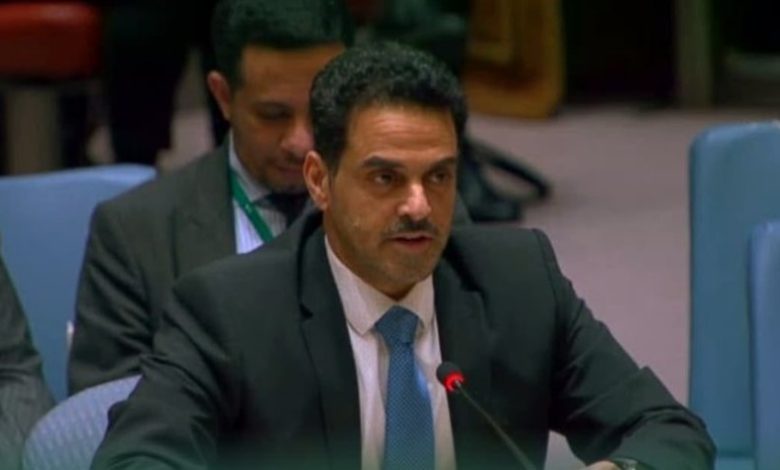
Driving the News: Acting Chargé d’Affaires of Saudi Arabia’s Permanent Mission to the UN, Faris Al-Otaibi, took part in the UNSC open debate on conflict resolution amid rapid technological change on November 25, 2026.
The Big Picture: During his speech, Al-Otaibi highlighted the need to respect international humanitarian law and establish human oversight and accountability over AI use.
Why It Matters: The UNSC has increasingly recognized that rapid advances in AI and other new and emerging technologies have implications for international peace and security, including their potential misuse in armed conflict, cyber operations, disinformation campaigns, and terrorist activities.
A Call for Transparency
The Context: Al-Otaibi called for transparency in explaining the capabilities, limitations, and potential risks of AI systems. He also stressed the need to implement appropriate precautionary measures and adhere to fundamental principles, most notably human responsibility, in AI use.
Go Deeper: The Riyadh-based International Center for AI Research and Ethics (ICAIRE) is designated as an official UNESCO Category 2 Center, acting as a global hub for advancing ethical AI research, policy coordination, capacity building, and awareness. Its work examines AI hallucinations – a phenomenon where AI systems generate confident but unfounded responses – and related technical risks through research, global guidance, and international workshops, highlighting why unverified AI outputs in sensitive security settings demand strict human oversight.
Flashback: In collaboration with ICAIRE and the Saudi National Commission for Education, Culture and Science, the Saudi Data and AI Authority (SDAIA) and UNESCO co-hosted the fourth UNESCO Global Forum on the Ethics of AI (GFEAI 2026) in Riyadh in mid-September 2026. The event focused on fostering global dialogue on responsible AI governance, enhancing the exchange of expertise and best practices, and exploring avenues for harnessing AI technologies to support sustainable development and promote societal prosperity.
How Can AI Threaten Regional Security?
State of Play: In his speech, Al-Otaibi warned against the exploitation of emerging technologies by terrorist groups, including components that could be used to develop military capabilities.
The Backstory: The 2023 Global Report on the Acquisition, Weaponization, and Deployment of Unmanned Aircraft Systems (UAS), released by the UN Office of Counter-Terrorism (UNOCT) and Conflict Armament Research (CAR), highlighted the risks associated with non-state actors acquiring off-the-shelf commercial components and converting them into weaponized drones leveraging AI and advanced technologies for terrorism-related purposes.
Between the Lines: In line with its pivotal efforts to combat terrorism, Saudi Arabia has been a major financial contributor to the UN Counter-Terrorism Center (UNCCT), which leads global research and capacity-building efforts against the terrorist misuse of AI and autonomous drones. The center was established in 2011 with a $10 million contribution from Riyadh. In September 2026, the Kingdom pledged $6 million in financial support for the center’s programs. It also provided $300,000 to fund the Arab Counter-Terrorism Strategy project.
The Saudi Model: From Riyadh to New York
Zoom In: Saudi Arabia called for strengthening international cooperation, capacity building, and expertise exchange to enable countries to benefit from modern technologies while ensuring their safe and responsible use.
The Bigger Picture: Riyadh has set a regional benchmark in establishing regulatory frameworks and guardrails for the ethical use of AI and emerging technologies. These initiatives are spearheaded by SDAIA.
- AI Ethics Principles: Launched in September 2023, the AI Ethics Principles aim to guide public, private, and non-profit entities in Saudi Arabia on the ethical use of AI based on seven core principles: fairness, privacy and security, humanity, social and environmental benefits, reliability and safety, transparency and explainability, and accountability and responsibility.
- AI Adoption Framework: Launched in September 2024, the AI Adoption Framework provides a roadmap to help organizations across the Kingdom adopt AI responsibly and effectively.
- Deepfakes Guidelines: Issued in May 2026, SDAIA’s “Deepfakes Guidelines: Mitigating Risks While Fostering Innovation” aims to guide developers and creators on the need to adhere to strict ethical and regulatory standards, including protecting personal data, obtaining explicit consent, and implementing technical safeguards such as digital watermarks and source verification.
- AI Market Regulation Tools: Released in May 2025, the AI Market Regulation Tools guide is a framework that combines voluntary incentives, accreditation, self-assessment, and technical standards to promote responsible AI adoption.
- International AI Safety Report: Saudi Arabia, represented by SDAIA, has contributed to the International AI Safety Report in its 2025 and 2026 editions alongside global partners, providing insights on balanced digital governance, risk evaluation, and general-purpose AI capabilities.
Saudi Arabia: A Responsible AI Leader
Vision 2030 Link: Al-Otaibi’s call at the UNSC, along with Riyadh’s active efforts to promote ethical AI, aligns with the objectives of Saudi Vision 2030, which aims to establish the Kingdom as a global hub for technological innovation while upholding the highest standards of responsibility and technical security.
The Bottom Line: The Saudi envoy’s UNSC speech underscores the Kingdom’s commitment to playing an active role in shaping the future of AI and promoting sustainable development while safeguarding security and protecting civilians.