CEER, Saudi Arabia’s first electric vehicle (EV) brand, has signed SAR 3.7 billion ($986.6 million) in landmark deals to localize manufacturing in the Kingdom.
The agreements align with CEER‘s strategy to localize 45% of vehicle materials and components by 2034, in support of the objectives of Saudi Vision 2030.
CEER Landmark Deals
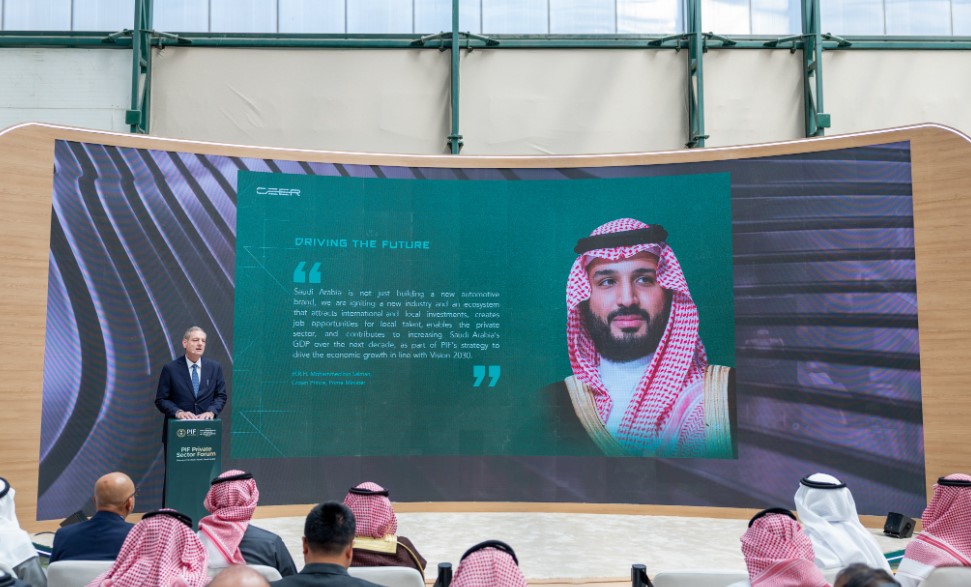
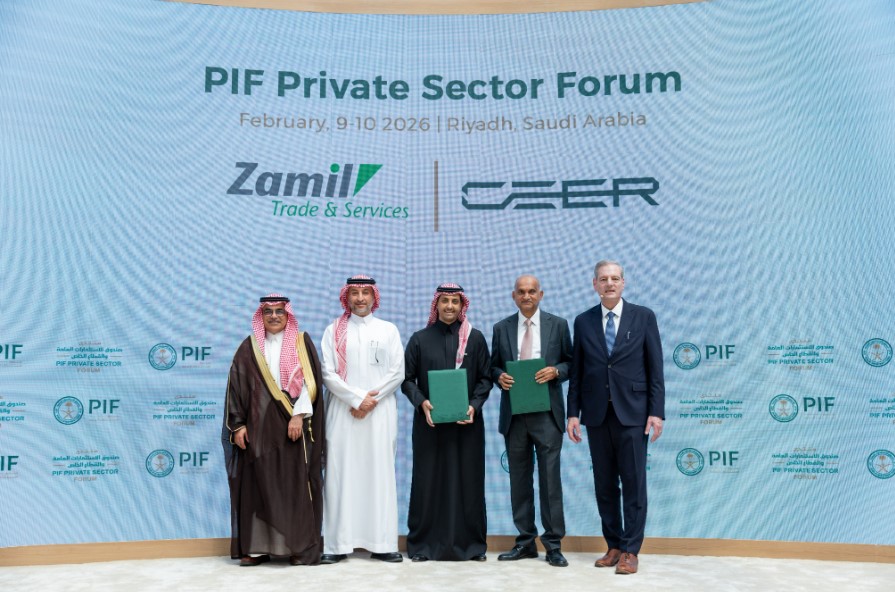
At the PIF Private Sector Forum 2026 in Riyadh, CEER announced signing 16 new agreements worth SAR 3.7 billion, reported the Saudi Press Agency (SPA). These deals expand upon the SAR 5.5 billion in contracts signed during the previous year’s event.
This move also marks CEER’s transition from planning to active implementation, as part of a long-term strategy aimed at solidifying domestic industrial value chains and enhancing readiness for advanced EV manufacturing in Saudi Arabia.
CEER & Vision 2030
Launched in 2022 as a joint venture between the Public Investment Fund (PIF) and Foxconn, CEER is Saudi Arabia’s first homegrown automotive brand dedicated to the design, manufacture, and sale of EVs. It develops a flagship range of sedans and SUVs tailored for the Middle East market.
CEER is a catalyst for the Saudi Vision 2030 objectives, aiming to attract SAR 562 million in foreign direct investment, create 30,000 jobs, and contribute SAR 30 billion to the national GDP by 2034.
Advancing EV Localization
Speaking at the PIF Private Sector Forum, CEER’s CEO, James DeLuca, said that these agreements are a “cornerstone of CEER’s wide and deep localization strategy,” explaining that this strategy targets sourcing 45% of vehicles material and components from Saudi companies by 2034.
“Our approach goes beyond mere assembly, we are utilizing local raw materials and empowering Saudi companies to become global suppliers, directly contributing to Vision 2030’s mission to diversify the national automotive industry and drive sustainable economic growth,” he said.
DeLuca also added that CEER will unveil new models this year. “2026 is the year of CEER. We will reveal our first flagship models, visionary design, breakthrough tech, exhilarating performance, built for this region. This moment is more than a reveal, it’s the start of a new era,” he said.
Building Automotive Ecosystem
The new agreements align with Saudi Arabia’s efforts to create a comprehensive automotive ecosystem by leveraging local resources, attracting advanced technology and foreign investment, as well as localizing the manufacturing of large-scale and labor-intensive components.
Moreover, these deals contribute to reducing carbon emissions and to creating high-value jobs for Saudi nationals, DeLuca noted.
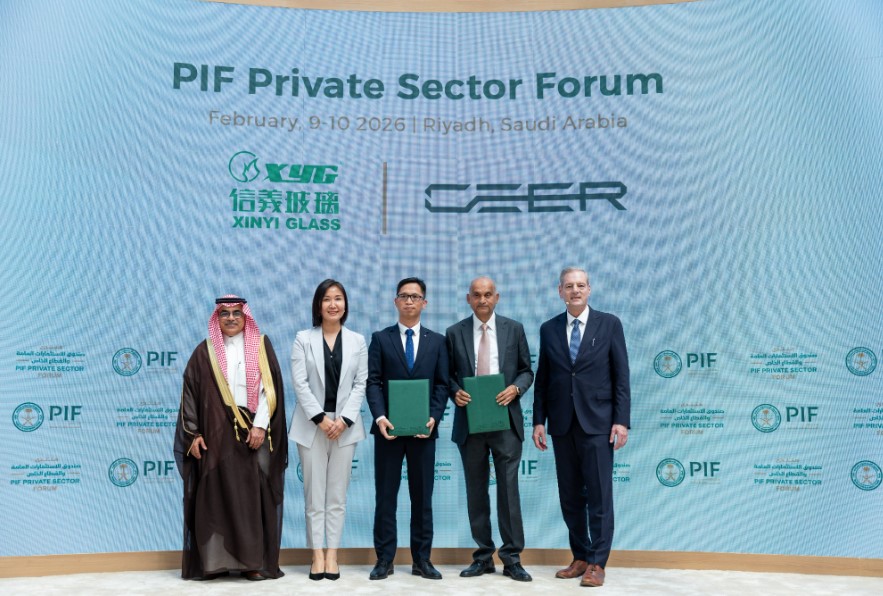
As a practical expansion of CEER’s localization strategy, DeLuca said that memoranda of understanding (MoUs) signed last year have been upgraded into direct commercial contracts with a diverse range of local and international partners.
These agreements cover the supply of windshield washer fluids, electric vehicle coolants, and forklift equipment. They also cover the procurement of brake fluids, aerodynamic access covers, front-end modules, polypropylene resins, and polymer compounds. Additionally, the contracts provide for chemical components, including cavity baffles and structural adhesives, as well as the development and installation of infrastructure for automotive body shops.
Boosting Local Value Chain
As part of bolstering the domestic ecosystem, new MoUs were signed to localize the production of expanded polypropylene (EPP); heating, ventilation, and air conditioning (HVAC) systems; and the manufacturing of window regulators and door hinges.
These strategic partnerships cover the production and supply of critical components within the Kingdom, ranging from high-tech chemical compounds to heavy automotive body equipment.
This establishes a robust and reliable supply chain for CEER’s fleet of seven models expected over the next five years, while supporting the development of a sustainable, high-tech industrial base in Saudi Arabia.