Saudi Arabia is gathering world leaders, policymakers, international organizations, and key stakeholders for the 16th session of the United Nations Convention to Combat Desertification (UNCCD COP16).
To run from December 2-13, 2024, under the theme “Our Land, Our Future,” COP16 Riyadh aims to provide a global platform to address challenges related to land degradation, drought, and desertification, in addition to accelerating action on land and drought resilience through a people-centered approach.
COP16: Unifying Global Efforts
At the opening session on Monday, Saudi Arabia was elected president of COP16 to lead global efforts in land restoration and fighting desertification for a two-year term.
On this occasion, the Saudi Minister of Environment, Water and Agriculture, and President of COP16, Abdulrahman Al-Fadli, stressed the need for a comprehensive approach encompassing environmental, economic, and social policies to address challenges like drought.

According to the Saudi Press Agency (SPA), he emphasized the importance of unifying efforts to achieve sustainable outcomes and fulfill the UNCCD commitments. “The purpose of the dialogue is to strengthen global and national policy tools for the proactive management of drought, a critical environmental challenge impacting ecosystems, economies, and societies,” Al-Fadli said.
He added that the world “is actively working to tackle this issue through various international initiatives, such as the Integrated Drought Management Program by the Global Water Partnership, the World Meteorological Organization, the Drought Initiative of the United Nations Convention to Combat Desertification, and the establishment of international working groups focused on drought.”
Saudi Arabia’s Environmental Commitments
The Saudi Environment Minister said that hosting the COP16 in Riyadh is a testament to Saudi Arabia’s commitment to environmental efforts, according to Asharq Al-Awsat.
In the light of this, Al-Fadli highlighted the Kingdom’s increased efforts to address major environmental challenges, in line with the UNCCD, and to enhance cooperation under the existing global agreements, including the Rio Conventions on climate change and biodiversity.
He added that Saudi Arabia is working closely with international partners to address issues such as land degradation, drought, and desertification, given that the Middle East is one of the most affected regions by these challenges.
Environmental Measures
Aiming to achieve its environmental goals, Saudi Arabia developed a National Environmental Strategy, established a dedicated fund and five specialized centers, updated regulations to adhere to global standards, and launched initiatives to reduce pollution, boost vegetation cover and enhance waste management and climate research.
Moreover, Al-Fadli highlighted the Saudi Green Initiative (SGI). Launched in 2021, the SGI aims to achieve three main targets: help Saudi Arabia achieve net-zero emissions by 2060, support its green transformation, and protect land and sea.

The ultimate target of the SGI is to grow 10 billion trees and rehabilitate over 74 million hectares of land. So far, Saudi Arabia has planted over 49 million trees and rehabilitated 94,000 hectares of degraded lands. Furthermore, it launched more than 40 projects to grow over 600 million trees and rehabilitate 8 million hectares by 2030.
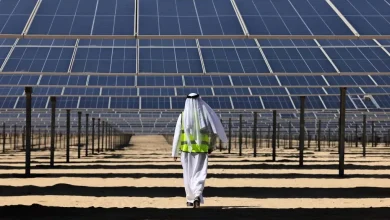
Saudi Arabia also aims to generate 50% of its energy from renewable sources by 2030 and cut carbon dioxide emissions. Moreover, Al-Fadli pointed out that the Kingdom has developed a National Water Strategy to preserve resources and launched recycling projects to promote sustainability.
The Kingdom’s efforts also include a National Agricultural Strategy to improve production efficiency and farmland management, as well as a National Food Security Strategy aimed at reducing food loss and waste.
Strengthening Partnerships at COP16
The Saudi Environment Minister said that the Kingdom is working to bolster partnerships among governments, the private sector, local communities, and NGOs, while adopting binding measures to boost international cooperation.
To this end, Saudi Arabia has launched the Riyadh Global Drought Resilience Partnership on the first day of COP16, according to SPA. The initiative aims to make a transformative shift in drought resilience by enhancing early warning systems, financing, vulnerability assessments, and drought risk mitigation.
Today, #COP16Riyadh was set in motion. Global experts from government, research, and grassroots organizations attended the opening ceremony to join forces for helping our planet’s lands thrive for the wellbeing of present and future generations.
Watch some of day one’s… pic.twitter.com/tlzNzXvwXZ
— COP16 Riyadh (@Cop16Riyadh) December 2, 2024
On day one, the Riyadh Global Drought Resilience Partnership secured $2.15bn in commitments: Saudi Arabia pledged $150mn, the Islamic Development Bank pledged $1bn and the OPEC Fund for International Development pledged $1bn, according to the UN.
Highlighting Drought Risks
Furthermore, the UNCCD, in collaboration with the European Commission Joint Research Centre (JRC) and partners, launched the World Drought Atlas, the most comprehensive global publication on drought risks and solutions.
It uses maps, infographics, and case studies to illustrate the systemic risks of drought across critical sectors like energy, agriculture, river transport and trade.
Additionally, the International Drought Resilience Alliance (IDRA) introduced the prototype International Drought Resilience Observatory (IDRO). It is an AI-powered global platform designed to empower diverse stakeholders with actionable insights for building drought resilience.
Saudi Green Initiative Forum
In conjunction with the COP16 Riyadh, Saudi Arabia has kicked off the fourth edition of the Saudi Green Initiative Forum, reported SPA.
Under the theme Action is in our Nature, the Forum gathers global experts, policymakers, business leaders, and specialists to discuss critical topics such as land rehabilitation and harnessing innovations to cut carbon emissions.
They will also discuss funding the green transition to support sustainable livelihoods, and leveraging natural solutions to help communities adapt to climate change. The Forum also prioritizes the preservation of Saudi Arabia’s rich biodiversity.
Running from December 3-4, 2024, the Saudi Green Initiative Forum will review progress made towards climate and environmental goals in line with the SGI. It will also explore strategies to combat desertification, restore degraded land, and harness environmental innovations to create a more sustainable future.