
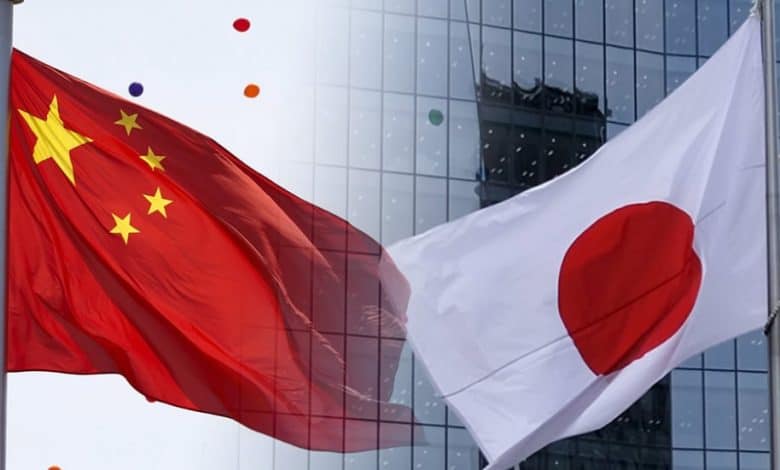
China has taken its widening spat with Japan to the United Nations, accusing Tokyo of threatening “an armed intervention” over Taiwan. China’s UN Ambassador Fu Cong wrote a letter to UN Secretary-General Antonio Guterres, calling Japanese Prime Minister Sanae Takaichi’s remarks a grave violation of international law.
Fu Cong stated that if Japan attempts an armed intervention in the cross-Strait situation, it would be an act of aggression. “China will resolutely exercise its right of self-defense under the UN Charter and international law and firmly defend its sovereignty and territorial integrity,” he wrote.
Japan’s Controversial Stance
Takaichi, a conservative nationalist, recently stated that a hypothetical Chinese attack on Taiwan could be deemed a situation threatening Japan’s survival. This statement allows for the deployment of Japan’s military. However, Japan’s Foreign Ministry and Prime Minister’s Office have not immediately responded to Fu’s letter.
China has repeatedly emphasized the Potsdam and Cairo declarations, which envision restoring Taiwan and other territories to Chinese rule. These declarations form the basis for China’s legal claims of sovereignty over Taiwan.
Impact on Relations
The dispute has spilled beyond diplomacy, affecting trade cooperation and cultural exchanges, with China stating that the dispute has “severely damaged” trade cooperation, and Beijing has abruptly canceled concerts of Japanese musicians.
Fu demanded that Japan stop making provocations and retract its erroneous remarks, arguing that these remarks openly challenge China’s core interests.
As the 80th anniversary of Japan’s World War Two defeat approaches, Beijing has increasingly invoked Tokyo’s wartime atrocities and China’s postwar role in setting up the UN to criticize its Asian neighbor and seek to reshape the international governance system.
Taiwan’s government rejects Beijing’s claims, asserting that only the island’s people can decide their future.