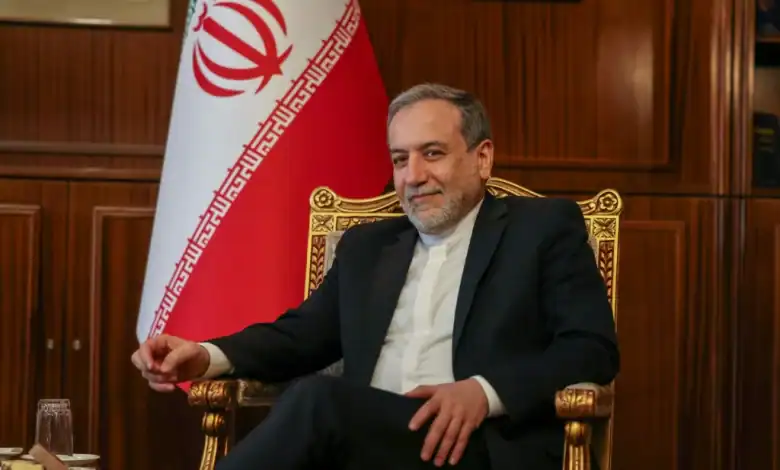
Iranian Foreign Minister Abbas Araghchi will meet on Tuesday with UN nuclear watchdog chief Rafael Grossi in Egypt, according to AFP.
Cairo Meeting
This meeting marks the first talks since Tehran suspended cooperation with the International Atomic Energy Agency (IAEA) two months ago.
“During a trip to Cairo, a meeting will be held with the Director General of the International Atomic Energy Agency to conclude negotiations on a new protocol for interaction between Iran and the Agency,” Iran’s official IRNA news agency reported.
Set to take place on Tuesday, the meeting will bring together Egyptian Foreign Minister Badr Abdelatty, Araghchi, and Grossi.
Iran & IAEA Relations
In the aftermath of the war, Iran issued a law suspending cooperation with the IAEA. Meanwhile, the agency had withdrawn its last remaining inspectors from Tehran.
Iranian relations with IAEA have deteriorated since the United States and Israel attacked Iranian nuclear facilities in June in order to eliminate Iran’s nuclear program.
Moreover, Iranian President Masoud Pezeshkian said that the agency should abandon its “double standards” if Tehran wants to resume cooperation with it, according to Reuters.
New Form of Cooperation
In July, however, Araqchi stated that Tehran intended to collaborate with the UN nuclear watchdog, but the cooperation would “take a new form and will be guided and managed through the Supreme National Security Council.”
Therefore, a team of IAEA inspectors briefly returned to Iran in August to oversee the replacement of fuel at the Bushehr nuclear power plant and departed shortly afterwards.
Notably, the team did not gain access to other key sites, including Fordo and Natanz, which were hit during the conflict.
Snapback Sanctions
Apart from this, Britain, France, and Germany have for weeks threatened “to use the ‘snapback’ mechanism — which allows for the reimposition of all international sanctions against Iran — in the absence of concrete progress” towards a new deal on Iran’s nuclear program “by the end of the summer”, the French Foreign Ministry said.
In response, Araqchi stated that European countries have no moral or legal grounds for reactivating UN sanctions.
“If EU/E3 want to have a role, they should act responsibly and put aside the worn-out policies of threat and pressure, including the ‘snap-back’ for which they (have) absolutely no moral (or) legal grounds,” Araghchi said on X.
Related Topics:
Iran-Israel: The Hidden Truths Dr. Ziad Noujeim Dares to Unveil
Xi Backs Iran’s Nuclear Rights, Rejects Force to Resolve Disputes
Western Powers Urge Iran to Agree Deal to Postpone UN Sanctions