In a controversial move, the US President, Donald Trump, has called for free transit for all American commercial and military ships through the Suez and Panama canals.
Trump claimed that both maritime routes would have not existed without the US, a claim that has raised questions about the US affiliation to the Suez Canal, an Egyptian strategic waterway linking Europe and Asia.
Trump’s Call
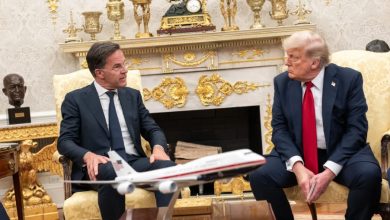
On Saturday, the US President demanded free transit for all American vessels. “American Ships, both Military and Commercial, should be allowed to travel, free of charge, through the Panama and Suez Canals! Those Canals would not exist without the United States of America,” Trump wrote on his Truth Social.

“I’ve asked Secretary of State Marco Rubio to immediately take care of, and memorialize, this situation!” the US President added.
Suez Canal: A Vital Waterway
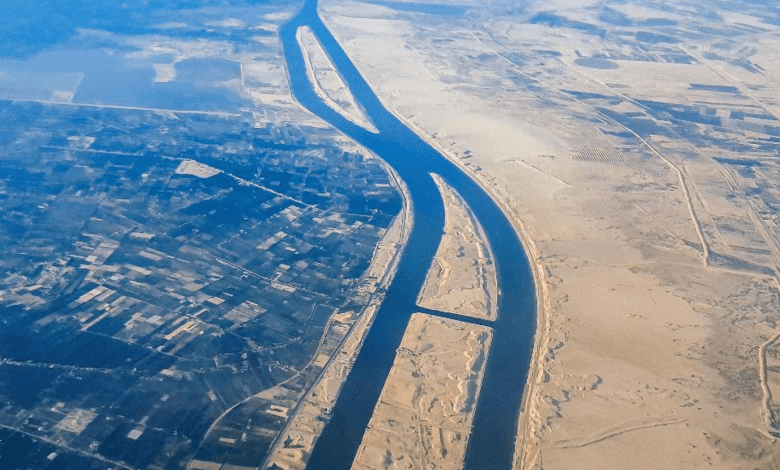
The Suez Canal is a key waterway in Egypt, linking Europe and Asia. The strategic canal connects the Mediterranean Sea to the Red Sea, accounting for about 10% of the global maritime trade, according to the Guardian. Dividing Africa and Asia, the Suez Canal is the shortest maritime route between Europe and the countries located around the Indian and western Pacific oceans.
However, the attacks of the Houthi militia against shipping in the Red Sea have affected transit through the canal, forcing ships to take a longer route around the south of Africa.
Suez Canal History
The origins of the first canal in the region date back to Egypt’s Twelfth Dynasty, when the Egyptian Pharoah, Senausert III, came up with the idea of digging a canal that connects the Mediterranean and the Red Seas via the Nile and its branches.
However, the actual history of the Suez Canal begins in 1854, when Ferdinand de Lesseps received the First Concession from Egypt’s viceroy (Khedive), Said Pasha, to establish a company to dig the Suez Canal. Under the Concession’s articles, de Lesseps shall establish the company and oversee its work; the Egyptian government shall appoint the company’s president; the Concession shall last for 90 years since inauguration; and the Egyptian government shall receive 15% of the Company’s annual net profit.

Moreover, the Concession stipulated that all countries shall be treated equally and without discrimination, and that the Egyptian government shall take over the canal and its affiliated buildings when the concession ends.
Then, in 1856, a Second Concession was issued, underscoring the canal’s neutrality. In 1858, the Universal Suez Canal Company was established with a capital of 200 million Francs (8 million Egyptian Pounds) divided over 400,000 shares. Egypt ended up with owning roughly half of the Company’s capital, after Britain, the US, Austria and Russia refused to take part in the public offering.
Digging started in 1859 and lasted for ten years, excavating 74 million m3 of soil with an execution cost of 433 million Francs (17320000 Egyptian Pounds). The Suez Canal was officially inaugurated on November 17th, 1869, in a fascinating ceremony that brought together world leaders.
Suez Canal Nationalization
In 1956, the Egyptian President, Gamal Abdel-Nasser, declared the nationalization of the Suez Canal, transferring all its assets, rights and obligations to the Egyptian State and compensating all stockholders and holders of founder shares.
Since then, the Suez Canal has undergone several development processes and expansions, the latest of which was in 2014, extending the canal’s total length to 72 km.