

Saudi Arabia on Sunday gathered top diplomats and officials from across the Arab World and Europe in Riyadh for meetings to discuss the future of Syria and explore ways to support the Syrian people.
The Riyadh Meetings built upon the Aqaba talks, held in Jordan in December 2024. It involved two sessions; an Arab ministerial meeting and an expanded ministerial meeting that brought together Arab and Western diplomats. The participants reiterated support for Syria at this critical stage after the fall of the Assad regime, calling for a Syrian-led inclusive transition process.
Supporting Syria’s Unity
According to a statement issued by the Riyadh Meetings Presidency, the meetings on Syria discussed practical steps to support the Syrian people and rebuild Syria as a unified and independent Arab State that is secure for all its citizens. They stressed the need for a country free from terrorism or breaches of its sovereignty and territorial integrity.

Moreover, the participants expressed their support for a political transition process that includes all Syrian political and social groups and protects the rights of all Syrians. They also pointed to the need for addressing any challenges or concerns through dialogue. The participants reiterated their support for the choices and will of the Syrian people.
With regards to Israel’s incursions into the buffer zone in Syria and neighboring sites in Jabal al-Shaykh (Mount Hermon) and Quneitra Governorate, the participants voiced concern and stressed the need to respect Syria’s unity, sovereignty, and territorial integrity.
Arab-Western Participation
The Riyadh Meetings on Syria brought together foreign ministers and top diplomats from many Arab and Western countries who arrived upon an invitation from Saudi Arabia to join the high-level talks. The participants included the Foreign Ministers of Egypt, the UAE, Jordan, Oman, Bahrain, Kuwait, Qatar, Syria, Lebanon, Iraq and Türkiye.
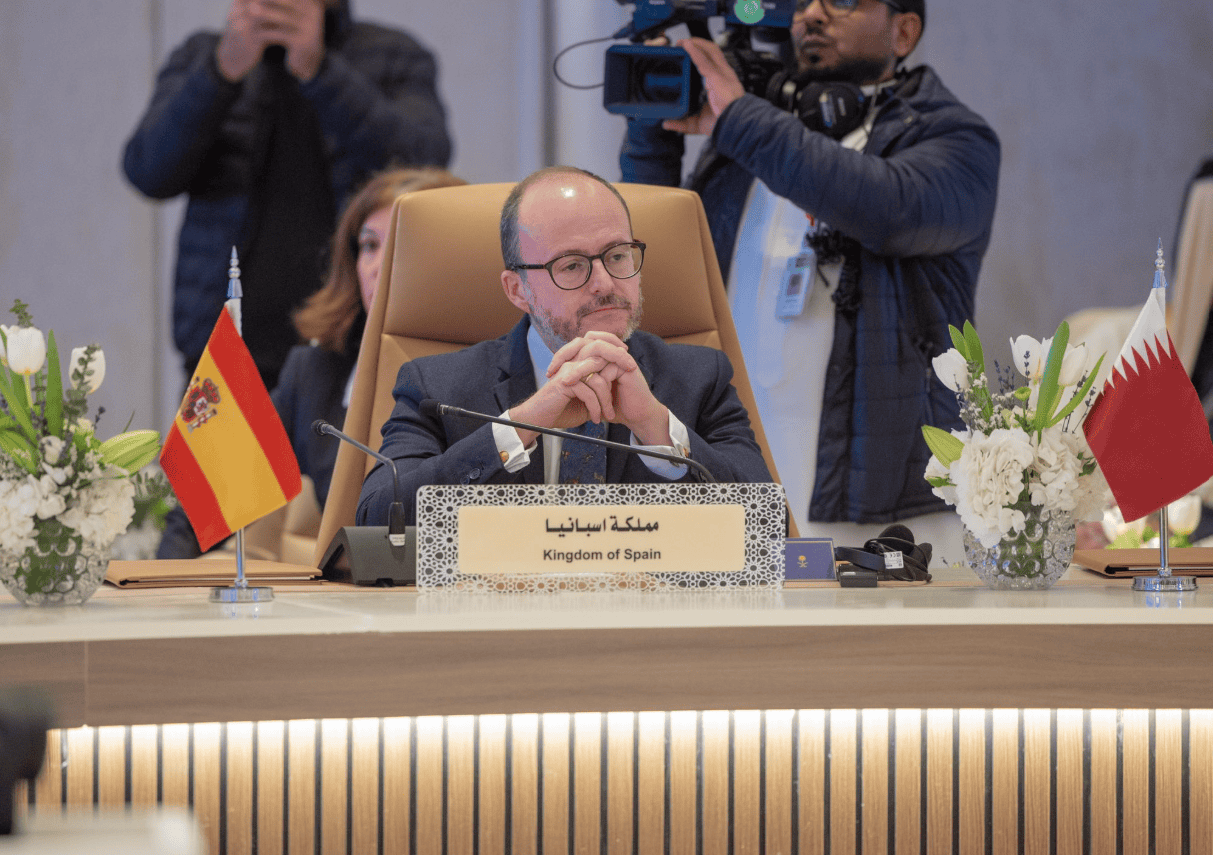
In addition, the Foreign Ministers of Germany, Italy, Spain, and the UK, as well as the French President’s Advisor for the Middle East and North Africa, took part in the meetings. The Secretary-General of the Arab League, Ahmed Aboul Gheit, and the Secretary-General of the Gulf Cooperation Council (GCC), Jasem Al-Budaiwi, also joined the talks.
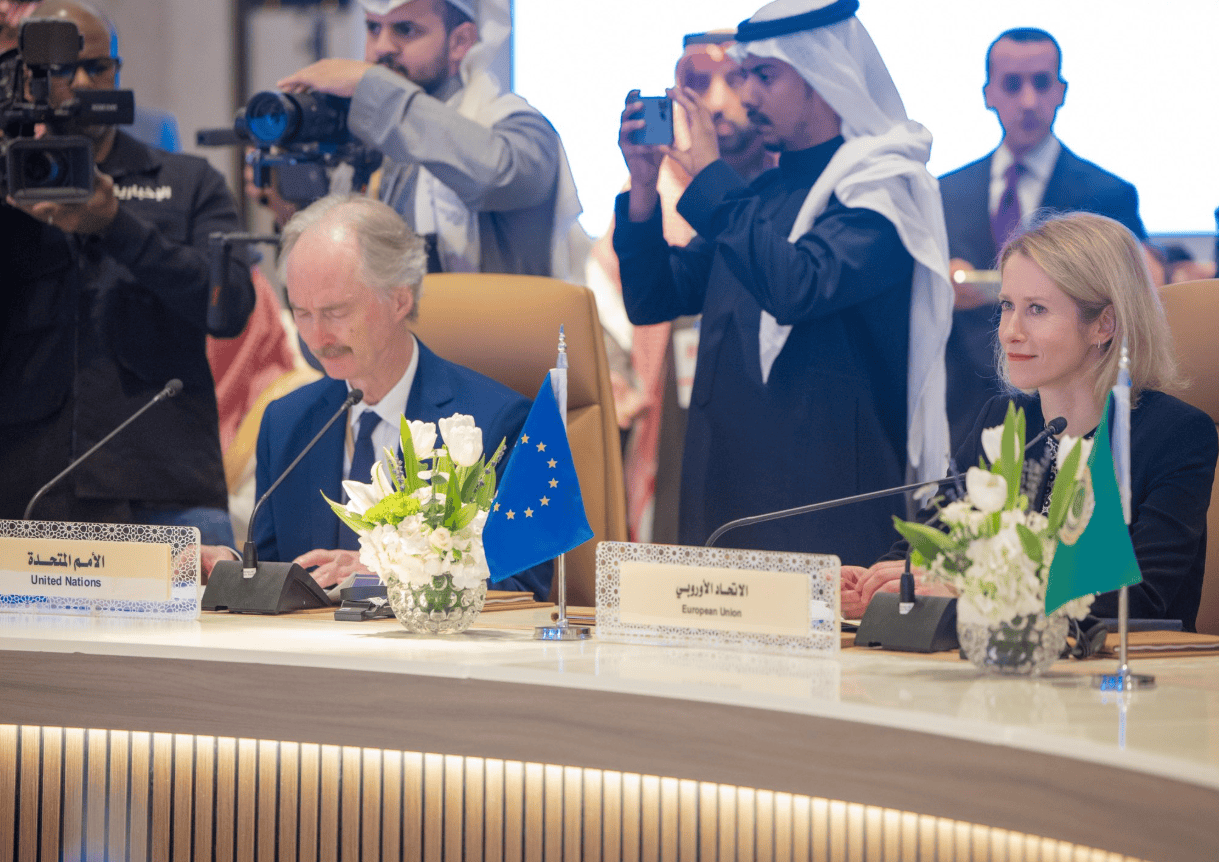
The US Acting Under Secretary of State for Political Affairs, John Bass; the UN Special Envoy for Syria, Geir O. Pedersen; and the High Representative for Foreign Affairs and Security Policy and Vice-President of the European Commission, Kaja Kallas, attended the meetings.
A Call for Sanctions Relief
The Chairman of the Riyadh Meetings and Saudi Foreign Minister, Prince Faisal bin Farhan, said that the meetings aim to coordinate efforts to support Syria and lift sanctions. He commended the US decision to issue a six-month general license that allows certain transactions with the Syrian government.
Prince Faisal called on the international community to lift unilateral and international sanctions on Syria, and start providing humanitarian, economic and capacity-building support to facilitate the return of Syrian refugees. He said that sanctions “will hinder the aspirations of the brotherly Syrian people to achieve development and reconstruction.”
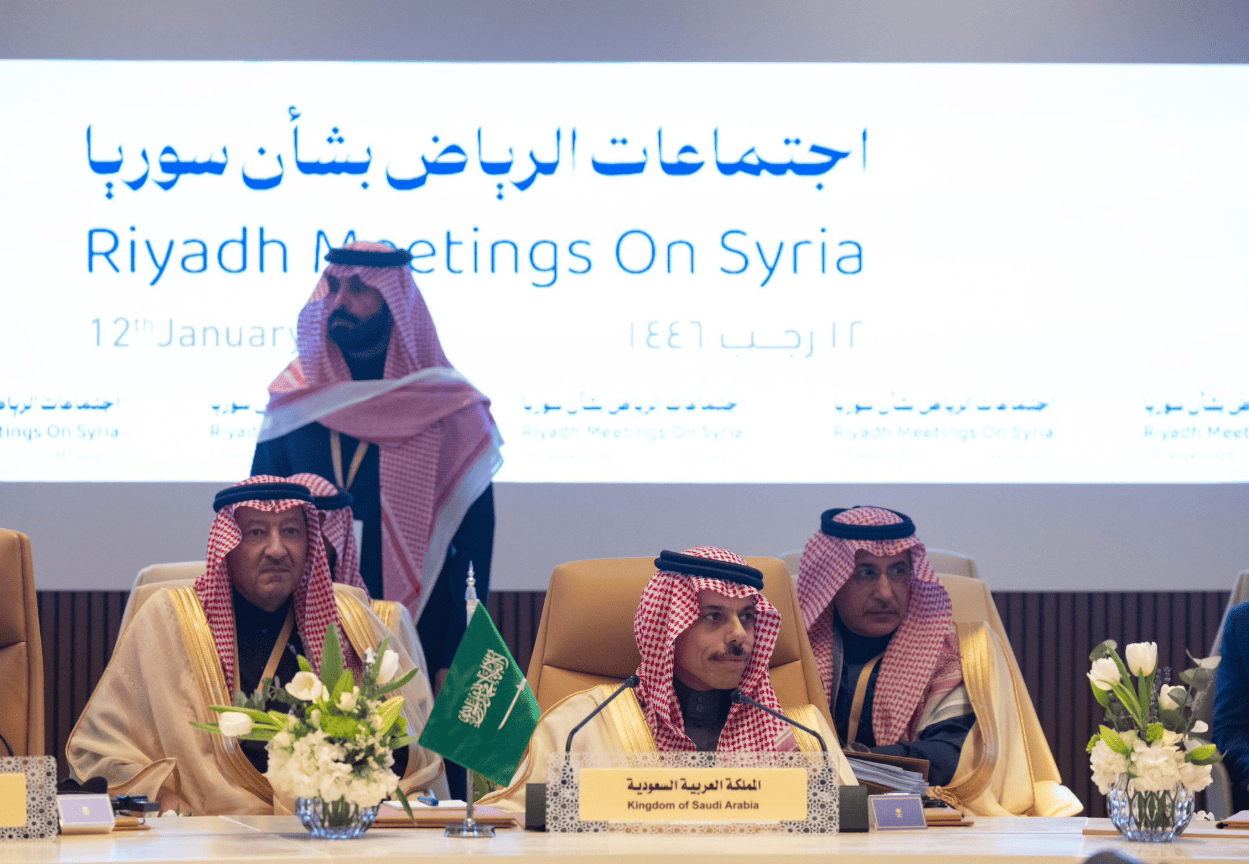
Furthermore, the Saudi Minister praised the positive steps taken by Syria’s new administration to safeguard the state institutions, foster dialogue among all Syrian parties, combat terrorism, and initiate an inclusive political process. He said that these steps contribute to preserving Syria’s stability and territorial integrity, and ensuring it does not pose a threat to the stability and security of the region’s countries.
Prince Faisal reiterated the Kingdom’s strong condemnation of Israel’s assault on Syrian territories, calling them “violations of international law and the 1974 disengagement agreement.” The Saudi Foreign Minister called for the immediate withdrawal of Israeli troops from Syrian territories and stressed Saudi Arabia’s rejection of these actions as acts of terrorism and occupation.
Western Position on Sanctions
During the Riyadh Meetings, Kallas said that the EU foreign ministers will meet on January 27, 2025, in Brussels to discuss easing sanctions on Syria. However, this will depend on “tangible progress in a political transition that reflects Syria in all its diversity,” she wrote on X.
On the same occasion, the German Foreign Minister, Annalena Baerbock, called for “a smart approach to sanctions, providing rapid relief for the Syrian population. Syrians now need a quick dividend from the transition of power,” announcing a $51.2mn in aid for Syria. Baerbock also warned that sanctions against “Assad’s henchmen who committed serious crimes” must remain in place, according to the Associated Press (AP).

Last week, the US Treasury Department eased some restrictions on Syria, with a general license that allows some transactions with the Syrian government, including some energy sales and incidental transactions.
Meanwhile, Türkiye said that it would help Syria in normalizing relations with the international community. During the Riyadh Meetings, the Turkish Foreign Minister, Hakan Fidan, noted the importance of establishing a balance between “the expectations of the international community and the realities faced by the new administration in Syria.”