Saudi Arabia Examines Impacts of Low-Pressure System on GCC Countries
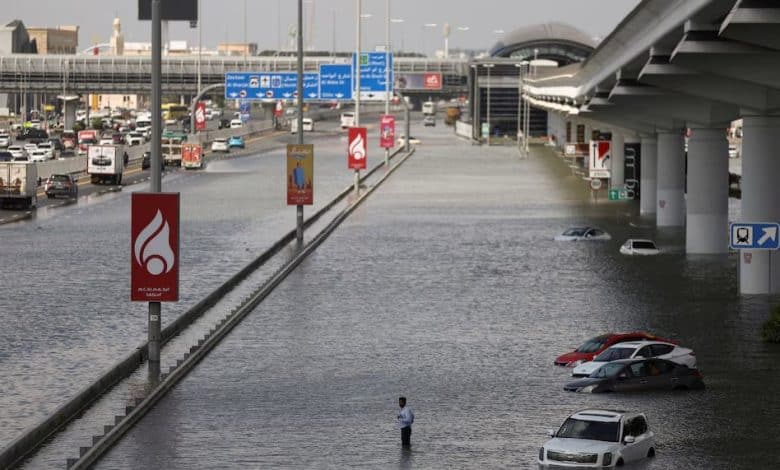
The Saudi Climate Change Regional Center has announced it will embark on a comprehensive climate study to investigate the impacts of the low-pressure system that hit the GCC countries this week.
According to a post on “X”, the Saudi National Center for Meteorology said that the study will examine the causes of the low-pressure system, the resulting extreme rainfall, and the role of climate change in this phenomenon, in coordination with the affected countries.
🛑المركز الإقليمي للتغير المناخي يعلن البدء في دراسة مناخية شاملة للمنخفض الجوي الذي أثر على دول مجلس التعاون الخليجي ومسبباته ومعدلات الأمطار المتطرفة الناجمة عنه ودور #التغير_المناخي في ذلك بالتنسيق مع الدول المتأثرة.#نحيطكم_بأجوائكم pic.twitter.com/s4nNtiI6Mz
— المركز الوطني للأرصاد (NCM) (@NCMKSA) April 18, 2024
Over the past week, GCC states have been hit by a low-pressure system, causing strong winds, thunderstorms, heavy rainfall and flash floods in several regions, with Oman and the UAE taking the biggest hit.
In Oman, the flooding has killed at least 20 people, including schoolchildren, blocked several roads and left dozens of people stranded. The Omani Ministry of Education closed schools in most regions.
In the UAE, heavy rains and unprecedented weather conditions have caused huge disruptions to flights, knocked out power in some areas, flooded highways and trapped people in their homes in Dubai, with one person reported dead according to Reuters.
Rainfall is rare in the Arabian Peninsula, which is known for its dry desert climate. The temperatures in Gulf States during summer can reach 50 Celsius.
The rainfall recorded in the UAE was the heaviest since recording started in 1949, authorities said.
According to experts, the heavy rainfall was likely a result of a normal weather system exacerbated by climate change.
Esraa Alnaqbi, a senior forecaster at the UAE government’s National Centre of Meteorology, said that the combined effect of a low-pressure system in the upper atmosphere and a low pressure at the surface had created a pressure “squeeze” on the air.
This squeeze, she explained, created the conditions for the powerful thunderstorm, due to the contrast between warmer temperatures at ground level and colder temperatures higher up.
She added that this “abnormal phenomenon” was expected in April because the pressure changes rapidly during season change, but climate change may have contributed to the storm.
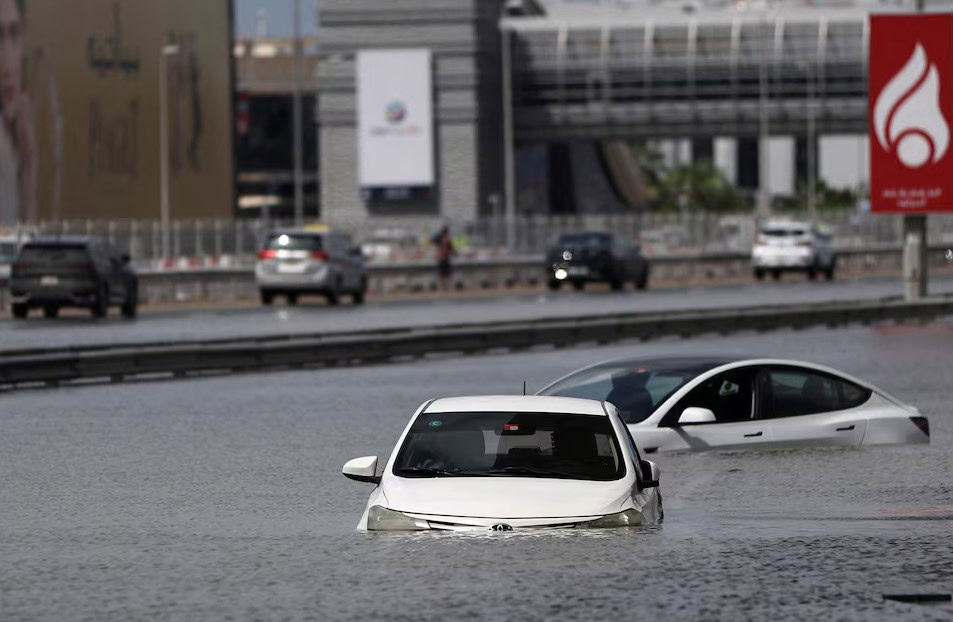
Global temperatures and extreme weather
Climate scientists see a connection between rising global temperatures and the increase in extreme weather events across the world.
In this regard, the Director at the Australian National University’s Institute for Climate, Energy & Disaster Solutions, Mark Howden, said that global warming has caused “extraordinarily” warm waters in the seas around Dubai, where there is very warm air above.
“This increases both potential evaporation rates and the capacity of the atmosphere to hold that water, allowing bigger dumps of rainfall such as what we have just seen in Dubai,” he told Reuters.
Meanwhile, Gabi Hegerl, a climatologist at Edinburgh University, expects the extreme rainfall, like in the UAE and Oman, to get worse in other regions due to the impacts of climate change.
She said, “When conditions are perfect for really heavy rain, there’s more moisture in the air, so it rains harder. This extra moisture is because the air is warmer, which is because of human-caused climate change.”