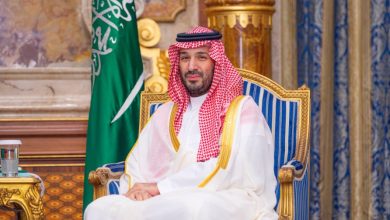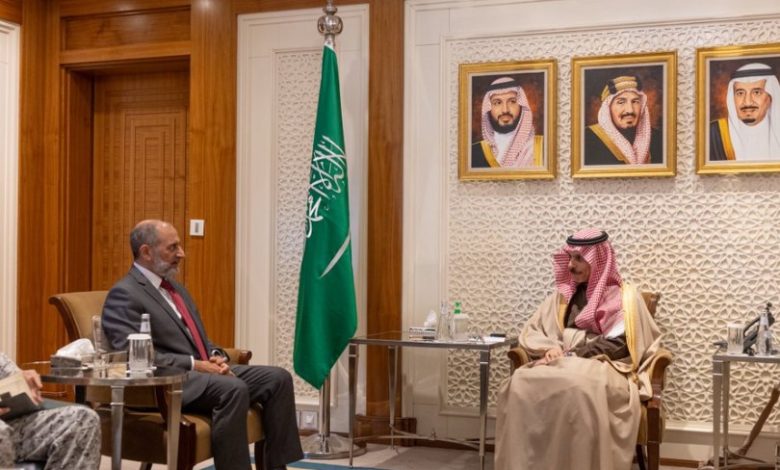
In Riyadh, a crucial meeting between Saudi Foreign Minister Prince Faisal bin Farhan and Makkah Defense Alliance Secretary-General Lt. Gen. (Ret.) Nauman Mahmood has signaled the pact’s transition from legal ratification to institutional execution.
The talks come ahead of the alliance’s planned meeting in Islamabad and the upcoming R-4+E4 ministerial talks, underscoring Saudi Arabia’s active push to consolidate collective regional deterrence.
The Riyadh Reception
Driving the News: Saudi Foreign Minister Prince Faisal bin Farhan received the Secretary-General of the Makkah Defense Alliance Nauman Mahmood in Riyadh on Thursday, November 19, 2026, according to the Saudi Press Agency (SPA).
The Big Picture: During the meeting, both officials reviewed efforts to establish the institutional framework of the General Secretariat of the Makkah Defense Alliance. They also reviewed progress made in developing mechanisms to boost cooperation and coordination among member states to strengthen joint defense.
The Backstory: On September 23, the Makkah Defense Alliance appointed Pakistani Lieutenant General (retired) Nauman Mahmood as the first Secretary-General to serve a three-year term in the alliance’s Riyadh-based General Secretariat.
Makkah Alliance Ratified
Flashback: On August 7, 2026, Saudi Arabia, Türkiye, and Pakistan signed the Makkah Joint Defense Agreement (also known as the Makkah Defense Alliance). It stipulates that “any armed attack against any one of the three states shall be regarded as an attack against them all,” laying the ground for collective deterrence, joint readiness, and coordinated military response.
The Context: The Riyadh meeting came a few days after Türkiye officially ratified the Makkah Defense Pact on November 14, 2026, following Saudi Arabia and Pakistan’s ratifications of the pact in October, bringing the agreement into effect.
Eyes on Islamabad
What to Watch: The Makkah Defense Alliance is set to meet in Islamabad in the coming weeks. Pakistani Deputy Prime Minister and Foreign Minister Ishaq Dar stated on November 16 that Islamabad would host the upcoming meeting of the alliance’s Strategic Political and Defense Committee later this month. Turkish Foreign Minister Hakan Fidan later confirmed the plans.
Catch Up Quick: The first meeting of the Strategic Political and Defense Committee took place in Istanbul on August 31, during which the three countries agreed to institutionalize cooperation, strengthen collective deterrence and defense, and establish a permanent secretariat in Riyadh. During the committee’s second meeting in Riyadh on October 5, the three countries agreed on the immediate implementation of the collective defense commitments under the pact, including the rapid deployment of the agreed military forces and capabilities in Saudi Arabia.
In His Words: “Hopefully, in the coming days, specifically in November, we will hold another meeting to further the institutionalization of the Makkah security alliance.” – Hakan Fidan, Türkiye’s Foreign Minister.
Zoom Out: Fidan noted that the alliance is open for other countries to join once its institutional framework is in place. Stressing the defensive nature of the Makkah Pact, he said prospective members should seek peace in the region and respect international law. Egypt and Bangladesh have emerged as potential candidates, while Syria stated it was considering joining the alliance.
The R-4+E4 Diplomatic Track
State of Play: The member states of the Makkah Defense Alliance, alongside Egypt, form the Regional Four (R-4) group – a quadrilateral consultative framework established in March 2026 in response to the US-Iran conflict, with the aim of fostering closer coordination and consultation to navigate the crisis. The foreign ministers of the group held their first meeting with their counterparts from the E4 (Germany, France, the UK, and Italy) in Istanbul on October 23. Their discussions focused on shipping disruption in the Strait of Hormuz, the Yemen crisis and Houthi attacks against Saudi Arabia, the Palestinian-Israeli conflict, and the Russia-Ukraine war.
Looking Ahead: Germany will host a meeting between the R-4 and the E4 in December to discuss regional security, focusing on the wars in Ukraine and the Middle East, Gaza’s humanitarian crisis, and Syria’s stability.
Why It Matters: The alignment between the R-4 and the E4 reflects a growing recognition among European powers that their national security interests are interconnected with Middle Eastern stability and that threats to Saudi energy facilities directly impact their energy security, thereby making their protection a shared responsibility that requires joint coordination and collective action.
The Bottom Line: The meeting between Prince Faisal bin Farhan and the Makkah Defense Alliance Secretary-General signals that the pact is moving from diplomatic blueprint to an active pillar of regional deterrence. Pairing these talks with the upcoming meeting in Islamabad and the broad diplomatic coordination through the R-4+E4 track, Saudi Arabia is building a dual-track security architecture, combining regional military deterrence with international diplomacy to safeguard Middle East stability and global energy flows.