
Pilgrims’ journey starts at the moment they step off the plane, making airports the first hosts welcoming the spiritual voyagers. In line with its historic responsibility for the Two Holy Mosques, Saudi Arabia continuously enhances Hajj and Umrah services, placing great emphasis on the aviation sector.
During the 6th Hajj Conference and Exhibition in Jeddah, the President of the General Authority of Civil Aviation (GACA) unveiled plans for massive airport expansions and innovative logistics, underscoring commitment to service excellence under Vision 2030.
The Gateway to the Kingdom
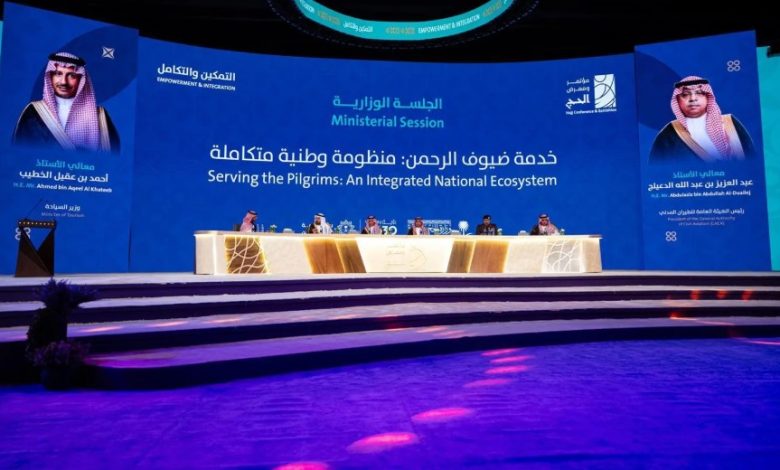
Driving the News: During a ministerial session at the 6th Hajj Conference, GACA President Abdulaziz Al-Duailej highlighted the Saudi aviation sector’s efforts to elevate the pilgrim experience by expanding airports and introducing smart logistics services.
The Big Picture: Saudi airports are the primary gateway for the holy sites, with about 94% of all international pilgrims arriving in Saudi Arabia by air.
The Context: Saudi aviation sector is undergoing a massive transformation under Vision 2030, advancing the Kingdom’s goal of becoming a global aviation hub bridging three continents.
Investing in Infrastructure Expansion
State of Play: Al-Duailej outlined airport development projects aimed at increasing long-term capacity and streamlining the Hajj journey.
- King Abdulaziz International Airport in Jeddah: Developing the Hajj and Umrah Terminal Complex to raise its annual capacity to around 16 million passengers and upgrading Terminal 4 to accommodate 15 million passengers annually.
- Prince Mohammad bin Abdulaziz International Airport in Madinah: Expanding the airport to increase its capacity to 18 million passengers annually, scheduled for completion by October 2027.
- Taif International Airport: Expanding its annual capacity to 1.1 million passengers to support operational efficiency during peak seasons.
The Goal: Under Vision 2030, Saudi Arabia aims to receive 30 million Umrah pilgrims annually by 2030.
Smart Logistics for a Seamless Journey
Between the Lines: GACA President highlighted innovative services and initiatives designed to reduce queues, waiting times, and baggage stress to offer a seamless experience for Hajj and Umrah pilgrims.
- Passengers with No Bags: An innovative service launched by MATARAT Holding across Saudi airports to allow travelers to check in and ship their luggage ahead directly from their home or accommodation to their destination.
- Makkah Route Initiative: A revolutionary program, spearheaded by the Ministry of Interior, aimed at streamlining travel for Hajj pilgrims by completing all visa, passport, and customs procedures at their home country airports before departure. It operates across 17 entry points in 10 countries, including Morocco, Indonesia, Malaysia, Pakistan, Bangladesh, Türkiye, Côte d’Ivoire, and the Maldives.
- Haramain High-Speed Railway: A 450-kilometer electric rail system connecting Makkah and Madinah, significantly reducing travel time for pilgrims, visitors, and residents.
- Distinguished Track (Al-Masar Al-Mumayyaz): A program designed to enable airlines to submit their Hajj flight schedules well in advance, improving operational efficiency and optimizing the overall arrival and departure experience.
- Zamzam Water Handling Facilitation: A dedicated logistic service that simplifies and speeds up the packaging, handling, and distribution of Zamzam water bottles for departing pilgrims.
- Compliant (Multazim) Award: An incentive program that recognizes and rewards airlines for adhering to regulatory standards, enhancing operational readiness, and elevating service quality for pilgrims.
Saudi Aviation Sector Milestones
Zoom In: Saudi Arabia’s civil aviation sector reached unprecedented milestones in 2025, cementing the Kingdom’s status as a global logistics hub under Vision 2030 and laying a robust foundation to serve millions of pilgrims and travelers.
- Record-Breaking Passenger Volumes: Handled over 140 million passengers in 2025, marking a 9% year-over-year increase, while maintaining three of the world’s busiest air traffic routes and expanding the global network to 176 international destinations.
- Investment and Market Competitiveness: Strengthened the aviation ecosystem by approving major new national carriers, including Riyadh Air and the Air Arabia Alliance, and licensing global logistics leaders such as FedEx and Swissport.
- Operational Readiness for Pilgrims: Prioritized the optimal deployment of national workforce talents and cross-agency readiness to guarantee a seamless, spiritually enriching travel experience for Hajj and Umrah performers.
KAIA: The Doorway to Makkah
Go Deeper: King Abdulaziz International Airport (KAIA) in Jeddah is the primary gateway to Makkah, receiving millions of Hajj and Umrah pilgrims annually.
By the Numbers:
- 53.4 million: Passengers received in 2025.
- 24.5 million: Passengers received in the first half of 2026.
- 3rd: KAIA’s global ranking among airports serving between 50 and 60 million passengers annually, as per Skytrax 2026 World Airport Awards.
- 5th: KAIA’s ranking in the “World’s Most Improved Airports” category.
- 27th: KAIA’s position in the overall list of the world’s top 100 airports.
The Takeaway: Building on the excellence of its aviation sector, Saudi Arabia continues to elevate the Hajj experience, delivering a dignified, effortless spiritual journey for every pilgrim.