Paris Welcomes Crown Prince: Elevating the Saudi-French Strategic Alignment
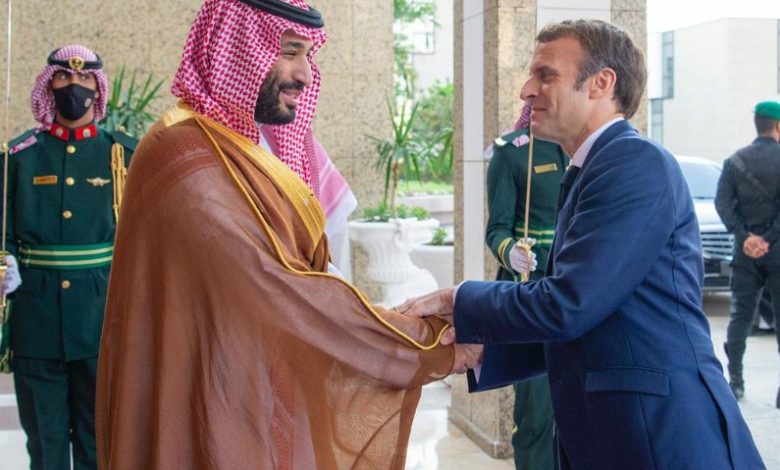
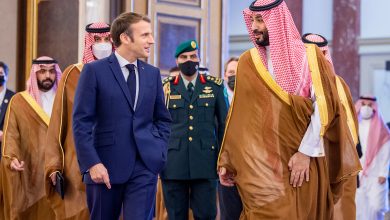
The Elysee Palace is gearing up for a grand reception for Saudi Arabia’s Crown Prince and Prime Minister Mohammed bin Salman, who will land in Paris on Saturday, August 22, 2026.
This landmark visit takes the Saudi-French strategic alignment to the next level, building on a solid partnership between Riyadh and Paris spanning several key areas. The visit also comes at a critical time amid the rapid developments in the Middle East and beyond, which necessitate close coordination to navigate shared challenges.
The Diplomatic Agenda
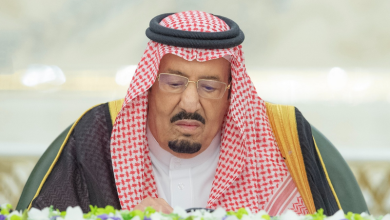
Driving the News: The Saudi Royal Court announced on Friday that Crown Prince Mohammed bin Salman departed on a state visit to France, upon an invitation from French President Emmanuel Macron.
The Big Picture: According to the Elysee Palace, Macron will receive the Crown Prince on August 23-24 to discuss key economic and strategic issues shaping the Saudi-French strategic partnership and exchange views on the most pressing regional issues. Moreover, Crown Prince Mohammed bin Salman will meet French Prime Minister Sebastien Lecornu on Monday at the Hôtel national des Invalides, where they will hold high-level bilateral talks.
What They Said: “It reflects the vitality of the dialogue between the Kingdom of Saudi Arabia and France and will provide an opportunity to further strengthen the strategic partnership between our two countries.” –The Elysee Palace
Demonstrating how soft power and sports diplomacy reinforce these bilateral ties, Crown Prince Mohammed bin Salman and Macron will attend the closing ceremony of the Esports World Cup on Sunday. The tournament is taking place in Paris for the first time at Saudi Arabia’s request. It underscores the shared ambition of France and Saudi Arabia to cement sports and culture as drivers of closer bilateral ties.
The Strategic Partnership Council
State of Play: The central anchor of the visit will be the inaugural meeting of the Saudi-French Strategic Partnership Council, co-chaired by the Crown Prince and President Macron.
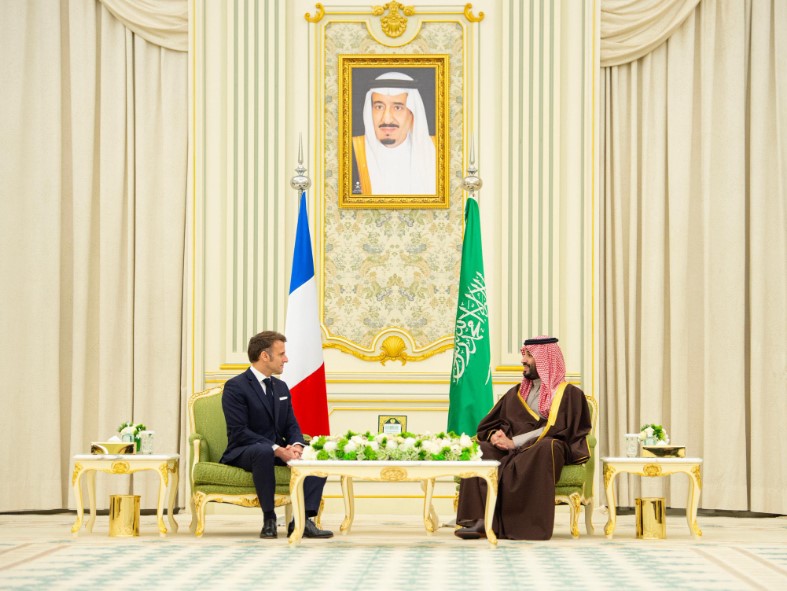
Established in December 2024 during Macron’s visit to Saudi Arabia, the council aims to provide a framework for long-term political, economic, and security coordination between Riyadh and Paris.
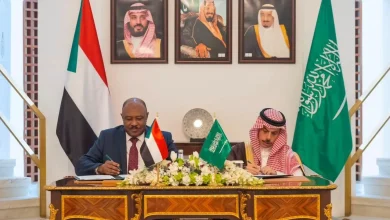
The inaugural meeting is expected to conclude with the signing of several agreements covering the technology, transport, energy, and health sectors.
Middle East Security
Between the Lines: Over the years, Riyadh and Paris have boosted bilateral coordination to resolve regional conflicts and promote security and stability across the Middle East.
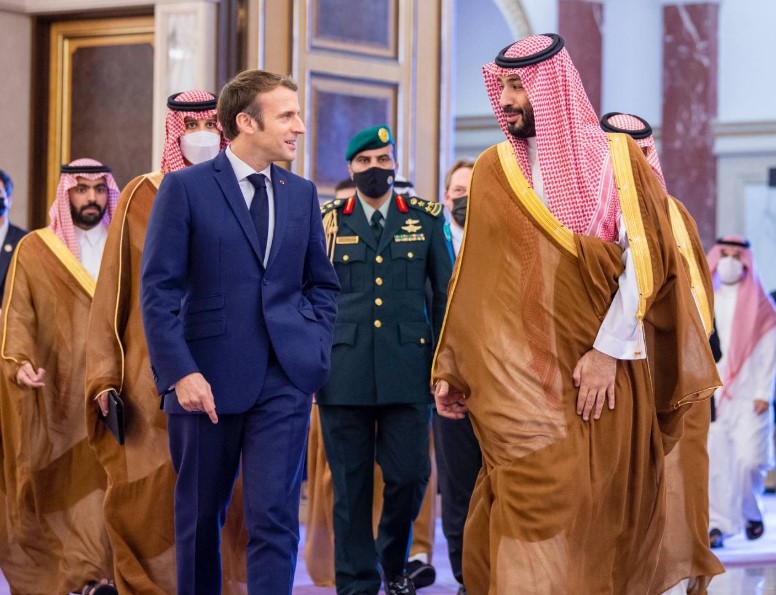
The Crown Prince and Macron will hold discussions on key regional issues, including the latest developments related to Palestine, Yemen, Lebanon, and Syria.
Lebanon
Saudi Arabia and France are closely coordinating on Lebanon, supporting the country’s sovereignty and state authority. The Kingdom has long advocated for Lebanon’s security, stability, sovereignty, and territorial integrity. In June 2026, the Saudi Crown Prince directed the resumption of Lebanese imports to the Kingdom, following a five-year ban, offering a vital trade pipeline for Lebanon’s struggling agricultural and commercial sectors, further strained by the ongoing geopolitical tensions.
Meanwhile, France has called for a “preparatory and technical” meeting for the chiefs of staff of 15 countries, possibly including the US, to support Lebanon’s army and internal security forces. According to Asharq Al-Awsat, citing Elysee sources, Paris is working on other undisclosed projects, with indications suggesting they are related to the expiry of the UNIFIL mandate in south Lebanon. With regard to this, France and Italy are developing a formula to prevent this vacuum.
Palestine
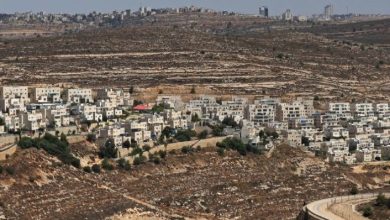
Both Saudi Arabia and France have underscored their shared commitment to Palestinian Statehood. To this end, Riyadh and Paris co-hosted the High-Level International Conference on the Peaceful Settlement of the Palestinian Question and Implementation of the Two-State Solution in July and September 2025 to mobilize international support for Palestinian Statehood and the rights of the Palestinian people.
The conference drove a wave of international recognitions of the State of Palestine by major Western nations, while cementing the New York Declaration as the primary international roadmap toward a sovereign Palestinian State.
Syria
Saudi Arabia and France also have shared interests in supporting the stability and sovereignty of Syria by encouraging a political process to address regional security concerns and humanitarian conditions. Riyadh has spearheaded a diplomatic push to end Damascus’ isolation and lift economic sanctions on the country, while Macron recently visited Syria.
Maritime Navigation
The two will also address the US-Iran conflict, discussing ways to bypass the Strait of Hormuz by diversifying transport routes for energy and logistics, including maritime routes, as well as alternative pipeline and regional rail projects that connect the Middle East and Europe, Bloomberg reported, citing French presidency officials.
These diplomatic goals are backed by naval alignment between the Saudi-led Multinational Maritime Defense Coalition and France’s participation in EUNAVFOR ASPIDES to guarantee freedom of navigation.
Saudi Arabia and France have a shared interest in securing Gulf and Red Sea routes and maintaining freedom of navigation. The Saudi Crown Prince’s visit could unlock a new horizon for cooperation in this area.
Defense Development & Localization
Why It Matters: The Saudi-French relations have been underpinned by defense and security. In line with Saudi Vision 2030, the Kingdom targets the localization of more than 50% of its military spending by the end of the decade. These efforts are led by the General Authority for Military Industries (GAMI), alongside Saudi Arabian Military Industries (SAMI).
In light of this, defense ties between Paris and Riyadh have evolved into a deep strategic mechanism focusing on long-term sovereign capabilities, involving direct co-development, technology transfer, and domestic manufacturing:
- Localization of Transport & Tanker Fleets: Through SAMIAirbus (a joint venture between SAMI and Airbus), Saudi Arabia is localizing Maintenance, Repair, and Overhaul (MRO) for its A330 Multi Role Tanker Transport (MRTT) Recent expansions include local conversion work and logistics support, laying the groundwork for potential future transport acquisitions like the Airbus A400M.
- Industrial Partnerships & High-Tech R&D: Joint ventures with French industry leaders are establishing domestic production hubs across critical defense sectors:
- Aerostructures: FIGEAC AÉRO and SAMI are manufacturing high-precision aerostructure components locally.
- Radar & Air Defense: Thales is facilitating technology transfer for advanced air defense, radar networks, and command-and-control systems.
- Advanced Combat Aircraft Discussions: Following Saudi Arabia’s formal request to Dassault Aviation for technical quotes, high-level negotiations continue regarding the acquisition and domestic assembly of Rafale F4 multi-role fighter jets. This move expands Riyadh’s tactical fleet while embedding fighter-jet supply chains inside the Kingdom.
On the security front, Saudi Arabia and France continue to expand joint naval exercises and intelligence sharing focused on safeguarding vital maritime routes across the Red Sea, the Arabian Gulf, and the Bab al-Mandab Strait.
The Economic Driver
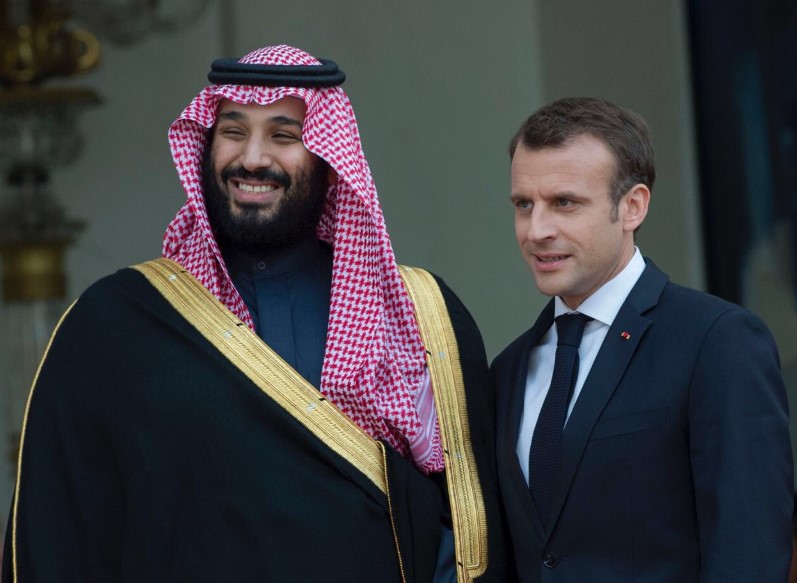
The Saudi Crown Prince and the French President will explore ways to accelerate joint industrial, defense, aviation, and energy projects between Riyadh and Paris. Both leaders will attend the closing session of a Saudi-French business forum being held in Paris.
State of Play: Saudi-French economic ties are driven by substantial bilateral trade, cross-border investments, and shared goals under Saudi Vision 2030. France is one of Saudi Arabia’s key European economic allies, with robust exchanges spanning transport equipment, aerospace, luxury goods, and refined petroleum.
As both nations expand joint initiatives across green energy, cultural infrastructure, and defense, the economic collaboration continues to broaden beyond traditional energy flows into high-value technology and sustainable investment sectors.
By the Numbers: (Source: Gulf Research Center)
- SAR 348.90 Billion ($93.04 Billion): Cumulative bilateral trade volume between Saudi Arabia and France from 2016 to 2025.
- SAR 44.21 Billion ($11.79 Billion): Total bilateral trade value in 2025 alone, marking a 2% annual growth and establishing Saudi Arabia as France’s second-largest trading partner in the Gulf.
- SAR 18.30 Billion ($4.88 Billion): Value of Saudi exports to France in 2025 (accounting for ~41% of total trade), primarily driven by mineral fuels, oils, and refined energy products.
- SAR 25.91 Billion ($6.91 Billion): Value of French exports to Saudi Arabia in 2025 (~59% of total trade), dominated by industrial machinery, mechanical equipment, pharmaceuticals, and cosmetics/perfumes.
- SAR 69.45 Billion ($18.52 Billion): French Foreign Direct Investment (FDI) stock in Saudi Arabia as of 2024 – a 147% surge from 28.09 billion SAR ($7.49 billion) in 2015.
- 74%: Overall growth rate of total bilateral trade between the two nations over the 2016-2025 decade.
Culture & Heritage Innovation
In recent years, Saudi Arabia and France have been boosting their collaboration in tourism and culture. In 2018, both countries signed a landmark agreement to develop AlUla region, with the aim of transforming it into a premier tourist attraction while preserving its cultural and historical heritage. The agreement created French Agency for AlUla Development (AFALULA), which focuses on heritage preservation, sustainable urban planning, eco-tourism, security, and specialized training.
Furthermore, initiatives like Villa Hegra actively bridge the creative communities of both countries, fostering direct exchange among artists, scholars, architects, and researchers.
Beyond AlUla, this joint vision extends across archaeology, museum management, cinema, visual arts, and higher education. Ultimately, the partnership leverages cultural exchange to support Saudi Arabia’s socio-economic transformation while positioning the Kingdom as a premier global cultural hub grounded in sustainable development.
What to Watch: Key announcements are expected to emerge from the inaugural Strategic Partnership Council meeting on Monday, particularly regarding joint Red Sea security protocols, green energy transition investments, and industrial localization terms for defense platforms.