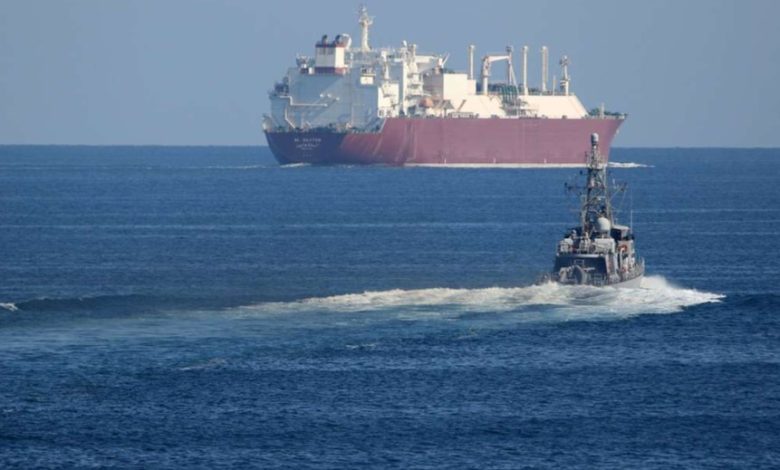
Iran announced on Monday that it had launched the Joint Hormuz Committee with Oman, holding its first meeting in Muscat to discuss the future management of the critical waterway.
The Strait of Hormuz has been a major sticking point in the ongoing talks between the US and Iran. Despite a preliminary deal signed earlier this month to end the conflict, recurring clashes over the maritime corridor have jeopardized the fragile ceasefire between Washington and Tehran.
Iran-Oman Hormuz Committee
Iranian Deputy Foreign Minister for Legal and International Affairs Kazem Gharibabadi said that Iran and Oman held the first meeting of the Joint Hormuz Committee to discuss the future administration of the waterway in line with the Islamabad Memorandum of Understanding (MoU) between the US and Iran.
“During a trip to Muscat, the first meeting of the Joint Hormuz Committee was held” with Oman’s Ambassador-at-Large Abdulaziz Al Hinai, he posted on X.
“While reviewing the current issues related to the strait, we exchanged views on the future management” of the waterway within the framework of paragraph five of the Islamabad MoU and the sovereign rights of the coastal states, he added.
Hormuz Postwar Status
The Strait of Hormuz is a strategic shipping route linking the Arabian Gulf with the Gulf of Oman and the Arabian Sea, through which around a fifth of daily global oil supplies and LNG supplies pass. The recent conflict disrupted passage through the Strait, as Iran blocked transit through the critical waterway without its permission and demanded control over it after the war.
Under the Islamabad MoU, Tehran will make arrangements using its best efforts for the safe passage of commercial vessels through the waterway.
The fifth provision of the agreement states that Iran and Oman will hold discussions with other Gulf littoral countries to “define the future administration and maritime services in the Strait of Hormuz.”
The MoU also notes that passage through the Strait of Hormuz will be toll-free “for 60 days only” after the signing of the deal, leaving the status of the strategic maritime corridor after that period unclear.
Iran, for its part, is weighing the imposition of “maritime service fees” on ships transiting the Strait of Hormuz – a charge that did not exist before the war. The US, however, strongly rejects the concept, arguing that Hormuz is an international waterway that must remain entirely free of transit charges.
Oman’s Position on Hormuz
Oman’s position on the management of Hormuz remains unclear. In a joint statement last week, Muscat and Tehran said that they would form a joint working group to “reach agreement on the future administration of navigation in the Strait of Hormuz, the services that will be provided in this regard, and the costs associated with them.”
However, Oman later said that it has no plans to impose any transit fees on ships transiting the waterway, stressing the importance of restoring freedom of navigation through the Strait and ensuring safe passage.
During a joint GCC-US ministerial meeting in Bahrain, Omani Foreign Minister Badr Albusaidi assured his Gulf counterparts of Muscat’s commitment to “full and constructive” engagement with various parties to secure maritime navigation, clarifying that future arrangements related to the Strait do not entail the imposition of any transit fees.
Furthermore, Oman announced the establishment of two toll-free routes north and south of the existing shipping lane to facilitate the safe passage of vessels leaving the region, in coordination with the International Maritime Organization (IMO).
Iranian Warning
The US and Iran exchanged strikes over the past days, as vessels transited the waterway using a passage not approved by Iran. In this context, Iranian Foreign Minister Abbas Araghchi warned that “any attempt to adopt new or separate arrangements” will only lead to more complicated situations and delays in the reopening of the Strait of Hormuz, and will increase the tensions” in the Middle East.
During a visit to Iraq, Araghchi on Sunday stressed that Iran alone is responsible for managing and fully reopening maritime traffic in the Strait of Hormuz under recent understandings. “No other country or institution has any responsibility in this regard,” he noted.
Speaking at a press conference alongside his Iraqi counterpart, Araghchi urged all parties to adhere to the MoU and not to allow it to deviate from its course.
Araghchi’s remarks echoed those of Iran’s Revolutionary Guards Corps (IRGC), which claimed that maritime traffic through Hormuz falls under Iran’s responsibility in line with the recently signed MoU with the US.
“Therefore, vessels found to be in violation will be dealt with more firmly than before,” the IRGC warned in a statement on Sunday.